


Mitchell, Horvath move to save Measure J from accidental repeal


Los Angeles County Supervisors Holly J. Mitchell (South Los Angeles, Compton, Carson, Inglewood, Watts) and Lindsey P. Horvath (West Hollywood, Santa Monica, Beverly Hills, Hollywood, San Fernando Valley) yesterday won Board approval of a motion to permanently protect Measure J in the County Charter — the voter-approved mandate that was accidentally repealed when voters passed Measure G in 2024.
Approved by 57 percent of county voters in 2020, Measure J requires a minimum allocation of the county’s locally generated, unrestricted general fund revenues for direct community investment and alternatives to incarceration under the county’s Care First, Jails Last vision. But after its passage, the measure was never inserted into the Charter’s text — an administrative error by a prior Executive Officer administration. As a result, when voters approved Measure G’s governance overhaul in November 2024, they unknowingly repealed Measure J effective December 2028.
The motion directs County Counsel to fold two protections into the Ethics Commission charter amendment already headed to the November 2026 ballot: relocating Measure J to a new section of the Charter so it is no longer subject to repeal in 2028 under Measure G, and explicitly barring the elected County Executive — who takes office in 2028 — from vetoing Measure J’s voter-mandated funding allocation during the budget process.
“Voters overwhelmingly established a lasting commitment to invest in communities and alternatives to incarceration, and that commitment should never have been put at risk by an administrative error,” said Mitchell. “This motion safeguards our responsibility to uphold the will of the voters and preserve the investments residents across Los Angeles County rely on every day.”
“Voters were clear, and the Board has consistently affirmed their decision: Measure J is law and belongs in our County Charter,” said Horvath. “This action honors the tireless advocacy of community members who have fought to protect these vital investments and advances our commitment to care-based systems of justice. Correcting this administrative oversight is essential to ensuring our Charter accurately reflects the law. Good governance means honoring the will of the voters, and building a County government people can trust.”
The proposed charter amendment returns to the Board on July 21, with final approval for placement on the November 2026 ballot required by July 28.
Friedman secures $500K to upgrade Metro, Metrolink before Olympics
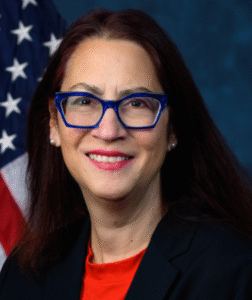
U.S. Rep. Laura Friedman (D-Glendale, Burbank, Hollywood, West Hollywood, Los Feliz, Silver Lake) yesterday announced a pair of $250,000 federal investments to upgrade the rider experience on LA Metro buses and Metrolink rail stations as the region prepares to welcome millions of visitors for the 2028 Olympic and Paralympic Games.
Speaking at the Glendale Metrolink station, Friedman said the first $250,000 will support LA Metro’s regional Bus Stop Enhancement Program — bringing shade and shelter, seating, lighting, accessibility upgrades, and real-time arrival information to bus stops. Los Angeles County has more than 13,000 bus stops, and a large share offer no shade, no seating, and no way for riders to know when the next bus is coming.
The second $250,000 will fund Metrolink’s Customer Information System upgrade, including modern displays showing every arrival and departure, an upgraded public-address system, and real-time service alerts — improvements aimed especially at first-time riders, visitors, and non-native English speakers at risk of missing their trains on outdated systems.
“A bus stop shouldn’t be a test of how much sun you can take,” said Friedman. “As our summers keep getting hotter, this is a major issue for riders, especially for seniors, for children, and for transit-reliant riders.”
The new airport-style display screens at the Glendale and downtown Burbank stations will take eight to 10 months to procure and install. Work will begin as soon as Metrolink finalizes a grant agreement with the federal government.
Schiavo delivers $2.75 million for Santa Clarita, San Fernando Valleys

Assemblywoman Pilar Schiavo (D-Santa Clarita, Stevenson Ranch, Castaic, Chatsworth, Porter Ranch, Granada Hills, Northridge) announced that the final 2026–27 state budget includes more than $2.75 million in local investments she secured for the Santa Clarita and San Fernando valleys, supporting public safety, wildfire prevention, housing, seniors, children, and foster youth.
“In a difficult budget year and when so many are struggling just to afford the basics, I fought to make sure our communities have the support they need,” said Schiavo. “As a single mom, small business owner, and former nurse advocate, I have seen firsthand how difficult times are for people. As a state, it is our job to step up in these moments and deliver. While there is still more work to be done, these local investments will go a long way for so many families.”
The largest share — more than $1.1 million — goes to public safety, including specialized vehicles for the Los Angeles County Sheriff’s Department and electric bikes and equipment for the LAPD’s community patrol in the San Fernando Valley. Another $900,000 will help Finally Family Homes acquire a permanent facility serving roughly 90 to 100 young adults each year, including those transitioning out of foster care.
The budget also includes $180,000 for the Santa Clarita Senior Center to expand its Meals on Wheels program with additional vehicles; more than $200,000 for wildfire preparedness, including two horse trailers for the LA County Department of Animal Control to expedite evacuations and mitigation equipment for the local Tribal Conservation Corps.
“Whether it is making sure a senior receives a meal, helping a young person find stability after foster care, strengthening emergency response, or giving local law enforcement the tools they need to keep communities safe, this funding will directly support families across our district,” Schiavo said.
Barger backs COPA program with transparency conditions

Los Angeles County Supervisor Kathryn Barger (Antelope Valley, Santa Clarita, Pasadena, Altadena, Glendale, Burbank, San Gabriel Valley) voted yesterday to advance a Community Opportunity to Purchase Act (COPA) program for unincorporated Los Angeles County — while conditioning her support on transparency and a 60-day progress report to the Board.
The motion, approved unanimously, directs the Department of Consumer and Business Affairs to draft a COPA ordinance within 180 days. The program would give qualified, mission-driven, affordable housing organizations a first opportunity to purchase multifamily rental properties of five or more units and mobile home parks in unincorporated areas before they reach the open market, with a future expansion envisioned to give purchase rights to tenants themselves.
The California Apartment Association opposes the proposal, arguing it would delay sales and discourage investment in rental housing.
“I supported today’s motion because it’s an opportunity for our Board to turn our commitment to preserving affordable housing into meaningful action,” said Barger. “It also has the potential to help protect the mom-and-pop property owners who have long provided much of our naturally occurring affordable housing by giving community-based organizations and local buyers a fair opportunity to compete with large, well-capitalized investors.”
“At the same time, I made clear that this process must be transparent and carefully crafted,” Barger added. “That’s why I requested a progress update within 60 days so the Board can monitor implementation, address outstanding questions, and ensure we’re getting this right.”
Barger tied the program to recovery from the Eaton Fire, saying that as Altadena continues rebuilding, preserving affordable rental housing and strengthening local ownership will be critical to the community’s long-term recovery, and that a thoughtfully implemented framework can give community-based organizations a meaningful opportunity to invest in the neighborhoods they serve.