

By Stephen Witt, Los Angeles County Politics
Government overreach or the breakup of a near-monopoly in entertainment media.
Either way, the biggest entertainment merger in Hollywood history is heading to court — and the fallout could cost California thousands of jobs regardless of who wins.

California Attorney General Rob Bonta yesterday announced the filing of a federal antitrust lawsuit, joined by a coalition of 12 state attorneys general, to block the proposed $110 billion acquisition of Warner Bros. Discovery by Paramount Skydance.
“The unlawful merger of these two entertainment behemoths would lead to higher prices, lower quality, and less content for film and television, harming movie theaters, basic cable distributors, and ultimately, audiences on every sofa and movie theater seat in the U.S.,” said Bonta. “In this country, no one is above the law. California and our sister states are fighting for free and fair markets, not rigged markets.”
If Paramount and Warner Bros. attempt to close the deal before litigation concludes, Bonta’s office has said it will seek a temporary restraining order to stop them.
But while Bonta was making hay over the lawsuit, sources told Semafor that Paramount CEO David Ellison’s friends and advisers have been pushing him to consider moving the corporate headquarters and reallocating much of its $30 billion in planned California spending to other states if the lawsuit proceeds.
No decisions have been made, and those familiar with the discussions say the considerations may be brinkmanship rather than settled intent.
Under the current merger agreement, Paramount has committed to keeping both the Paramount Pictures lot in Hollywood and the Warner Bros. lot in Burbank operational. But the threat carries weight in a state that has already lost up to 40 percent of its historic share of scripted television and film production to competing states and countries — and where more than 42,000 motion picture industry jobs in Los Angeles County alone disappeared between 2022 and 2024.
On-location production in the greater Los Angeles area declined 13.2 percent for the July through September 2025 period compared to the year prior — even as the expanded state film tax credit shows early signs of reversing that trend.
Netflix and Lionsgate have both pursued major production space in New Jersey — Netflix at the former Fort Monmouth Army base in a $1 billion investment, Lionsgate at a Newark studio that broke ground last December and will open in 2027 — signaling that competing states are actively positioning to absorb whatever California loses.
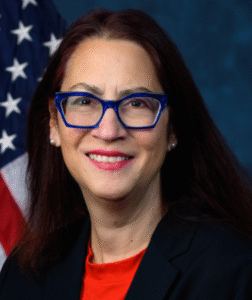
U.S. Rep. Laura Friedman (D-Burbank, Glendale, Pasadena), whose district includes the Warner Bros. Studios lot in Burbank, welcomed Bonta’s action as a necessary check on what she called an untrustworthy federal antitrust apparatus. Friedman led a 34-member California congressional letter in May urging Bonta to conduct a full and independent review of the deal.
“A merger this size, in an industry that has already lost thousands of California jobs to consolidation, deserves a full examination on the merits, not a rubber stamp from a federal administration we cannot trust to act in the best interests of American workers and consumers,” said Friedman. “As I have said at every step, this deal should be closely examined according to the law and its effects on Americans.”
Paramount would not be the first major company to decamp from California over a regulatory dispute. Chevron relocated its corporate headquarters from San Ramon to Texas two years ago. Oracle and Tesla have made similar moves.
Whether Ellison follows may depend on what happens next in court.