


Calabasas annexes long-excluded Craftsman’s Corner
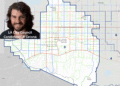
The City of Calabasas has officially annexed Craftsman’s Corner, ending a 12-year push to bring the quarter-square-mile community into city limits after the Los Angeles County Local Agency Formation Commission approved the reorganization Aug. 17.
Craftsman’s Corner sits landlocked between Calabasas and Hidden Hills. The LAFCO action splits the territory in a three-way reorganization, with most of the area joining Calabasas and a smaller portion annexing to Hidden Hills.
The City Council formally launched the current annexation effort in December 2013, though city officials trace the underlying grievance back to Calabasas’s 1991 incorporation, when the county excluded Craftsman’s Corner from the new city’s boundaries.
“We are excited at the prospect of annexing Craftsman’s Corner to the City of Calabasas. Los Angeles County wrongfully excluded this area from the City’s initial incorporation in 1991. We had made several attempts in the last 35 years to rectify this mistake, and we are relieved that adding this historic district to the City of Calabasas has finally come to pass,” said Calabasas Mayor James R. Bozajian.
Most day-to-day services will stay the same for Craftsman’s Corner residents: the Los Angeles County Sheriff’s Department will continue to handle law enforcement, and the Los Angeles County Fire Department will continue to provide fire protection, while schools, utilities, waste hauling, addresses and postal service remain unchanged.
The annexation does shift Craftsman’s Corner residents into Calabasas’s local government for the first time. Residents can now vote in city elections, participate in public hearings and access city programs and services, and planning and land-use authority over the area transfers from LA County to the city.
Calabasas created a dedicated online resource to walk residents, property owners and businesses through the transition, available at cityofcalabasas.com/our-city/welcome. Property owners with permits or projects already in process with the county can contact the Calabasas Community Development Department at (818) 224-1600.
Malibu launches outreach phase for PCH speed cameras
The City of Malibu is entering the public education and outreach phase of its PCH Speed Safety System as construction on the automated enforcement program nears completion, with officials aiming to inform residents and motorists before cameras begin capturing speed violations along the highway’s 21-mile stretch through the city.
More than 60 people have died in traffic collisions along Malibu’s stretch of Pacific Coast Highway since 2010. A speeding driver killed four Pepperdine University students standing along the road in October 2023 — a tragedy that prompted the city to declare a PCH safety emergency and form a coalition with state and county officials, the Los Angeles County Sheriff’s Department, the California Highway Patrol and Caltrans.
In 2023 alone, the highway saw 220 reported crashes resulting in 93 injuries and seven deaths; the Sheriff’s Department identifies speed as a primary factor in most of those collisions.
State Sen. Ben Allen authored the legislation that made the Speed Safety System possible; Gov. Gavin Newsom signed it into law in September 2024 following years of advocacy from the city, residents and partner agencies.
The system uses lidar technology and camera equipment to detect vehicles traveling at least 11 mph over the posted limit, automatically photographing a violator’s rear license plate and generating a citation for review. Under state law, Malibu may operate up to five camera systems with 10 cameras total within city limits.
The rollout follows a three-phase timeline: the education and information phase runs through Sept. 31, a 60-day warning-only period begins when the system activates in late September, and civil penalties begin in late November once the warning period ends. Violations carry no driver’s license points or insurance penalties.
Malibu built strong privacy protections into the program: the system won’t record continuously and activates only when it detects a violation, and the city will delete non-violation data immediately and destroy stored violation records within 60 days of a case’s resolution.
The city also built in an appeals process and a diversion program for eligible low-income residents, and plans to post regular performance updates to the Public Safety Commission’s agenda.
Manhattan Beach property values climb 5.3%
The Los Angeles County Assessor’s Office has released its 2026 Annual Assessment Roll, showing Manhattan Beach‘s total assessed property value climbing to $29.07 billion — a 5.3%, or $1.46 billion, increase over last year.
The Assessment Roll represents the county’s yearly inventory of all taxable real and business property, from which the county calculates and collects property taxes; it covers land, buildings and business equipment, offering a snapshot of the local economy.
Manhattan Beach’s growth reflects a resilient real estate market and continued economic strength in the beach city, whose total 2026 parcel count reached 12,933 — 11,175 single-family residential parcels, 1,274 residential income (apartment) parcels, and 484 commercial and industrial parcels.
Countywide, the 2026 Roll shows a total net value of $2.272 trillion, marking the county’s 16th consecutive year of property value growth — a $96 billion, or 4.42%, increase over 2025.
That total will generate more than $20 billion countywide to fund public services including public safety, schools, roads, hospitals and libraries.
Irwindale opens new $7.1 million library with ribbon-cutting
The City of Irwindale celebrated the grand opening of its new library Saturday with a ribbon-cutting ceremony at 5030 N. Irwindale Ave., marking what city officials call a major investment in residents’ access to education and lifelong learning.
The 13,000-square-foot facility offers expanded collections for children, teens and adults, modern technology, meeting and tutoring areas, and a community room. Local artists created four murals for the building, including one honoring the city’s founding mothers. Community members, elected officials, city staff and library partners joined the celebration and toured the new facility.
“This new library represents an investment in Irwindale’s future and in the people who call our city home. It will provide a welcoming place where children can discover the joy of reading, students can learn and study, families can connect, and residents of all ages can access information, technology, and educational opportunities,” said Irwindale Mayor H. Manuel Ortiz.
Assemblywoman Blanca Rubio and retired Congresswoman Grace Napolitano helped secure $7.1 million in funding from the California State Library for the project, according to City Librarian Shayna Balli.
Burbank Library seeks items for city’s 2026 time capsule
Burbank Public Library is asking the community to help decide what best represents life in Burbank today, inviting residents to suggest items for a new 2026 time capsule that will preserve a snapshot of the city’s history for future generations.
“Time capsules tell the story of a community through the everyday objects that future generations may find extraordinary. This is an opportunity for the people of Burbank to help decide how our community will be remembered 50 years from now,” said Eric Lashley, Library Services Director.
The project continues a tradition the Burbank Bicentennial Committee began in 1976, when it built a monument designed to hold four time capsules — one added every 25 years between 1976 and 2076. The first capsule preserved items representing Burbank during the nation’s Bicentennial year, and the city opened, displayed and resealed it in 2001.
Community members can submit ideas for objects, mementos and keepsakes capturing life in Burbank in 2026 through Sept. 25 at www.burbanklibrary.org/timecapsule.Suggested items should fit inside the roughly 8-by-10-by-8-inch capsule and consist of non-perishable, non-biodegradable materials that can survive decades of storage.