

Municipal Roundup: Homelessness City by City

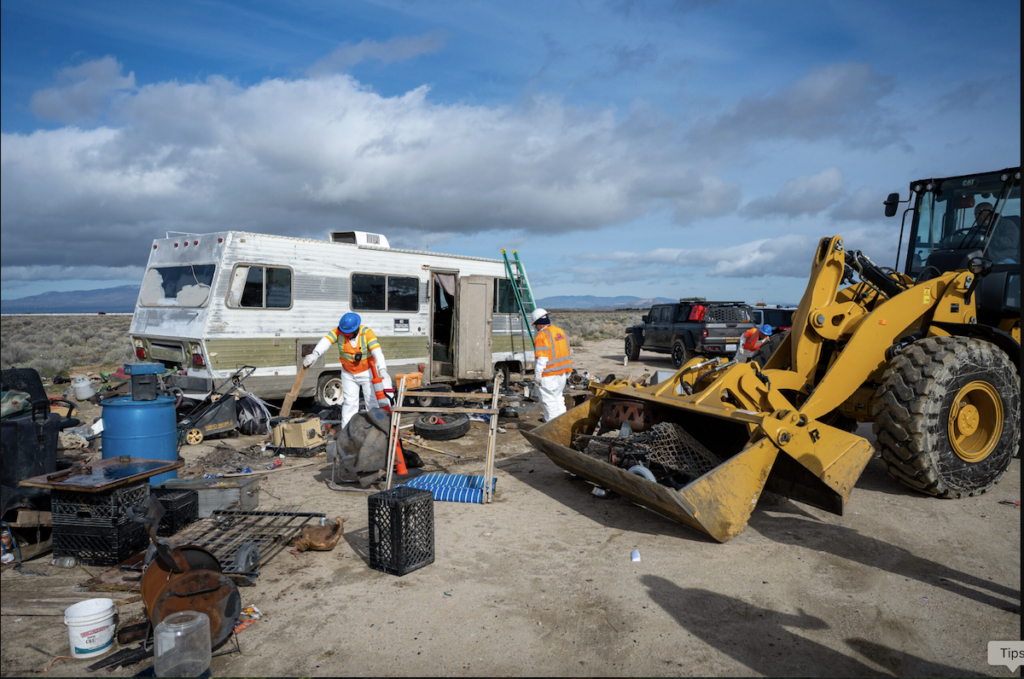
A cleanup crew clears an RV set to be towed during a Pathway Home operation in Lancaster on Feb. 11, 2026. The single-day push moved 35 people off an open stretch of Antelope Valley desert and into interim housing. (Photo by Michael Owen Baker / LA County Department of Homeless Services and Housing)"

By Los Angeles County Politics (LACP)

Los Angeles County’s 2026 Point-in-Time Count released last week showed homelessness rising for the first time in two years — up 1.2% countywide and 3.4% within the city of Los Angeles, according to the Los Angeles Homeless Services Authority.

Here’s a breakdown of a few cities and regions across the County.

Antelope Valley and South Bay post the biggest reversals in the county

Los Angeles County Supervisor Kathryn Barger‘s office reported a 37% reduction in unsheltered homelessness across the Antelope Valley, which includes the cities of Palmdale and Lancaster.

The turnaround is even more notable given the region’s recent history: homelessness in the Antelope Valley rose 42% in 2024 alone and had more than doubled since 2018, driven largely by residents priced out of central Los Angeles migrating north in search of cheaper rent.

However, the region saw a 33% decline in 2025, and this year’s 37% drop in unsheltered homelessness means the region has now posted two consecutive years of major improvement after several years running the worst homelessness trajectory in the county.

The county’s Department of Homeless Services and Housing credits three specific, sustained interventions for the Antelope Valley’s turnaround: the Pathway Home encampment resolution program, Project Homekey interim and permanent supportive housing — including a dedicated Homekey project for families in Lancaster — and intensive street outreach.

A nearly identical story played out in the South Bay.

The county’s Service Planning Area 8 — Hawthorne, Inglewood and surrounding South Bay cities — saw a 12% overall reduction in homelessness and an 8% decrease in unsheltered homelessness, which the county attributes to the same Pathway Home model deployed in coordination with local jurisdictional partners and the South Bay Cities Council of Governments.

Countywide, the county also reported a 21% reduction in RVs parked on streets, tied to a dedicated Pathway Home RV interim-housing pilot program.

Santa Monica reports steepest municipal decline in the region

Unsheltered homelessness in Santa Monica fell 18.7% this year, the sharpest drop of any individual city with independently released 2026 data.

The city counted 718 people experiencing homelessness total, down from 812 in 2025 — an 11.6% overall decrease — driven almost entirely by fewer people living outdoors. Unsheltered individuals dropped from 475 to 389, and the number of occupied vehicles used as shelter fell nearly 30%, from 84 to 59. The steepest single decline came among people living in vans, which fell from 52 to 34.

City officials credit the Homelessness Strategic Plan adopted in March 2025, which aligned every city department around a single response approach built on prevention, intervention, housing and data. Programs like SaMo Bridge, which diverts people cited for minor offenses into housing and treatment services rather than jail, are also part of the effort.

“This decline reflects what a dedicated system of care can achieve when we meet people where they are and connect them to services right away,” said Aileen Reynolds, Santa Monica’s Director of Housing and Human Services.

Long Beach sees rise in overall count, but fewer people living in vehicles

Long Beach’s 2026 count found an increase of 134 people compared to 2025, a 3.7% rise. Of the total homeless population counted, 2,588 people, or 69.4%, were unsheltered, while 1,141, or 30.6%, were in shelters or interim housing.

“While homelessness remains one of the most pressing challenges for our community, this year’s results show important signs of progress,” said Long Beach Mayor Rex Richardson. “More people are accessing shelter, and fewer people are experiencing unsheltered homelessness. However, the homeless count still increased by 134 people.”

One concrete bright spot is the number of people sleeping in vehicles dropped from 1,008 in 2025 to 783 in 2026, a decline the city links in part to a municipal ordinance restricting the use of vehicles for habitation or camping on public streets.

Pasadena posts modest overall decrease, but more people end up in shelters

Pasadena counted 577 people experiencing homelessness on the night of its 2026 count, a 1% decrease from 2025. The improvement is concentrated entirely in unsheltered homelessness, which fell 6%, while the number of people in shelters rose 7%.

Pasadena’s count is administered independently by the Pasadena Partnership to End Homelessness rather than LAHSA, and the city released its results in June, ahead of the broader countywide LAHSA report.

Santa Clarita & Torrance hold relatively steady

Santa Clarita’s 2026 count found 90 individuals sheltered, based on data from local service providers, alongside a visual count of 39 unsheltered individuals and 85 total “dwellings” — cars, vans, RVs, tents and makeshift shelters — sheltering people locally.

In Torrance, the number of unsheltered individuals rose only slightly, from 50 to 51, while improvised dwellings — tents, cars, vans, RVs and makeshift shelters — fell from 134 to 124.

“These results reflect the dedication of our City staff and community partners who work every day to connect people experiencing homelessness with housing and supportive services, including our Street Outreach Team, the Community Lead Officers of the Torrance Police Department, and our interim housing site operated by Harbor Interfaith Services,” said Torrance Mayor Sharon Kalani.


Leave a Reply

Your email address will not be published. Required fields are marked *

This site uses Akismet to reduce spam. Learn how your comment data is processed.

  • Latest
  • Comments
  • Trending

By Los Angeles County Politics (LACP)

Los Angeles County’s 2026 Point-in-Time Count released last week showed homelessness rising for the first time in two years — up 1.2% countywide and 3.4% within the city of Los Angeles, according to the Los Angeles Homeless Services Authority.

Here’s a breakdown of a few cities and regions across the County.

Antelope Valley and South Bay post the biggest reversals in the county

Los Angeles County Supervisor Kathryn Barger‘s office reported a 37% reduction in unsheltered homelessness across the Antelope Valley, which includes the cities of Palmdale and Lancaster.

The turnaround is even more notable given the region’s recent history: homelessness in the Antelope Valley rose 42% in 2024 alone and had more than doubled since 2018, driven largely by residents priced out of central Los Angeles migrating north in search of cheaper rent.

However, the region saw a 33% decline in 2025, and this year’s 37% drop in unsheltered homelessness means the region has now posted two consecutive years of major improvement after several years running the worst homelessness trajectory in the county.

The county’s Department of Homeless Services and Housing credits three specific, sustained interventions for the Antelope Valley’s turnaround: the Pathway Home encampment resolution program, Project Homekey interim and permanent supportive housing — including a dedicated Homekey project for families in Lancaster — and intensive street outreach.

A nearly identical story played out in the South Bay.

The county’s Service Planning Area 8 — Hawthorne, Inglewood and surrounding South Bay cities — saw a 12% overall reduction in homelessness and an 8% decrease in unsheltered homelessness, which the county attributes to the same Pathway Home model deployed in coordination with local jurisdictional partners and the South Bay Cities Council of Governments.

Countywide, the county also reported a 21% reduction in RVs parked on streets, tied to a dedicated Pathway Home RV interim-housing pilot program.

Santa Monica reports steepest municipal decline in the region

Unsheltered homelessness in Santa Monica fell 18.7% this year, the sharpest drop of any individual city with independently released 2026 data.

The city counted 718 people experiencing homelessness total, down from 812 in 2025 — an 11.6% overall decrease — driven almost entirely by fewer people living outdoors. Unsheltered individuals dropped from 475 to 389, and the number of occupied vehicles used as shelter fell nearly 30%, from 84 to 59. The steepest single decline came among people living in vans, which fell from 52 to 34.

City officials credit the Homelessness Strategic Plan adopted in March 2025, which aligned every city department around a single response approach built on prevention, intervention, housing and data. Programs like SaMo Bridge, which diverts people cited for minor offenses into housing and treatment services rather than jail, are also part of the effort.

“This decline reflects what a dedicated system of care can achieve when we meet people where they are and connect them to services right away,” said Aileen Reynolds, Santa Monica’s Director of Housing and Human Services.

Long Beach sees rise in overall count, but fewer people living in vehicles

Long Beach’s 2026 count found an increase of 134 people compared to 2025, a 3.7% rise. Of the total homeless population counted, 2,588 people, or 69.4%, were unsheltered, while 1,141, or 30.6%, were in shelters or interim housing.

“While homelessness remains one of the most pressing challenges for our community, this year’s results show important signs of progress,” said Long Beach Mayor Rex Richardson. “More people are accessing shelter, and fewer people are experiencing unsheltered homelessness. However, the homeless count still increased by 134 people.”

One concrete bright spot is the number of people sleeping in vehicles dropped from 1,008 in 2025 to 783 in 2026, a decline the city links in part to a municipal ordinance restricting the use of vehicles for habitation or camping on public streets.

Pasadena posts modest overall decrease, but more people end up in shelters

Pasadena counted 577 people experiencing homelessness on the night of its 2026 count, a 1% decrease from 2025. The improvement is concentrated entirely in unsheltered homelessness, which fell 6%, while the number of people in shelters rose 7%.

Pasadena’s count is administered independently by the Pasadena Partnership to End Homelessness rather than LAHSA, and the city released its results in June, ahead of the broader countywide LAHSA report.

Santa Clarita & Torrance hold relatively steady

Santa Clarita’s 2026 count found 90 individuals sheltered, based on data from local service providers, alongside a visual count of 39 unsheltered individuals and 85 total “dwellings” — cars, vans, RVs, tents and makeshift shelters — sheltering people locally.

In Torrance, the number of unsheltered individuals rose only slightly, from 50 to 51, while improvised dwellings — tents, cars, vans, RVs and makeshift shelters — fell from 134 to 124.

“These results reflect the dedication of our City staff and community partners who work every day to connect people experiencing homelessness with housing and supportive services, including our Street Outreach Team, the Community Lead Officers of the Torrance Police Department, and our interim housing site operated by Harbor Interfaith Services,” said Torrance Mayor Sharon Kalani.