



Newsom Unveils $349.9 Billion FY 2026-27 Revised Budget

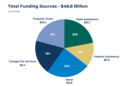
California Gov. Gavin Newsom yesterday unveiled a revised $349.9 billion state budget proposal for fiscal year 2026-27 that he says fully eliminates California’s projected deficit through July 2028 while maintaining strong reserves and protecting core services.
The revised spending plan delivers a $1.8 billion reduction in General Fund spending and projects zero deficit for both this budget year and next, with no structural deficit through July 2028. The budget was boosted in part by an unexpected $16.8 billion increase in tax revenue, largely attributed to the stock market success of artificial intelligence companies, according to the Los Angeles Times.
“California is proof that fiscal discipline and progressive values go hand in hand. We’re balancing the budget, eliminating the deficit, cutting spending, and building reserves — all while protecting healthcare, education, and essential services for Californians,” said Newsom.
Among the budget’s major investments: a $300 million commitment to protect healthcare affordability following the Trump administration’s failure to renew Affordable Care Act subsidies; a record $2.4 billion ongoing increase in special education funding; a $500 million investment to expand literacy and math support in high-need schools; a new $100 million disaster rebuilding fund to help wildfire survivors; and a 50% tax cut for hundreds of thousands of new small businesses through lower LLC fees.
To strengthen the state’s long-term position, the budget deposits $9.7 billion into the state’s Surplus Holding Account and maintains nearly $30 billion in combined reserves — a 30% increase since Newsom took office.
Barger Welcomes Wildfire Rebuilding Fund, Calls for Clear Guidance to Survivors

LA County Supervisor Kathryn Barger (R-Palmdale, Lancaster, Santa Clarita, San Marino, Pasadena, La Cañada Flintridge, portions of the San Gabriel Valley) welcomed the governor’s proposed $100 million Disaster Rebuilding Fund as part of the revised state budget.
Barger said this allocation is an encouraging sign for Eaton Fire survivors, and also called on the state to deliver clear and timely guidance on how to access it.
“I appreciate Governor Newsom proposing a new $100 million Disaster Rebuilding Fund to help wildfire survivors access the financial tools they need to move forward. Many Eaton Fire survivors are under enormous pressure and strain right now, navigating rising rebuilding costs, insurance payouts that fall far short of what it actually takes to rebuild, and FEMA assistance caps that leave significant gaps uncovered,” said Barger.
Barger noted that while the funding would not provide direct cash assistance to homeowners, it could facilitate access to private financing through an interest rate buy-down program and a loan loss guarantee program that would encourage lenders to finance rebuilding projects — tools she said could make a meaningful difference for families who otherwise lack access to rebuilding capital.
“If the Legislature approves this budget proposal, I will be looking to the state to provide timely and clear guidance so survivors fully understand how these resources can support their rebuilding efforts and what options will be available to them,” Barger said. “Recovery after a disaster is never easy, and there is still more work ahead. But every effort to expand access to rebuilding support helps ease the burden on survivors and brings families one step closer to returning home.”
Chu, Sánchez Lead Bipartisan Demand for Answers on Taiwan’s WTO Exclusion

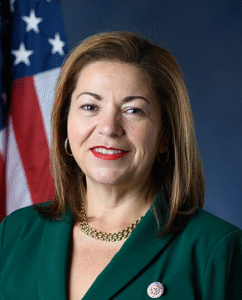
U.S. Rep. Judy Chu (D-Pasadena, Alhambra, Monterey Park, San Gabriel, Temple City, Arcadia) and U.S. Rep. Linda T. Sánchez (D-Whittier, Norwalk, Montebello, Pico Rivera, Rowland Heights, Santa Fe Springs) this week led a bipartisan group of 25 House members in demanding answers from the World Trade Organization (WTO) over Taiwan’s effective exclusion from the international body’s 14th Ministerial Conference in Cameroon.
The letter comes at a particularly fraught moment in U.S.-China relations. President Trump arrived in Beijing on Wednesday for a high-stakes two-day summit with Chinese President Xi Jinping — his first visit to China since 2017 — with Taiwan squarely on the agenda.
The WTO dispute that prompted the Chu-Sánchez letter adds a new dimension to that tension. Taiwan was effectively forced to choose between participating in the Cameroon ministerial conference under the designation “Taiwan, Province of China” and not participating.
The members told WTO Director-General Okonjo-Iweala that forcing Taiwan’s delegates into such a choice is an improper infringement on the island’s rights as a full WTO member.
“It is an improper infringement of Taiwan’s right as a full WTO Member to force its delegates to choose between entering Cameroon for the Ministerial Conference on visas using the nomenclature ‘Taiwan, Province of China’ — which implies that Taiwan is not a WTO Member in its own right — or missing the Ministerial Conference altogether,” the members wrote.
The letter was also signed by Rep. Adrian Smith (R-NE), the Trade Subcommittee Chairman, giving the effort a bipartisan imprimatur. Sánchez serves as the Ways and Means Trade Subcommittee Ranking Member.
Bass Breaks Ground on East Hollywood Tiny Home Village

Los Angeles Mayor Karen Bass this week joined Councilmember Hugo Soto-Martínez and nonprofit partners to break ground on a new tiny home village in East Hollywood that will provide interim housing for more than 50 unhoused Angelenos, including 10 beds dedicated to transitional-age youth.
The project, located on Sierra Vista Avenue, is part of a broader citywide effort supported by a $33 million investment from Governor Newsom and the State of California to create new tiny homes across Los Angeles. The Sierra Vista village is expected to open in early 2027.
Bass said the project reflects her roots as an emergency room physician and her firsthand experience with the human toll of street homelessness.
“These tiny homes will provide safe, stable interim housing for more than 50 of our unhoused neighbors. But this is about more than four walls and a roof — it is about dignity, and giving people a real chance to start again,” Bass said.
Soto-Martínez acknowledged the city still has a long way to go.
“Right now, Los Angeles only has enough interim housing capacity for about one-third of the people living on our streets. That’s unacceptable, which is why we’ve expanded our interim housing stock by more than 25% since taking office,” Soto-Martínez said.
He added that breaking ground on 51 new beds amid government funding cuts at every level required extraordinary determination and creativity from his team and service providers.