



Brownley demands DHS stop detaining immigrant DV survivors who report abuse

U.S. Rep. Julia Brownley (D – Westlake Village, Calabasas, Agoura Hills) joined 34 Democratic Women’s Caucus colleagues in a letter to Department of Homeland Security Secretary Markwayne Mullin this week, demanding the immediate reinstatement of protections for immigrant survivors of domestic violence.
The letter follows a pattern of ICE detaining women who came forward to report abuse, including a mother of two who was detained after testifying against her ex-boyfriend for choking her until she lost consciousness and then raping her.
“Your Department is punishing victims rather than perpetrators, which contradicts your Department and the President’s stated priority to keep our communities safe and get violent offenders off our streets,” the lawmakers wrote to Secretary Mullin. “Your policies are instead protecting violent offenders, leaving many women vulnerable, scared, and with their safety at real risk.”
According to data cited in the letter, immigrant women experience intimate partner violence at a rate of 49% — three times the national average — in part because abusers exploit survivors’ immigration status to prevent them from seeking help.
In 2025, 75.6% of advocates reported that immigrant survivors they serve have concerns about contacting police, 70.3% reported concerns about going to court, and 50% reported that survivors chose not to report their abuser out of fear.
“Effective enforcement depends on survivors being able to safely report crime. Congress created survivor-based protections to support law enforcement and improve public safety. A victim-centered approach strengthens enforcement, increases accountability, and makes us all safer,” the lawmakers wrote.
Friedman demands fed investigation into cyberattack that compromised 275 million users
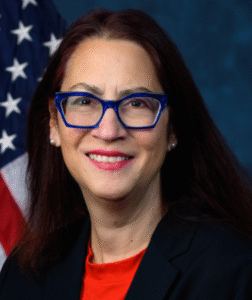
U.S. Rep. Laura Friedman (D – Burbank, Glendale, Pasadena) joined Democratic colleagues in calling on the Department of Justice and Department of Education to launch a full investigation into a cyberattack that compromised the data of 275 million users across 9,000 schools during final exams.
Specifically, the cyberattack targeted Instructure and its subsidiary Canvas — a widely used online learning platform serving millions of students, educators, and institutions nationwide.
“The last thing our parents and students need to worry about when we’re in the midst of finals and graduating is wondering whether or not their personal information has been compromised,” said Friedman. “I’m joining my colleagues to call for a robust investigation of this breach and more cybersecurity resources for our schools, because with so much of our children’s information online, we can’t protect them with outdated security.”
The attack hit particularly close to home in Friedman’s district — Glendale Community College was among the 9,000 institutions affected. The timing of finals week disrupted students’ access to coursework at a critical moment in the academic calendar and raised serious concerns about the security of students’ and faculty members’ personal data.
The letter calls for expanded cybersecurity resources for schools alongside the federal investigation.
Zbur bill stopping data centers from shifting energy costs moves forward

Assemblymember Rick Chavez Zbur (D – Hollywood, Santa Monica, Pacific Palisades, Malibu) last week saw the Assembly pass his legislation (AB 2383) requiring the California Public Utilities Commission (CPUC) to establish a new electricity customer classification for large energy users such as data centers, ensuring that the enormous costs of serving these facilities are not quietly shifted onto residential customers and small businesses.
The measure comes as the California Energy Commission projects statewide peak electricity demand could exceed 66 gigawatts by 2040, with data centers alone accounting for approximately 6.7 gigawatts of new demand — roughly equivalent to the electricity consumption of more than 4 million California households.
“As California continues leading the world in innovation and artificial intelligence, we must make sure working families and small businesses are not left footing the bill for the enormous energy demands of large-scale data centers,” Zbur said. “AB 2383 ensures these facilities pay their fair share, protects ratepayers from cost shifts, and helps California plan responsibly for the future of our electrical grid.”
Under AB 2383, the CPUC must establish the new large energy user classification by 2028, designed to appropriately assign costs, avoid shifting infrastructure expenses onto other ratepayers, and support grid reliability.
Utilities serving these facilities will also be required to enter into long-term service agreements with large energy users to ensure financial responsibility remains with the facilities driving the demand.
The bill now moves to the Senate.
Court Watch: Hochman wins conviction against man who murdered two in downtown LA
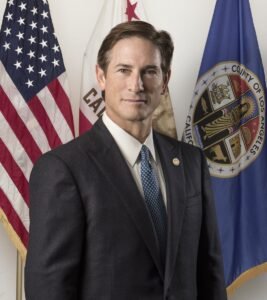
Los Angeles County District Attorney Nathan Hochman announced yesterday that a jury convicted a 41-year-old man on two counts of first-degree murder, among other charges, for a two-day shooting spree in April 2024 that left two unhoused men dead and a third critically wounded on the streets of downtown Los Angeles.
Clifford Chaun Loyer armed himself with a stolen .380 semi-automatic handgun on April 24 and 25, 2024, and shot three unhoused men in the head — killing two and leaving a third with a bullet lodged in his neck. The surviving victim, despite his injury, took the witness stand and testified against Loyer at trial.
“Over two days in April 2024, Clifford Chaun Loyer armed himself with a stolen handgun and hunted human beings on the streets of downtown Los Angeles,” Hochman said. “He targeted three unhoused individuals, shooting each of them in the head and killing two. This case shows exactly why people who commit acts of extreme violence must be taken off our streets before they can claim more victims. The surviving victim displayed extraordinary courage. With a bullet still lodged in his neck, he took the witness stand and testified about what happened to him. His testimony was instrumental in securing justice.”
Loyer faces life in prison without the possibility of parole. He is scheduled to be sentenced on June 26.
Deputy District Attorneys Natalie Adomian and Elizabeth French of the Fraud and Corruption Prosecution Division prosecuted the case. The Los Angeles Police Department investigated.