



Barger and Horvath Rescue Fire Survivors From Red Tape; Zbur Wins Back Santa Monica’s Coast; Schiavo Scores Landfill Cash; Friedman Tackles Housing Costs

Barger, Horvath build a single front door for fire survivors 

LA County Supervisor Kathryn Barger
LA County Supervisor Lindsey P. Horvath

Los Angeles County Supervisors Kathryn Barger (R – Palmdale, Lancaster, Santa Clarita, San Marino, Pasadena, La Cañada Flintridge, portions of the San Gabriel Valley) and Lindsey P. Horvath (D – Western Los Angeles and San Fernando Valley, including Pacoima, Panorama City, Santa Monica, Beverly Hills, West Hollywood, Calabasas, Malibu, Sylmar) won unanimous Board approval yesterday for their motion directing the county to build a single, coordinated front door for homelessness prevention services, with Eaton and Palisades fire survivors.

The motion came after the nonprofit Department of Angels’ latest Community Voices: LA Fire Recovery Report found that two out of three fire survivors remain displaced, and nearly half have already exhausted or will soon exhaust their insurance-funded temporary housing benefits. Forty percent of survivors said they could afford no more than six months of housing on their own, while fewer than one in three believe they can sustain housing for more than a year without continued assistance.

“Fire survivors are doing everything right, including paying their mortgage, finding temporary housing, and waiting for support to catch up to their needs,” said Barger. “We can’t let families lose their housing on top of everything else they’ve already lost. This motion means the County will be proactive. Instead of survivors and seniors on fixed incomes having to chase down a dozen different agencies, we’re building one clear path to help.”

The motion directs the county’s Chief Executive Office to coordinate with the Department of Homeless Services and Housing, the Los Angeles County Development Authority, the Department of Consumer and Business Affairs, and other county departments to build a comprehensive prevention framework. Within 45 days, the county will launch a public Homelessness Prevention Resource webpage covering rental assistance, mortgage relief, legal aid, and utility assistance.

“As families continue rebuilding after the fires and residents across our County face extraordinary housing pressures, we need a prevention system that responds to the realities people are facing today,” said Horvath. “Recovery isn’t one-size-fits-all. We have to make it easier to access support, connect people to the right resources sooner, and coordinate across agencies so temporary setbacks don’t become permanent losses.”

County departments will also develop a Coordinated Homelessness Prevention Referral System with a triage tool for seniors on fixed incomes, transition-age youth, justice-impacted individuals, and fire survivors.

Zbur strikes breakthrough coastal deal with Santa Monica

Assemblymember Rick Chavez Zbur

Assemblymember Rick Chavez Zbur (D – Hollywood, Santa Monica, Pacific Palisades, Malibu) announced a breakthrough agreement yesterday between the City of Santa Monica and the California Coastal Commission that puts the city on a clear path toward a certified Local Coastal Program — ending a permitting standoff that has slowed housing, mobility, and public space projects.

AB 1740, sponsored by the City of Santa Monica and Streets for All, originally proposed exempting projects in urban, transit-rich communities from Coastal Development Permit requirements. Following months of negotiation between Zbur’s office, the Coastal Commission, the city, and environmental, housing, and mobility advocates, the parties reached an agreement that replaces the original exemptions with clear timelines, accountability measures, and reporting requirements.

“AB 1740 started an important conversation about how we protect California’s coastline while ensuring our coastal communities can thrive,” said Zbur. “I’m proud that what began as a proposal to address permitting challenges evolved into a collaborative agreement that preserves California’s gold-standard coastal protections while creating a clear path for Santa Monica to regain local permitting authority.”

Once finalized, the Local Coastal Program will allow most coastal permits to be processed locally by the city rather than requiring separate Coastal Commission approval, while preserving the Commission’s broader oversight of the coastal zone.

The revised bill also creates a statewide streamlined process for approving bike, pedestrian, and transit improvements that expand public access to the coast, with new reporting requirements so the Legislature and public can track which projects are being approved.

Santa Monica Mayor Caroline Torosis called the agreement a real win for the city’s ability to control its own permitting decisions while keeping coastal protections intact.

“As we are welcoming the world to our shores for the 2026 FIFA World Cup, the Super Bowl and the 2028 Olympic and Paralympic Games, this is exactly the kind of progress that will serve both our residents and the millions who visit us each year,” said Torosis.

Schiavo secures Chiquita Canyon Landfill funding 

Assemblywoman Pilar Schiavo

Assemblymember Pilar Schiavo (D – Santa Clarita Valley, Granada Hills, Porter Ranch) announced yesterday that several of her priority investments survived the Legislature’s passage of the 2026-27 state budget bill, including new funding to address the ongoing Chiquita Canyon Landfill crisis.

The budget approves $5.14 million for the state’s continued response to the Chiquita Canyon Landfill, which has plagued Castaic, Val Verde, and surrounding communities. It also rejects Governor Newsom’s proposed $2,000 asset limit for Medi-Cal eligibility, delaying implementation of the test Schiavo argued would punish low-income seniors and disabled residents for maintaining modest savings.

“At a time when families in our community are struggling with high costs, new barriers to accessing healthcare, ongoing health impacts from the Chiquita Canyon Landfill, and cuts to life-saving services, we fought to make sure the state budget includes investments to help with these issues and more,” said Schiavo. “This was a tough budget year, especially with cuts coming from the federal government, but we were able to balance fiscal responsibility with protecting critical programs families depend on.”

The budget maintains $29 billion in state reserves and includes $375 million in new Proposition 36 implementation funding for courts, mental health treatment, and rehabilitation programs.

“No budget is perfect and there is still more work ahead, but today’s vote moves us closer to delivering for our community in the ways they need and deserve,” said Schiavo.

Friedman Launches House Democrats’ Housing Affordability Push

U.S. Rep. Laura Friedman

U.S. Rep. Laura Friedman (D – Burbank, Glendale, Pasadena) co-convened the first meeting of House Democrats’ Housing Affordability Working Group last week alongside Ohio Rep. Emilia Sykes, one of five member-driven groups launched by Democratic Leader Hakeem Jeffries (NY) to confront the rising cost of living for working families nationwide.

The working group brought House Democrats together to begin shaping a caucus-wide housing agenda, focusing on strategies to drive down rents, expand pathways to homeownership, and cut regulatory red tape slowing new construction.

“Nothing is hitting families harder than the cost of housing. I’m committed to making sure people can afford to keep a roof over their heads and give more families the option to purchase a home,” said Friedman. “I’m grateful that Leader Jeffries and our Caucus have trusted me to help lead this effort. Americans need us to cut red tape, build more homes, protect tenants, and deliver real relief.”

The Housing Affordability Working Group is one of five such caucus groups formed under the Democratic Policy and Communications Committee’s broader affordability initiative, alongside parallel efforts on gas and utilities, groceries and goods, caregiving, and healthcare costs.

The group is expected to develop concrete policy and legislative proposals in the coming months as House Democrats build their 2026 economic message around the affordability crisis facing American families.

Members also discussed strengthening tenant protections and addressing the broader homelessness crisis. U.S. Rep. Maxine Waters (D, Inglewood, Hawthorne, Gardena, Watts, South Los Angeles), whose longstanding work on the House Financial Services Committee is expected to help guide the group’s policy direction going forward.

Leave a Reply

Your email address will not be published. Required fields are marked *

This site uses Akismet to reduce spam. Learn how your comment data is processed.

  • Latest
  • Comments
  • Trending

Barger, Horvath build a single front door for fire survivors 

LA County Supervisor Kathryn Barger
LA County Supervisor Lindsey P. Horvath

Los Angeles County Supervisors Kathryn Barger (R – Palmdale, Lancaster, Santa Clarita, San Marino, Pasadena, La Cañada Flintridge, portions of the San Gabriel Valley) and Lindsey P. Horvath (D – Western Los Angeles and San Fernando Valley, including Pacoima, Panorama City, Santa Monica, Beverly Hills, West Hollywood, Calabasas, Malibu, Sylmar) won unanimous Board approval yesterday for their motion directing the county to build a single, coordinated front door for homelessness prevention services, with Eaton and Palisades fire survivors.

The motion came after the nonprofit Department of Angels’ latest Community Voices: LA Fire Recovery Report found that two out of three fire survivors remain displaced, and nearly half have already exhausted or will soon exhaust their insurance-funded temporary housing benefits. Forty percent of survivors said they could afford no more than six months of housing on their own, while fewer than one in three believe they can sustain housing for more than a year without continued assistance.

“Fire survivors are doing everything right, including paying their mortgage, finding temporary housing, and waiting for support to catch up to their needs,” said Barger. “We can’t let families lose their housing on top of everything else they’ve already lost. This motion means the County will be proactive. Instead of survivors and seniors on fixed incomes having to chase down a dozen different agencies, we’re building one clear path to help.”

The motion directs the county’s Chief Executive Office to coordinate with the Department of Homeless Services and Housing, the Los Angeles County Development Authority, the Department of Consumer and Business Affairs, and other county departments to build a comprehensive prevention framework. Within 45 days, the county will launch a public Homelessness Prevention Resource webpage covering rental assistance, mortgage relief, legal aid, and utility assistance.

“As families continue rebuilding after the fires and residents across our County face extraordinary housing pressures, we need a prevention system that responds to the realities people are facing today,” said Horvath. “Recovery isn’t one-size-fits-all. We have to make it easier to access support, connect people to the right resources sooner, and coordinate across agencies so temporary setbacks don’t become permanent losses.”

County departments will also develop a Coordinated Homelessness Prevention Referral System with a triage tool for seniors on fixed incomes, transition-age youth, justice-impacted individuals, and fire survivors.

Zbur strikes breakthrough coastal deal with Santa Monica

Assemblymember Rick Chavez Zbur

Assemblymember Rick Chavez Zbur (D – Hollywood, Santa Monica, Pacific Palisades, Malibu) announced a breakthrough agreement yesterday between the City of Santa Monica and the California Coastal Commission that puts the city on a clear path toward a certified Local Coastal Program — ending a permitting standoff that has slowed housing, mobility, and public space projects.

AB 1740, sponsored by the City of Santa Monica and Streets for All, originally proposed exempting projects in urban, transit-rich communities from Coastal Development Permit requirements. Following months of negotiation between Zbur’s office, the Coastal Commission, the city, and environmental, housing, and mobility advocates, the parties reached an agreement that replaces the original exemptions with clear timelines, accountability measures, and reporting requirements.

“AB 1740 started an important conversation about how we protect California’s coastline while ensuring our coastal communities can thrive,” said Zbur. “I’m proud that what began as a proposal to address permitting challenges evolved into a collaborative agreement that preserves California’s gold-standard coastal protections while creating a clear path for Santa Monica to regain local permitting authority.”

Once finalized, the Local Coastal Program will allow most coastal permits to be processed locally by the city rather than requiring separate Coastal Commission approval, while preserving the Commission’s broader oversight of the coastal zone.

The revised bill also creates a statewide streamlined process for approving bike, pedestrian, and transit improvements that expand public access to the coast, with new reporting requirements so the Legislature and public can track which projects are being approved.

Santa Monica Mayor Caroline Torosis called the agreement a real win for the city’s ability to control its own permitting decisions while keeping coastal protections intact.

“As we are welcoming the world to our shores for the 2026 FIFA World Cup, the Super Bowl and the 2028 Olympic and Paralympic Games, this is exactly the kind of progress that will serve both our residents and the millions who visit us each year,” said Torosis.

Schiavo secures Chiquita Canyon Landfill funding 

Assemblywoman Pilar Schiavo

Assemblymember Pilar Schiavo (D – Santa Clarita Valley, Granada Hills, Porter Ranch) announced yesterday that several of her priority investments survived the Legislature’s passage of the 2026-27 state budget bill, including new funding to address the ongoing Chiquita Canyon Landfill crisis.

The budget approves $5.14 million for the state’s continued response to the Chiquita Canyon Landfill, which has plagued Castaic, Val Verde, and surrounding communities. It also rejects Governor Newsom’s proposed $2,000 asset limit for Medi-Cal eligibility, delaying implementation of the test Schiavo argued would punish low-income seniors and disabled residents for maintaining modest savings.

“At a time when families in our community are struggling with high costs, new barriers to accessing healthcare, ongoing health impacts from the Chiquita Canyon Landfill, and cuts to life-saving services, we fought to make sure the state budget includes investments to help with these issues and more,” said Schiavo. “This was a tough budget year, especially with cuts coming from the federal government, but we were able to balance fiscal responsibility with protecting critical programs families depend on.”

The budget maintains $29 billion in state reserves and includes $375 million in new Proposition 36 implementation funding for courts, mental health treatment, and rehabilitation programs.

“No budget is perfect and there is still more work ahead, but today’s vote moves us closer to delivering for our community in the ways they need and deserve,” said Schiavo.

Friedman Launches House Democrats’ Housing Affordability Push
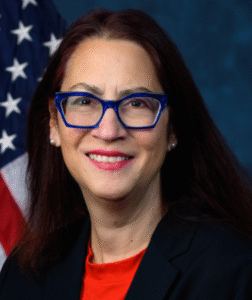
U.S. Rep. Laura Friedman

U.S. Rep. Laura Friedman (D – Burbank, Glendale, Pasadena) co-convened the first meeting of House Democrats’ Housing Affordability Working Group last week alongside Ohio Rep. Emilia Sykes, one of five member-driven groups launched by Democratic Leader Hakeem Jeffries (NY) to confront the rising cost of living for working families nationwide.

The working group brought House Democrats together to begin shaping a caucus-wide housing agenda, focusing on strategies to drive down rents, expand pathways to homeownership, and cut regulatory red tape slowing new construction.

“Nothing is hitting families harder than the cost of housing. I’m committed to making sure people can afford to keep a roof over their heads and give more families the option to purchase a home,” said Friedman. “I’m grateful that Leader Jeffries and our Caucus have trusted me to help lead this effort. Americans need us to cut red tape, build more homes, protect tenants, and deliver real relief.”

The Housing Affordability Working Group is one of five such caucus groups formed under the Democratic Policy and Communications Committee’s broader affordability initiative, alongside parallel efforts on gas and utilities, groceries and goods, caregiving, and healthcare costs.

The group is expected to develop concrete policy and legislative proposals in the coming months as House Democrats build their 2026 economic message around the affordability crisis facing American families.

Members also discussed strengthening tenant protections and addressing the broader homelessness crisis. U.S. Rep. Maxine Waters (D, Inglewood, Hawthorne, Gardena, Watts, South Los Angeles), whose longstanding work on the House Financial Services Committee is expected to help guide the group’s policy direction going forward.