


Feldstein Soto lauds court win for LA’s Sanctuary City Ordinance

Los Angeles City Attorney Hydee Feldstein Soto yesterday lauded the U.S. District Court’s grant of the city’s motion to dismiss the federal government’s challenge to LA’s 2024 Sanctuary City Ordinance, which bars city resources and personnel — including the LAPD — from cooperating with federal immigration enforcement.
The ordinance, formally titled “Prohibition of the Use of City Resources for Federal Immigration Enforcement”, prevents city property, personnel, and data from being used to assist immigration authorities or share information about an individual’s immigration status.
In its June 20 order, the court dismissed the federal government’s complaint, finding it failed to plausibly allege the ordinance violates intergovernmental immunity, and ruled the government’s preemption arguments insufficient, noting the federal statutes cited did not support its claims.
“This order reinforces the well-established principle that local governments have the authority to decide how to use their personnel and resources,” said Feldstein Soto. “The goal of this ordinance, and of LAPD’s immigration-related policies — which date back to Special Order 40 in the 1970s — is to encourage victims of and witnesses to crime to feel safe coming forward to seek help from LAPD regardless of their immigration status. It does not obstruct or impede lawful federal immigration enforcement operations.”
The ruling is the latest chapter in a broader confrontation between Feldstein Soto’s office and the Trump administration.
Since immigration raids and roundups erupted across Los Angeles on June 6, 2025, Feldstein Soto has emerged as a national leader challenging the administration on immigration enforcement, the deployment of the National Guard, and the threatened loss of $500 million in federal grants to the city, including at least $56 million in emergency funds.
Hochman-sponsored anti-labor trafficking bill heads to Newsom’s desk
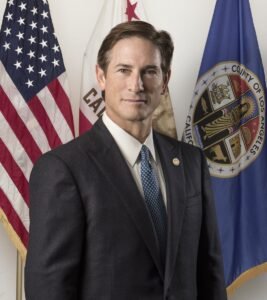
Los Angeles County District Attorney Nathan Hochman announced Thursday that AB 1583, legislation his office sponsored to close jurisdictional loopholes in labor trafficking and wage theft prosecutions, passed the California State Senate by a unanimous 38-0 vote and now awaits Governor Gavin Newsom’s signature.
The bill establishes clear jurisdictional authority allowing prosecutors to bring labor trafficking and wage theft cases in the county where the victim resided at the time of the crime, where the employment agreement was made, where any portion of the work was performed, or where the offending business operated.
“AB 1583 gives prosecutors the tools they need to hold labor traffickers and wage thieves accountable, regardless of how many county lines they cross in the commission of these crimes,” said Hochman. “Too often, workers are harmed by schemes that span multiple jurisdictions, creating unnecessary barriers to effective prosecution. AB 1583 removes those barriers.”
Hochman credited Deputy District Attorney Tamar Tokat’s work advancing the bill through the Legislature and urged Newsom to sign it, saying doing so would strengthen worker protections statewide. The Sonoma County District Attorney’s Office co-sponsored the measure, which passed both legislative houses unanimously with bipartisan support throughout.
Sherman Calls Trump’s $300 Billion Iran Deal a “Betrayal”

U.S. Rep. Brad Sherman (D – Sherman Oaks, Encino, Woodland Hills, Northridge, and the San Fernando Valley, including Malibu and Pacific Palisades), Ranking Member of the House Foreign Affairs Subcommittee on the Middle East and North Africa, issued a forceful statement condemning President Trump’s agreement to provide $300 billion in “reconstruction funds” to Iran and lift U.S. sanctions as part of a deal ending recent hostilities.
Sherman, who has authored numerous Iran sanctions measures, argued the agreement squanders one of the most effective tools the United States has had for constraining the regime. He framed the deal as a one-sided giveaway that secures no meaningful commitments from Tehran in return.
“Since 1979, the Islamic Republic of Iran has waged a campaign of terror against the world and its own people,” said Sherman. “President Trump’s agreement to provide the government of the Islamic Republic of Iran with $300 billion in so-called ‘reconstruction funds,’ lift U.S. sanctions, and pressure Israel into standing down against Hezbollah is a betrayal — of the American service members who gave their lives, of decades of bipartisan consensus backed by the American people, and of the allies who have bled alongside us. It extracts staggering concessions from the United States while securing little in return: no commitment that Iran will abandon its terrorist proxies or respect international law in the Strait of Hormuz.”
Sherman warned the agreement risks reviving Hamas and Hezbollah at the precise moment American and allied forces had significantly weakened them, restarting a cycle of regional conflict the sanctions regime had helped suppress.
Lieu Introduces Bill to Microchip Shelter Pets

U.S. Rep. Ted Lieu (D – Westside Los Angeles and South Bay, including Beverly Hills, Santa Monica, Culver City, Manhattan Beach, Redondo Beach, Torrance, Rancho Palos Verdes) last week introduced the Keeping Pets and Families Together Act, legislation that would establish a USDA program to fund the microchipping of dogs and cats in animal shelters nationwide.
Lieu said the idea was inspired by his own family’s experience microchipping their rescue dog, Abbot.
“When my family adopted our rescue dog, Abbot, our lives changed for the better. The thought of losing our furry family member is unthinkable, which is why I’m so glad we were able to microchip Abbot,” said Lieu. “I’m pleased to introduce The Keeping Pets and Families Together Act to fund microchipping services in animal shelters. With this legislation, we can help lost pets find their ways back home.”
According to the American Humane Association, roughly one-third of all pets become lost at some point in their lives, and many end up in shelters, while an American Veterinary Medical Association study found nearly three-fourths of lost or stolen animals with microchips are eventually located and reunited with their families.
The bill is endorsed by the American Veterinary Medical Association, Humane World for Animals, the ASPCA, the Animal Legal Defense Fund, and Social Compassion in Legislation.