


By Stephen Witt, Los Angeles County Politics
Los Angeles County Supervisor Kathryn Barger (R-Palmdale, Lancaster, Santa Clarita, San Marino, Pasadena, La Cañada Flintridge, portions of the San Gabriel Valley) wants abused animals off the docket and into homes — even if the person who hurt them can’t be bothered to show up to court.
Barger won unanimous Board support yesterday for a motion backing Assembly Bill 2344, legislation that would allow for quicker pet adoption for animals stuck in county shelters while their former or current owners are being tried in court on animal cruelty charges.
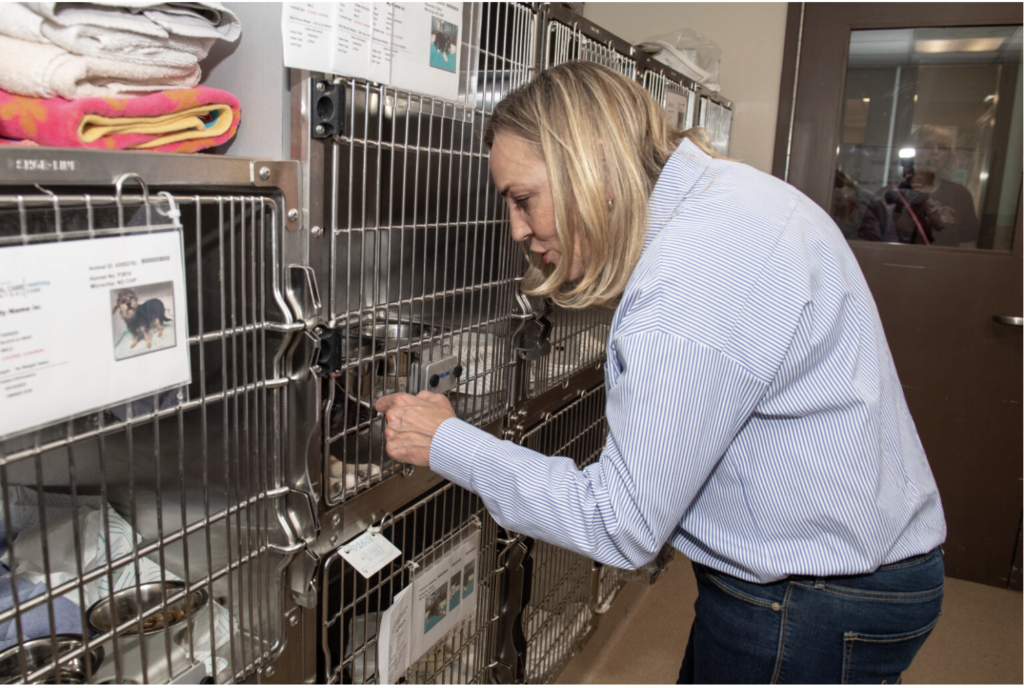
Currently, pooches or kitties seized in these cases stay in county shelters as evidence while the criminal case works through court — sometimes for months or years, especially if the defendant skips their court dates and the case stalls out.

“Animals that have already endured unimaginable cruelty should not have to spend months or years waiting in a shelter because a criminal case is delayed,” said Barger.
AB 2344 gives shelters a shortcut: if the defendant doesn’t show up, the shelter can ask a judge to grant permanent custody of the animals right then, instead of waiting indefinitely for a case that may never move.
Los Angeles County’s Department of Animal Care and Control (DACC) impounded 38,790 animals in fiscal year 2025-26, according to county data, with dogs making up 58% of intakes. The department places, adopts out, returns or releases about 69% of animals in its care; roughly 30% are euthanized.
Barger’s office says one ongoing cruelty case alone has kept 48 animals in county custody since August 2024, awaiting trial, at a cost of more than $500,000 in housing expenses.
At roughly $105 a day to house each pooch or kitty in county care, delayed cases compound quickly — a dynamic Barger’s district has confronted directly.
In March, DACC executed the largest animal seizure in county history at a Lake Hughes property in the Antelope Valley, removing approximately 250 pooches and 66 kitties from what officials described as a hoarding operation, straining shelter capacity for months afterward.
Now that the Board’s vote is final, the county’s Sacramento legislative team will begin formally advocating for AB 2344’s passage.
If signed into law, the bill’s backers say the savings freed up by faster forfeiture proceedings could be redirected toward shelter operations, veterinary care and adoption programs. It could also help fund programs like Pets Are Family, which provides emergency veterinary vouchers and free pet food to keep struggling owners from surrendering animals in the first place.
“This legislation recognizes that these animals deserve the chance to heal in loving homes as quickly as possible. It also reflects responsible stewardship of taxpayer resources by reducing unnecessary shelter costs and freeing up capacity to care for other vulnerable animals,” said Barger.