


LA Lawmakers on the Move: Forgotten Heroes Get a Courthouse, A 140-Year-Old Massacre Gets Its Due, Pop-Ups Beat City Hall, Bass Builds 30,000 Homes

Gomez speaks at federal courthouse named after a Latina
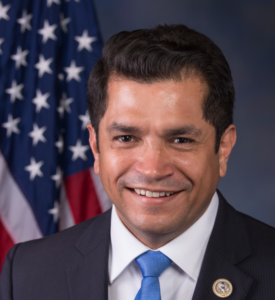
U.S. Rep. Jimmy Gomez

U.S. Rep. Jimmy Gomez (D – Downtown Los Angeles, Echo Park, Silver Lake) was the driving force behind one of the most historically resonant moments in Downtown Los Angeles this week — the official renaming of the federal courthouse at 350 W. First Street as the Felicitas and Gonzalo Méndez U.S. Courthouse, making it the first federal courthouse in American history named after a Latina.

The Méndez family, along with the Ramirez, Estrada, Guzman, and Palomino families, fought and won the landmark 1947 federal court case Méndez v. Westminster, which ended school segregation in California and helped lay the legal and moral foundation for Brown v. Board of Education seven years later.

Gomez secured passage of the courthouse-renaming legislation in 2024 as part of the Thomas R. Carper Water Resources Development Act, which was signed into law by President Biden.

“Today, we gathered to honor families whose bravery transformed our nation,” said Gomez. “For too long, their story was overlooked in our history books, even though their fight helped lay the foundation for one of the most important civil rights victories in American history. That is why I was proud to lead the legislation in Congress to rename this courthouse in honor of Felicitas and Gonzalo Méndez.”

For Gomez, the moment was personal. As the son of Mexican immigrants and a member of the Congressional Hispanic Caucus, he tied the Méndez family’s fight directly to his own.

“Today is a recognition of people being at the center of changing our laws and the course of our nation’s history,” he said. “When Felicitas and Gonzalo Méndez and four other courageous families challenged segregation in California schools more than seven decades ago, they not only stood up for their own children, but for me, my three-year-old son, and generations of students of color.”

Chu introduces resolution recognizing 1885 Rock Springs Chinese Massacre

U.S. Rep. Judy Chu

U.S. Rep. Judy Chu (D – Pasadena, San Gabriel Valley), Chair Emerita of the Congressional Asian Pacific American Caucus, introduced a resolution this week formally recognizing the 1885 Rock Springs Chinese Massacre.

On September 2, 1885, in Rock Springs, Wyoming, a mob of more than 200 white miners attacked the town’s Chinese community — murdering at least 28 Chinese miners, burning Chinatown to the ground, and forcing survivors to flee.

The Chinese workers had been brought to America under harsh and exploitative conditions to work in Union Pacific Coal Company mines, paid less than white workers, excluded from labor unions, and subjected to discrimination fueled by the Chinese Exclusion Act of 1882 — the first federal law in American history to ban immigration based on race and nationality. None of the perpetrators was ever held accountable.

“The Rock Springs Chinese Massacre is one of the most horrific and shameful acts of anti-Asian violence in our nation’s history,” said Chu. “Chinese immigrant workers helped build America’s railroads, mining industries, and critical infrastructure, yet they were exploited, dehumanized, and treated as scapegoats for America’s economic problems. That is why I am proud to lead this resolution to preserve the truth of what happened in Rock Springs, honor the victims and survivors, and ensure future generations understand this painful chapter of our history so that hatred like this is never repeated.”

The resolution carries particular resonance in Los Angeles, which has its own dark chapter in this history. On October 24, 1871 — fourteen years before Rock Springs — a mob killed at least 18 Chinese immigrants in what ranks as one of the largest mass lynchings in American history. As with Rock Springs, justice was never served.

The City of Los Angeles aims to unveil the first site commemorating its own dark chapter of Anti-Chinese violence this year with 18 sculptures inspired by Banyan tree trunks, representing each known victim.

The 1871 Memorial Project is a multi-site installation, and the remaining sites are being funded separately with a target completion date tied to the 2028 Los Angeles Olympic and Paralympic Games.

González moves two downtown recovery bills to Senate 

Assemblymember Mark Gonzalez

Assemblymember Mark González (D – Downtown Los Angeles, Boyle Heights) advanced two bills off the Assembly floor this week aimed at reversing the bureaucratic obstacles that he says are strangling small businesses and emptying storefronts across California’s downtown corridors.

“Bureaucratic nonsense and chronic delays are the difference between a vibrant business and another shuttered storefront,” González said.

The first bill, AB 1679, would require cities and counties to create a Temporary Commercial Activation permit specifically designed for pop-up businesses — allowing temporary retail or service businesses to operate in vacant storefronts for up to 120 days without navigating the maze of permits and approvals currently required.

Pop-up businesses have become a recognized tool for activating vacant commercial spaces and driving foot traffic, but no permit currently exists that fits their needs.

“This bill breaks down the nightmares of navigating complex permits — allowing the pop-ups that bring life and vibrance to our downtowns to access permits faster and for longer durations,” González said. “Because securing a permit shouldn’t need a pop quiz in city law.”

The second bill, AB 2418, would streamline commercial building and retail permit applications by creating firm timelines for local government to review plans and conduct inspections. If those timelines are not met, the bill would allow businesses to hire an approved private plan-checker to expedite approvals.

Both bills now move to the Senate.

Bass reports nearly 30,000 new homes moving forward

LA Mayor Karen Bass

Los Angeles Mayor Karen Bass marked the one-year anniversary of the Citywide Housing Incentive Program (CHIP) this week with a progress report showing nearly 30,000 new homes moving forward across the city.

CHIP, signed into effect by Bass last year with near-unanimous City Council support, was designed to cut red tape and make it faster and more affordable to build homes near jobs, transit stops, and existing neighborhoods.

According to the one-year progress report, nearly 40% of all proposed units will be income-restricted for 99 years, more than half are located in higher-opportunity neighborhoods with better schools and transit access, and 90% of CHIP projects are advancing through a streamlined approval process that reduces delays.

“For decades, Los Angeles failed to build enough housing, and working families have paid the price through soaring rents and astronomical housing costs,” Bass said. “One major step was launching the Citywide Housing Incentive Program, and today nearly 30,000 new homes are moving forward because of it. As Mayor, I will keep doing everything I can to build more housing so our kids and grandkids can still call these communities home.”

Bass said the program has unlocked the capacity to build nearly half a million new homes across Los Angeles in the years ahead.


Leave a Reply

Your email address will not be published. Required fields are marked *

This site uses Akismet to reduce spam. Learn how your comment data is processed.

Gomez speaks at federal courthouse named after a Latina

U.S. Rep. Jimmy Gomez

U.S. Rep. Jimmy Gomez (D – Downtown Los Angeles, Echo Park, Silver Lake) was the driving force behind one of the most historically resonant moments in Downtown Los Angeles this week — the official renaming of the federal courthouse at 350 W. First Street as the Felicitas and Gonzalo Méndez U.S. Courthouse, making it the first federal courthouse in American history named after a Latina.

The Méndez family, along with the Ramirez, Estrada, Guzman, and Palomino families, fought and won the landmark 1947 federal court case Méndez v. Westminster, which ended school segregation in California and helped lay the legal and moral foundation for Brown v. Board of Education seven years later.

Gomez secured passage of the courthouse-renaming legislation in 2024 as part of the Thomas R. Carper Water Resources Development Act, which was signed into law by President Biden.

“Today, we gathered to honor families whose bravery transformed our nation,” said Gomez. “For too long, their story was overlooked in our history books, even though their fight helped lay the foundation for one of the most important civil rights victories in American history. That is why I was proud to lead the legislation in Congress to rename this courthouse in honor of Felicitas and Gonzalo Méndez.”

For Gomez, the moment was personal. As the son of Mexican immigrants and a member of the Congressional Hispanic Caucus, he tied the Méndez family’s fight directly to his own.

“Today is a recognition of people being at the center of changing our laws and the course of our nation’s history,” he said. “When Felicitas and Gonzalo Méndez and four other courageous families challenged segregation in California schools more than seven decades ago, they not only stood up for their own children, but for me, my three-year-old son, and generations of students of color.”

Chu introduces resolution recognizing 1885 Rock Springs Chinese Massacre

U.S. Rep. Judy Chu

U.S. Rep. Judy Chu (D – Pasadena, San Gabriel Valley), Chair Emerita of the Congressional Asian Pacific American Caucus, introduced a resolution this week formally recognizing the 1885 Rock Springs Chinese Massacre.

On September 2, 1885, in Rock Springs, Wyoming, a mob of more than 200 white miners attacked the town’s Chinese community — murdering at least 28 Chinese miners, burning Chinatown to the ground, and forcing survivors to flee.

The Chinese workers had been brought to America under harsh and exploitative conditions to work in Union Pacific Coal Company mines, paid less than white workers, excluded from labor unions, and subjected to discrimination fueled by the Chinese Exclusion Act of 1882 — the first federal law in American history to ban immigration based on race and nationality. None of the perpetrators was ever held accountable.

“The Rock Springs Chinese Massacre is one of the most horrific and shameful acts of anti-Asian violence in our nation’s history,” said Chu. “Chinese immigrant workers helped build America’s railroads, mining industries, and critical infrastructure, yet they were exploited, dehumanized, and treated as scapegoats for America’s economic problems. That is why I am proud to lead this resolution to preserve the truth of what happened in Rock Springs, honor the victims and survivors, and ensure future generations understand this painful chapter of our history so that hatred like this is never repeated.”

The resolution carries particular resonance in Los Angeles, which has its own dark chapter in this history. On October 24, 1871 — fourteen years before Rock Springs — a mob killed at least 18 Chinese immigrants in what ranks as one of the largest mass lynchings in American history. As with Rock Springs, justice was never served.

The City of Los Angeles aims to unveil the first site commemorating its own dark chapter of Anti-Chinese violence this year with 18 sculptures inspired by Banyan tree trunks, representing each known victim.

The 1871 Memorial Project is a multi-site installation, and the remaining sites are being funded separately with a target completion date tied to the 2028 Los Angeles Olympic and Paralympic Games.

González moves two downtown recovery bills to Senate 

Assemblymember Mark Gonzalez

Assemblymember Mark González (D – Downtown Los Angeles, Boyle Heights) advanced two bills off the Assembly floor this week aimed at reversing the bureaucratic obstacles that he says are strangling small businesses and emptying storefronts across California’s downtown corridors.

“Bureaucratic nonsense and chronic delays are the difference between a vibrant business and another shuttered storefront,” González said.

The first bill, AB 1679, would require cities and counties to create a Temporary Commercial Activation permit specifically designed for pop-up businesses — allowing temporary retail or service businesses to operate in vacant storefronts for up to 120 days without navigating the maze of permits and approvals currently required.

Pop-up businesses have become a recognized tool for activating vacant commercial spaces and driving foot traffic, but no permit currently exists that fits their needs.

“This bill breaks down the nightmares of navigating complex permits — allowing the pop-ups that bring life and vibrance to our downtowns to access permits faster and for longer durations,” González said. “Because securing a permit shouldn’t need a pop quiz in city law.”

The second bill, AB 2418, would streamline commercial building and retail permit applications by creating firm timelines for local government to review plans and conduct inspections. If those timelines are not met, the bill would allow businesses to hire an approved private plan-checker to expedite approvals.

Both bills now move to the Senate.

Bass reports nearly 30,000 new homes moving forward

LA Mayor Karen Bass

Los Angeles Mayor Karen Bass marked the one-year anniversary of the Citywide Housing Incentive Program (CHIP) this week with a progress report showing nearly 30,000 new homes moving forward across the city.

CHIP, signed into effect by Bass last year with near-unanimous City Council support, was designed to cut red tape and make it faster and more affordable to build homes near jobs, transit stops, and existing neighborhoods.

According to the one-year progress report, nearly 40% of all proposed units will be income-restricted for 99 years, more than half are located in higher-opportunity neighborhoods with better schools and transit access, and 90% of CHIP projects are advancing through a streamlined approval process that reduces delays.

“For decades, Los Angeles failed to build enough housing, and working families have paid the price through soaring rents and astronomical housing costs,” Bass said. “One major step was launching the Citywide Housing Incentive Program, and today nearly 30,000 new homes are moving forward because of it. As Mayor, I will keep doing everything I can to build more housing so our kids and grandkids can still call these communities home.”

Bass said the program has unlocked the capacity to build nearly half a million new homes across Los Angeles in the years ahead.