


By Los Angeles County Politics
The Los Angeles County Commission on HIV (COH) yesterday sounded the alarm that the Trump administration’s proposed defunding of key federal HIV prevention programs could result in a significant spike in new HIV infections throughout the county — threatening decades of hard-won public health progress.
The dire warning came as part of the commission’s 2025-2026 annual report, submitted to the Los Angeles County Board of Supervisors and covering Ryan White Program Year 35 — March 1, 2025, through February 28, 2026.
“Our County will continue to strengthen this foundation so people remain at the center — even when systems are under strain and the federal government falls short of its responsibility to protect the health and dignity of Americans,” said LA County Supervisor Lindsey P. Horvath (D-Santa Monica, Beverly Hills, West Hollywood, Calabasas, Malibu, Pacoima, Panorama City) in response to the report’s issuance.
At the center of the commission’s concern is the Trump administration’s proposed fiscal year 2026 budget, which would eliminate the Centers for Disease Control (CDC) and Prevention’s entire HIV prevention division and gut the Ryan White HIV/AIDS Program — the federal government’s primary funding vehicle for HIV care and treatment for low-income, uninsured, and underinsured patients.
The proposed cuts total more than $1.5 billion nationally. This includes the proposed elimination of the federal Housing Opportunities for Persons with AIDS (HOPWA) program, which provides rental assistance and housing support to HIV-positive residents throughout Los Angeles County.
The Trump budget would also eliminate Ryan White Part F, which funds dental care, provider training, and community-based research programs.
According to the LA Public Press, after losing $19 million in federal HIV prevention funding, the county terminated contracts with 39 community health providers. A coalition of those providers is urging the Newsom administration to include $60 million in the state budget to cover the shortfall.
Supervisor Holly J. Mitchell (D-Inglewood, Hawthorne, Gardena, Compton, Carson) said the report captures both progress and peril.
“This report highlights the significant strides Los Angeles County has made in the ongoing fight to end the HIV/AIDS epidemic, the challenges we now face as federal funding cuts threaten that progress, and the work that still lies ahead,” Mitchell said.
The county currently records approximately 1,400 new HIV infections per year — a number that public health officials say had been trending downward over the past decade before the funding disruptions hit.
According to the LA Public Press, the county health department estimates that infections could climb to 1,900-2,050 annually if federal prevention funding is fully eliminated.
Estimates and proposed cuts aside, no final federal budget has been enacted. The government is currently operating under a continuing resolution, and the Senate passed a bipartisan bill in July 2025 that would keep Ryan White funding essentially flat. The gap between the House and Senate proposals remains unresolved.
The commission’s annual report also highlighted a year of significant internal restructuring. The commission reduced its membership from 51 to 32 full voting members, streamlined its committee structure, strengthened conflict-of-interest provisions, and clarified term limits.
The commission’s year also included a February 13 consumer resource fair at The California Endowment that drew more than 200 attendees and 60 vendors offering housing assistance, legal aid, mental health services, and benefits enrollment support.
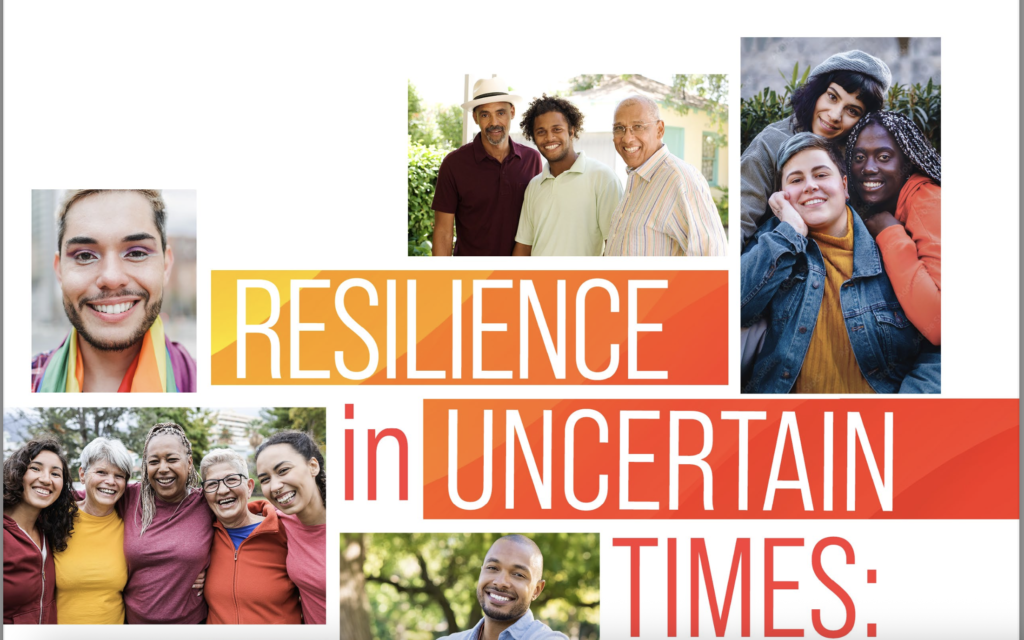
Its annual November conference convened community members, researchers, providers, and policymakers under the theme “Resilience in Uncertain Times.” The commission’s Black Caucus hosted a World AIDS Day town hall on December 5 focused on Black sexual health and the fight for funding.
“As Los Angeles County navigates unprecedented federal cuts and healthcare impacts, the County’s Commission on HIV plays an essential role in uplifting community voices while informing the County on the real challenges that are felt across our most vulnerable residents,” said LA County Supervisor Chair Hilda L. Solis (D-Downtown LA, East LA, Pico-Union, Boyle Heights, El Monte, West Covina, Baldwin Park, Pomona).
Supervisor Janice Hahn (D-Long Beach, San Pedro, Diamond Bar, Whittier, Cerritos, Downey, Torrance, Redondo Beach, Hacienda Heights) said the county has made meaningful progress in how it serves people living with HIV, but acknowledged the challenges that remain.
“I can think of few populations more important to that mission than people living with HIV and those at risk,” Hahn said. “And we could not meet that responsibility without this Commission. It is our eyes and ears.”
Supervisor Kathryn Barger (R-Palmdale, Lancaster, Santa Clarita, San Marino, Pasadena, La Cañada Flintridge, portions of the San Gabriel Valley) praised the commission’s governance reforms and singled out a longtime advocate. “I’m especially proud of Commissioner Jonathan Weedman for his decades of leadership on behalf of HIV and LGBTQ+ communities,” said Barger.
The full report is available at hiv.lacounty.gov.