




Editor’s Note to communications teams: Kindly refrain from reposting old press releases with new dates. We get it that we’re the hacks and you’re the flacks, but doing this builds distrust and does not serve the public or the media well. Please keep your releases timely so we don’t have to spend time flagging them.
Friedman blasts FCC’s Disney/ABC license decision as First Amendment threat
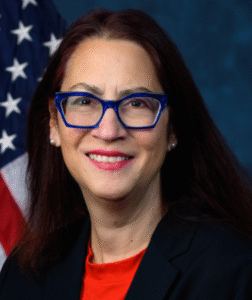
U.S. Rep. Laura Friedman (D – Burbank, Glendale, Hollywood, West Hollywood) sharply condemned the Federal Communications Commission’s (FCC) decision to force an early broadcast license renewal for Disney/ABC yesterday, calling it a direct act of government retaliation against a network that airs critical coverage of the Trump administration.
The FCC action follows Jimmy Kimmel’s April 23 joke on his ABC late-night program in which he quipped that First Lady Melania Trump had “a glow like an expectant widow” — a remark made before an armed man attempted to breach the White House Correspondents’ Dinner on April 25.
Trump posted on Truth Social demanding Kimmel be “immediately fired,” and Melania called the joke “hateful and violent.”
The FCC then ordered Disney’s eight ABC-owned stations — including KABC in Los Angeles — to file for license renewal within 30 days, years ahead of schedule.
“The Trump Administration forcing Disney/ABC to renew its broadcast licenses early is blatant government retaliation against a network that airs critical voices,” Friedman said. “This is the kind of move we condemn when it happens in other countries. It’s happening here now.”
Friedman noted that one FCC Commissioner called the action “the most egregious action this FCC has taken in violation of the First Amendment to date.” She said she is working with congressional colleagues to use every available legislative tool to block the administration from weaponizing federal agencies against the press.
Chu hails House passage of Eaton Fire tax relief bill

U.S. Rep. Judy Chu (D – Pasadena, San Gabriel Valley) is calling on the Senate to quickly pass legislation the House approved Tuesday that would ensure Eaton Fire survivors can receive their settlements from Southern California Edison tax-free, regardless of when those payments arrive.
The Federal Disaster Tax Relief Certainty Act, H.R. 5366, extends an exemption for qualified wildfire relief payments from gross income — closing a gap created when a previous exemption expired December 31, 2025, leaving families already navigating catastrophic loss facing potential tax liability on their settlements.
“Yesterday’s passage of the Federal Disaster Tax Relief Certainty Act is a major victory for natural disaster survivors nationwide, and especially for survivors of the Eaton Fire in my district,” Chu said. “Survivors deserve the full amount of their settlements so they can rebuild their homes, restore their lives, and recover from the devastation they have endured.”
Chu, a member of the House Ways and Means Committee, noted that more than a year after the LA fires, over 70% of survivors have not returned to their homes, with most facing net losses exceeding $100,000.
The lawmaker called on the Senate to pass the bill immediately and called on President Trump to sign it and fulfill Governor Newsom’s disaster supplemental funding request without conditions.
Chu has also introduced a companion bill, H.R. 6842, the Disaster Survivors Tax Relief and Recovery Act, to address the broader financial challenges fire survivors face as they rebuild.
Valladares travels to Washington to testify for crime survivors

State Sen. Suzette Martinez Valladares (R – Lancaster, Palmdale, Santa Clarita, portions of the Antelope Valley) testified Wednesday before the House Subcommittee on Crime and Federal Government Surveillance in support of the federal version of Kayleigh’s Law, legislation that would allow judges to issue lifetime protective orders against dangerous offenders at the time of sentencing.
The law is named after Kayleigh Kozak, a crime survivor who was repeatedly forced to return to court to renew restraining orders against a perpetrator convicted of abusing her as a minor — reliving her trauma each time simply to maintain protections already granted by a court.
Under current California law, protective orders for childhood victims of felony sex offenses last just four to seven years.
“We’ve built a system with gaps and the consequences are real,” Valladares said. “Survivors who did everything right — reported the crime, testified, obtained protection orders — are being failed by a system that lets those protections expire.”
Valladares authored California’s version of the legislation, SB 1395, which last week passed the Senate Public Safety Committee with unanimous bipartisan support and now advances to the Senate Appropriations Committee. The amended California bill would provide victims of child felony sex offenses up to 25 years of protection.
The federal version she testified in support of goes further, allowing lifetime protective orders at sentencing for the most serious offenders.
Kamlager-Dove introduces criminal justice reentry package

U.S. Rep. Sydney Kamlager-Dove (D – Culver City, Inglewood, parts of South LA) introduced a three-bill legislative package Wednesday aimed at supporting formerly incarcerated people and their children as they reenter society, coinciding with National Reentry Week.
The package includes the One Stop Shop Community Reentry Program Act, which would authorize $10 million annually for community reentry resource centers offering housing, job training, and mental health services; the Second Look Act, which would create pathways for sentence reductions for individuals who have served at least 10 years; and the Directly Impacted Child Rehab and Safety Act, which would expand protections for children with incarcerated parents and prohibit federal prosecution of children under 13.
“Everyone deserves a second chance. But too often, the justice system prioritizes punishment over rehabilitation, disproportionately impacting Black and brown communities,” Kamlager-Dove said. “Too few incarcerated people get another opportunity, and those who do often reenter society without help getting back on their feet — leading some to end up back in the system.”
The One Stop Shop Act was previously passed by the House during the 117th Congress and is co-led by U.S. Rep. Shontel Brown (D-OH).
The package is endorsed by a broad coalition including the Brennan Center for Justice, the Vera Institute of Justice, Families Against Mandatory Minimums, and the Los Angeles Regional Reentry Partnership.