

LA’s fed officials confront Olympics mass transit funding shortfall

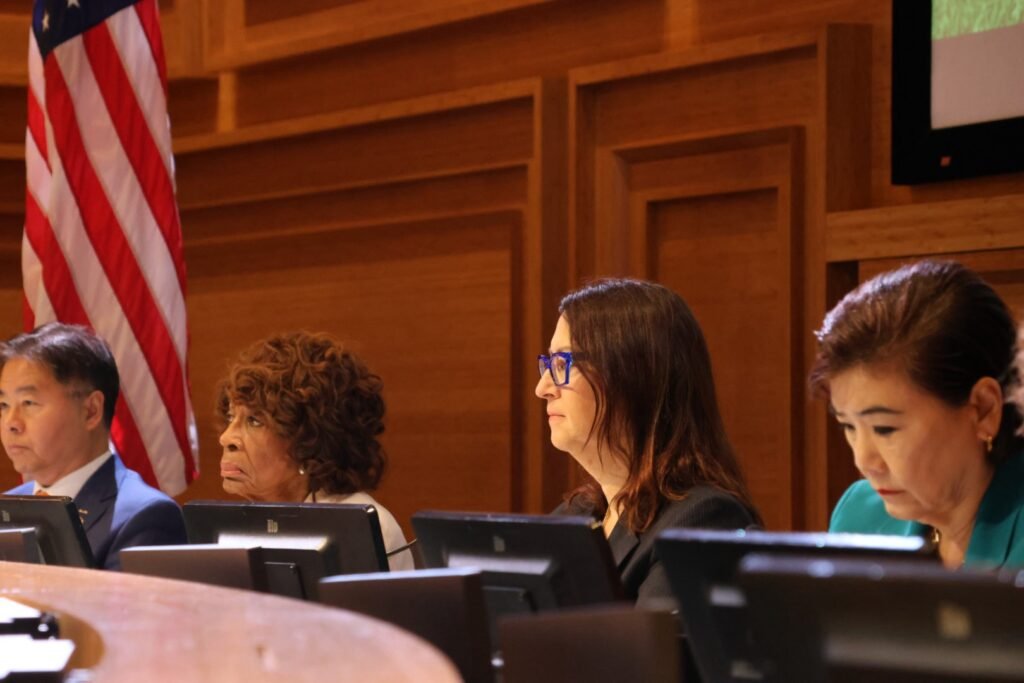
U.S. Reps. Ted Lieu, Maxine Waters, Laura Friedman and Judy Chu (from left) listen during Wednesday's panel on Los Angeles' transit readiness for the 2028 Olympic and Paralympic Games. Photo courtesy of Rep. Laura Friedman's office.

By Los Angeles County Politics (LACP)

U.S. Rep. Laura Friedman (D-Burbank, Glendale, West Hollywood, parts of Los Angeles, Pasadena) convened a panel of the region’s top transportation officials yesterday in West Hollywood along with a number of other members of the County Congressional delegation to examine federal funding gaps for mass transit amid the County’s readiness to move millions of people during the 2028 Olympic and Paralympic Games.

The other members of Congress present at the sit-down included U.S. Reps. Maxine Waters (D-Inglewood, Hawthorne, Gardena, Watts, South Los Angeles), Judy Chu (D-Pasadena, Monterey Park, San Gabriel, Alhambra, the west San Gabriel Valley), Ted Lieu (D-Westside Los Angeles, South Bay, including Beverly Hills, Santa Monica, Culver City, Manhattan Beach, Redondo Beach, Torrance, Rancho Palos Verdes) and Sydney Kamlager-Dove (D-Culver City, Crenshaw, Leimert Park, Baldwin Hills, West Adams, Mid-City).

Agency representatives who run public transit across the region included LA Metro Chief Customer Experience Officer Jennifer Vides, LA Department of Transportation General Manager Laura Rubio-Cornejo, Santa Monica Department of Transportation Director Anuj Gupta, and LA Metro Chief of Police and Emergency Management Bill Scott.

The briefing came just weeks before Congress decides how much federal funding Los Angeles gets for the Games.
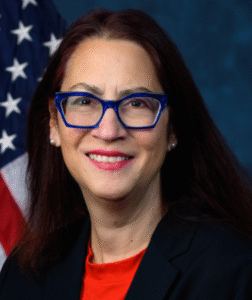
U.S. Rep. Laura Friedman

“The [recent 2026 FIFA] World Cup proved that Los Angeles can deliver, but eight matches at one stadium over five weeks is not the same as sixteen days of events at dozens of venues across the region. The agencies responsible for moving those visitors have never had to work at that scale together. So, we brought them into one room to tell Congress what they need to pull this off, and when they need it because the window for that closes in weeks, not years,” said Friedman.

Metro’s enhanced bus service to and from SoFi Stadium logged more than 212,000 rides at $1.75 each way during the World Cup, with direct shuttles connecting the stadium to 15 transit hubs across Southern California.

Systemwide ridership in June ran 2 million higher than the same month last year, and Metro CEO Stephanie Wiggins has said the tournament saw zero major security incidents.

But the funding gap for 2028 remains wide. Metro has requested roughly $2 billion for its Games mobility plan, and so far, Congress has approved $94.3 million, and the House Appropriations Committee’s FY27 Transportation, Housing and Urban Development bill includes $875 million toward the request.

Additionally, President Trump’s FY27 budget request included no funding for the effort. Metro says it needs roughly 1,700 additional buses against a current fleet of about 2,100, has secured only about half of that total, and has stated publicly that the full scope of its planned Games Enhanced Transit System isn’t feasible without the complete funding request.

The Infrastructure Investment and Jobs Act, a key funding mechanism, expires Sept. 30, 2026.

U.S. Rep. Sydney Kamlager-Dove

“The American Decade of Sports is an opportunity for Los Angeles to shine bright on the world stage while leaving our region better than fans found it. Hosting successful games and delivering lasting benefits for our community starts with investing in our transportation infrastructure,” said Kamlager-Dove.

“The 2026 World Cup was the ultimate test run for the 2028 Olympics, and convenings like today help us learn from the past so we can build a safer, more accessible, and better-connected LA long after the Olympic flame is extinguished,” she added.

In February, Kamlager-Dove led 36 members of the California congressional delegation, including U.S. Sens. Adam Schiff and Alex Padilla (D-CA) in a letter to Transportation Secretary Sean Duffy urging the administration to include Metro’s request in the president’s FY27 budget — warning at the time that FY27 was likely the region’s last real opportunity to get the investment in place before the Games.

“I am going to keep fighting to bring our tax dollars home, and to make sure what this region builds for 2028 is still serving Angelenos long after the Games leave town,” said Friedman, who serves on the House Committee on Transportation and Infrastructure.

Leave a Reply

Your email address will not be published. Required fields are marked *

This site uses Akismet to reduce spam. Learn how your comment data is processed.

  • Latest
  • Comments
  • Trending

By Los Angeles County Politics (LACP)

U.S. Rep. Laura Friedman (D-Burbank, Glendale, West Hollywood, parts of Los Angeles, Pasadena) convened a panel of the region’s top transportation officials yesterday in West Hollywood along with a number of other members of the County Congressional delegation to examine federal funding gaps for mass transit amid the County’s readiness to move millions of people during the 2028 Olympic and Paralympic Games.

The other members of Congress present at the sit-down included U.S. Reps. Maxine Waters (D-Inglewood, Hawthorne, Gardena, Watts, South Los Angeles), Judy Chu (D-Pasadena, Monterey Park, San Gabriel, Alhambra, the west San Gabriel Valley), Ted Lieu (D-Westside Los Angeles, South Bay, including Beverly Hills, Santa Monica, Culver City, Manhattan Beach, Redondo Beach, Torrance, Rancho Palos Verdes) and Sydney Kamlager-Dove (D-Culver City, Crenshaw, Leimert Park, Baldwin Hills, West Adams, Mid-City).

Agency representatives who run public transit across the region included LA Metro Chief Customer Experience Officer Jennifer Vides, LA Department of Transportation General Manager Laura Rubio-Cornejo, Santa Monica Department of Transportation Director Anuj Gupta, and LA Metro Chief of Police and Emergency Management Bill Scott.

The briefing came just weeks before Congress decides how much federal funding Los Angeles gets for the Games.

U.S. Rep. Laura Friedman

“The [recent 2026 FIFA] World Cup proved that Los Angeles can deliver, but eight matches at one stadium over five weeks is not the same as sixteen days of events at dozens of venues across the region. The agencies responsible for moving those visitors have never had to work at that scale together. So, we brought them into one room to tell Congress what they need to pull this off, and when they need it because the window for that closes in weeks, not years,” said Friedman.

Metro’s enhanced bus service to and from SoFi Stadium logged more than 212,000 rides at $1.75 each way during the World Cup, with direct shuttles connecting the stadium to 15 transit hubs across Southern California.

Systemwide ridership in June ran 2 million higher than the same month last year, and Metro CEO Stephanie Wiggins has said the tournament saw zero major security incidents.

But the funding gap for 2028 remains wide. Metro has requested roughly $2 billion for its Games mobility plan, and so far, Congress has approved $94.3 million, and the House Appropriations Committee’s FY27 Transportation, Housing and Urban Development bill includes $875 million toward the request.

Additionally, President Trump’s FY27 budget request included no funding for the effort. Metro says it needs roughly 1,700 additional buses against a current fleet of about 2,100, has secured only about half of that total, and has stated publicly that the full scope of its planned Games Enhanced Transit System isn’t feasible without the complete funding request.

The Infrastructure Investment and Jobs Act, a key funding mechanism, expires Sept. 30, 2026.

U.S. Rep. Sydney Kamlager-Dove

“The American Decade of Sports is an opportunity for Los Angeles to shine bright on the world stage while leaving our region better than fans found it. Hosting successful games and delivering lasting benefits for our community starts with investing in our transportation infrastructure,” said Kamlager-Dove.

“The 2026 World Cup was the ultimate test run for the 2028 Olympics, and convenings like today help us learn from the past so we can build a safer, more accessible, and better-connected LA long after the Olympic flame is extinguished,” she added.

In February, Kamlager-Dove led 36 members of the California congressional delegation, including U.S. Sens. Adam Schiff and Alex Padilla (D-CA) in a letter to Transportation Secretary Sean Duffy urging the administration to include Metro’s request in the president’s FY27 budget — warning at the time that FY27 was likely the region’s last real opportunity to get the investment in place before the Games.

“I am going to keep fighting to bring our tax dollars home, and to make sure what this region builds for 2028 is still serving Angelenos long after the Games leave town,” said Friedman, who serves on the House Committee on Transportation and Infrastructure.