



By Stephen Witt, Los Angeles County Politics (LACP)
While the Trump administration last week touted a shift in treating homelessness away from the Housing First model to a Treatment First model, a Woodland Hills faith-based recovery center with a decade of history and hundreds of graduates says no elected official has ever bothered to see what it does.
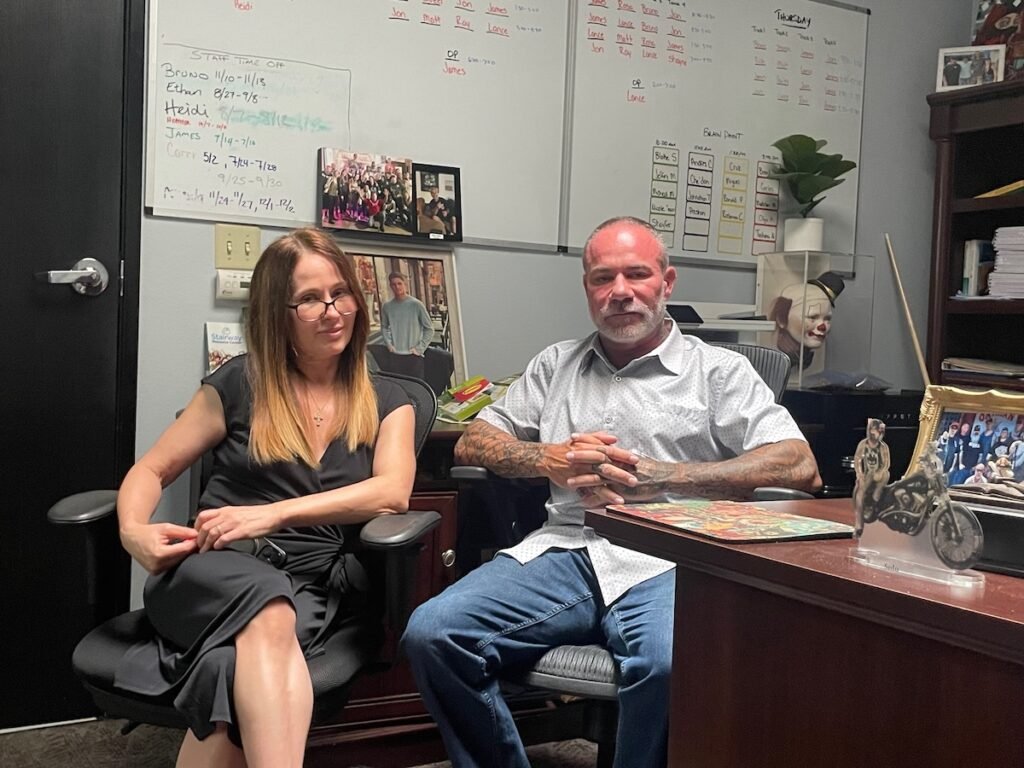
“No one’s helping us. No one’s coming to save us,” said Michael Lynch, CEO of Stairway Recovery Center, while seated in his office with co-founder Janette Fleming in the group’s Erwin Street facility, a 10-year-old nonprofit that treats addiction alongside homelessness rather than housing people first and addressing addiction later. “Jeanette and I bankrupt ourselves doing this.”
Stairway runs 168 sober living beds spread across the San Fernando Valley — the largest concentration in Woodland Hills, with additional houses in Van Nuys, West Hills and Tarzana — alongside a day program where residents receive group therapy, individual counseling, psychiatric care and, unusually for a treatment center of its size, an in-house transcranial magnetic stimulation machine, an FDA-approved treatment for depression, anxiety and OCD.
Lynch said its average client stays a year to two years, well beyond the 30- to 90-day windows most insurance plans typically cover, with the difference largely funded through scholarships the organization pays for itself.
Asked whether LA City Councilmember Bob Blumenfield, whose district includes the facility, or LA County Supervisor Lindsey P. Horvath, whose Third District also covers the area, had ever visited or engaged with Stairway, Lynch and Fleming said neither had.
Fleming recalled one attempt to reach out to a local official’s office — she could not recall which one — that connected her with a young staffer rather than any substantive engagement. Fleming said she doubts an addiction recovery center draws the same political interest an arts organization might.
A spokesperson for Horvath’s office said that Stairway officials never contacted their office to request a meeting or extend an invitation to visit the facility.
LACP reached out to Blumenfield’s office for comment and had not received a response by the time of publication. This story will be updated if a response is received.
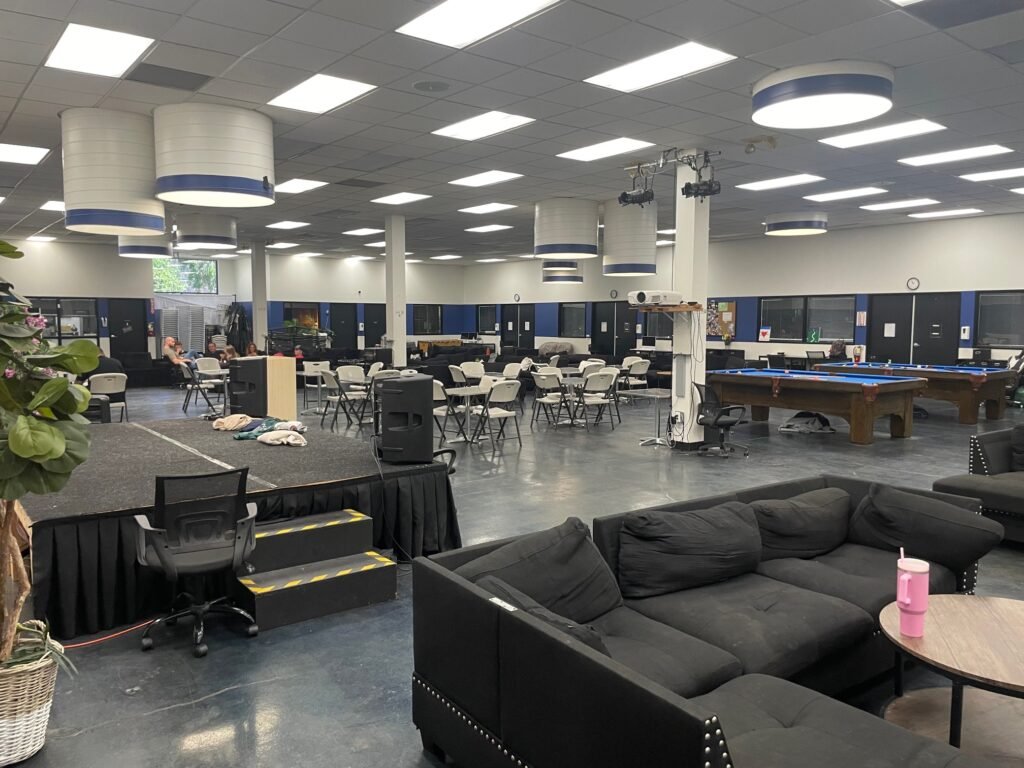
The disengagement comes as Stairway operates on a financial model its founders describe as precarious. The organization doesn’t own its Erwin Street building or any of its sober living houses; Fleming said landlords who lease to the organization often charge more once they learn how the space will be used. Lynch and Fleming both said they have not drawn a paycheck from the organization since February, relying instead on insurance reimbursements from clients with coverage to subsidize care for those without. Stairway is in-network with most major insurers, except Kaiser Permanente.
Lynch and Fleming were also critical of how Medi-Cal funding works for organizations like theirs, saying the approval and reimbursement process makes it difficult for treatment providers to access the funding despite what they described as significant unmet need.
Separately, LACP reached out to the Los Angeles County Department of Homeless Services and Housing (HSH) with questions about the toolkit’s “Treatment First” approach relative to the county’s current Housing First model, including whether HSH Director Sarah Mahin has reviewed the toolkit and how the department is weighing critiques like the ones raised at Stairway. LACP had not received a response as of publication.
Several of Stairway’s current staff are themselves graduates of the program. James Miller, the organization’s director of operations, went through treatment there nine years ago. Rich Bishop, a case manager and alumni coordinator who came to California from Pittsburgh, went through the program roughly six and a half years ago and now runs a quarterly outreach event for Skid Row’s homeless population as well as an annual holiday toy drive for children with incarcerated parents.
“I think for me, it just motivates me more to help more,” Bishop said of the work. “This gives me purpose.”
Lynch, who said he spent 15 years incarcerated before entering recovery 18 years ago, said he doesn’t expect government help to materialize.
“I kind of feel like God’s gonna direct us like He has the whole time,” Lynch said.
Editor’s Note: This story was updated to include Supervisor Horvath’s response.










Comments 4
My name is Liam and I also went thru the Stairway program a year ago. The experience completely transformed my life. After over 20yrs of in and out of prison and struggling with Heroin, Meth, and Alcohol addiction I’ve finally learned a new way to live. Stairway and their amazing staff gave me the tools and care necessary to a life of peace and freedom without substances. Today I’m a college graduate in AOD Studies helping others who struggle with this disease as I once did. Thank you Michael and thank you Stairway. I’m forever grateful !! #wedorecover
No one running these locations is bankrupt. There are shell corporations, friends who own the drug testing locations, kickbacks, insurance bonuses, the list is endless.
Anon lol. At the end of the day, are people getting helped in an ethical manner ? Maybe thats how institutions you know of are run but as a former client I vouche for Stairway. I have never heard of someone getting put on the street when insurance isn’t covering treatment anymore, I have never heard or seen another place willing to go above and beyond to help an addict the way this place did for me.
Oh wow, I found so many discrepancies in this article. I personally went through Stairway myself. Stairway definitely helped me get sober, but it wasn’t through “scholarships that Stairways pays for themselves.” I was offered to come to Stairway because of my insurance plan, I was advised that my insurance would cover the cost of my sober living. I have since learned that Sober Living rent isn’t billable to insurance, but that Stairways gets the rent money by billing my insurance for way more services than were provided. Which is why Michael and Janette make reference to the following – “Lynch and Fleming both said they have not drawn a paycheck from the organization since February, relying instead on insurance reimbursements from clients with coverage to subsidize care for those without.” Yes, billing my good PPO insurance coverage for services never rendered definitely helps Stairway be reimbursed for the clients without coverage. That’s also why clients “stay a year to two years, well beyond the 30- to 90-day windows most insurance plans typically cover” but it’s not because of “the difference being largely funded through scholarships the organization pays for itself.”
It pays for itself through body brokering, erroneous billing, and deceitful practices (such owning the drug testing lab they use). It’s definitely a precarious financial model. That’s because it’s full of cover ups, deceit, and crime.