


County health officials warn of serious flea-borne typhus outbreak

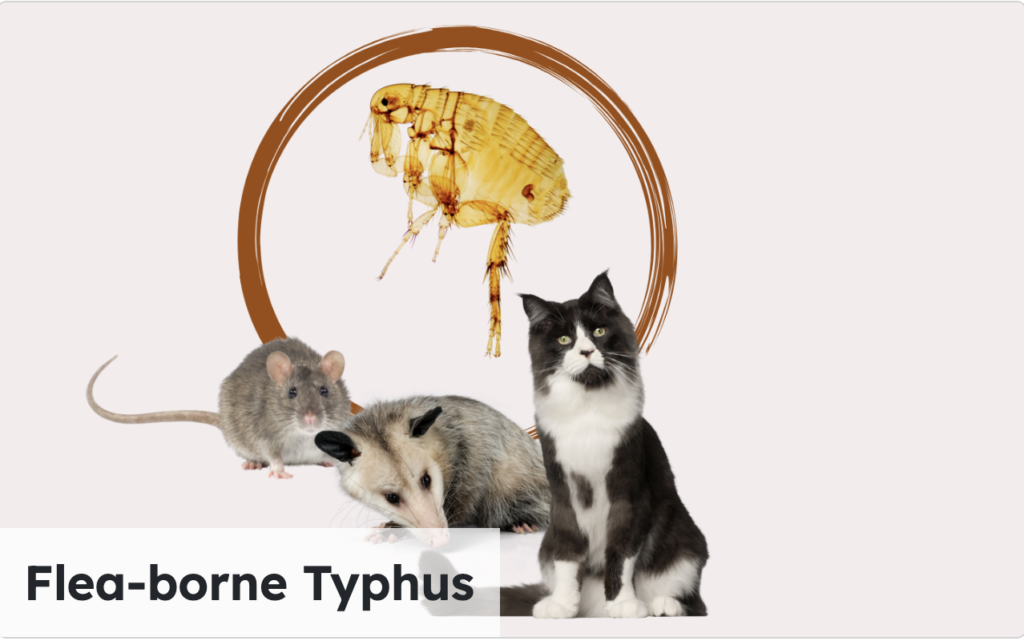
The primary carriers of flea-borne typhus in LA County. (Graphic: LA County Department of Public Health)

By Los Angeles County Politics (LACP)

The Los Angeles County Department of Public Health (DPH) is investigating a localized outbreak of flea-borne typhus in the Pico-Union neighborhood as cases continue to climb across the county. Five symptomatic cases tied to the outbreak have been identified so far this year; all five patients were hospitalized, and all have since recovered.

The outbreak comes amid a sustained, years-long rise in flea-borne typhus cases countywide. Public Health recorded 220 cases in 2025, the highest number ever documented in Los Angeles County, up from 187 cases in 2024. Patients have ranged in age from 1 to 85, meaning no age group is immune to exposure.

Officials say the trend is especially concerning given how often the illness lands people in the hospital. Nearly nine out of 10 people diagnosed with flea-borne typhus in 2025 required hospitalization.

“As flea-borne typhus cases continue to increase across Los Angeles County, preventing exposure to infected fleas is more important than ever,” said Dr. Muntu Davis, Los Angeles County Health Officer. “Community members can help protect themselves and their neighbors by keeping pets on flea control year-round, avoiding stray animals, and making sure wildlife cannot live in or around their homes.”

Flea-borne typhus is a bacterial infection caused by Rickettsia typhi, spread through contact with infected fleas rather than person to person. In Los Angeles County, those fleas are most commonly found on rats, free-roaming cats, and opossums. People are typically exposed in and around their own homes, often when a pet unknowingly carries infected fleas indoors.

Infected animals usually show no signs of illness themselves, which health officials say makes it easy for residents to underestimate their risk. Infection can also occur when flea dirt, essentially flea excrement, enters the body through a cut or scrape, or is rubbed into the eyes.

Symptoms typically appear within one to two weeks of exposure and can include fever, headache, body aches, nausea, vomiting, and rash.

The DPH is urging anyone experiencing these symptoms, particularly those who may have had contact with fleas or wild or stray animals, to seek medical care promptly. The illness responds well to antibiotics when caught early, and early diagnosis significantly lowers the risk of severe illness or hospitalization.

To reduce the risk of exposure, the DPH recommends keeping pets on a routine flea control regimen and indoors as much as possible, and using an EPA-registered insect repellent labeled for flea protection when outside.

Residents should avoid feeding or touching free-roaming animals and should not leave pet food outdoors, since both practices tend to attract the wildlife that carries infected fleas into residential areas. Keeping yards free of debris, trimming overgrown vegetation, sealing openings where animals could enter or nest, and storing trash in containers with tightly fitting lids can also help limit contact between households and flea-carrying wildlife.

Residents who notice stray animals, rodents, or opossums near their property are encouraged to notify local animal control.

More information on flea-borne typhus and prevention is available at  http://publichealth.lacounty.gov/acd/diseases/Typhus/.

Leave a Reply

Your email address will not be published. Required fields are marked *

This site uses Akismet to reduce spam. Learn how your comment data is processed.

  • Latest
  • Comments
  • Trending

By Los Angeles County Politics (LACP)

The Los Angeles County Department of Public Health (DPH) is investigating a localized outbreak of flea-borne typhus in the Pico-Union neighborhood as cases continue to climb across the county. Five symptomatic cases tied to the outbreak have been identified so far this year; all five patients were hospitalized, and all have since recovered.

The outbreak comes amid a sustained, years-long rise in flea-borne typhus cases countywide. Public Health recorded 220 cases in 2025, the highest number ever documented in Los Angeles County, up from 187 cases in 2024. Patients have ranged in age from 1 to 85, meaning no age group is immune to exposure.

Officials say the trend is especially concerning given how often the illness lands people in the hospital. Nearly nine out of 10 people diagnosed with flea-borne typhus in 2025 required hospitalization.

“As flea-borne typhus cases continue to increase across Los Angeles County, preventing exposure to infected fleas is more important than ever,” said Dr. Muntu Davis, Los Angeles County Health Officer. “Community members can help protect themselves and their neighbors by keeping pets on flea control year-round, avoiding stray animals, and making sure wildlife cannot live in or around their homes.”

Flea-borne typhus is a bacterial infection caused by Rickettsia typhi, spread through contact with infected fleas rather than person to person. In Los Angeles County, those fleas are most commonly found on rats, free-roaming cats, and opossums. People are typically exposed in and around their own homes, often when a pet unknowingly carries infected fleas indoors.

Infected animals usually show no signs of illness themselves, which health officials say makes it easy for residents to underestimate their risk. Infection can also occur when flea dirt, essentially flea excrement, enters the body through a cut or scrape, or is rubbed into the eyes.

Symptoms typically appear within one to two weeks of exposure and can include fever, headache, body aches, nausea, vomiting, and rash.

The DPH is urging anyone experiencing these symptoms, particularly those who may have had contact with fleas or wild or stray animals, to seek medical care promptly. The illness responds well to antibiotics when caught early, and early diagnosis significantly lowers the risk of severe illness or hospitalization.

To reduce the risk of exposure, the DPH recommends keeping pets on a routine flea control regimen and indoors as much as possible, and using an EPA-registered insect repellent labeled for flea protection when outside.

Residents should avoid feeding or touching free-roaming animals and should not leave pet food outdoors, since both practices tend to attract the wildlife that carries infected fleas into residential areas. Keeping yards free of debris, trimming overgrown vegetation, sealing openings where animals could enter or nest, and storing trash in containers with tightly fitting lids can also help limit contact between households and flea-carrying wildlife.

Residents who notice stray animals, rodents, or opossums near their property are encouraged to notify local animal control.

More information on flea-borne typhus and prevention is available at  http://publichealth.lacounty.gov/acd/diseases/Typhus/.