


County Supes respond to rising homeless count

A homeless encampment. (Photo taken from a LAHSA presentation)

By Stephen Witt, Los Angeles County Politics

If it ain’t broke, don’t fix it. But if it is broke — take over the agency.

Three of the five LA County Supervisors quickly weighed in on Friday’s Greater Los Angeles Point-in-Time Homeless Count — which found homelessness up 3.4% in the city of Los Angeles and 1.2% across the broader Continuum of Care, ending a two-year stretch of declines.

Their comments came as the County pulled homelessness funding from the joint city-county Los Angeles Homeless Services Authority (LAHSA) last year and created its own Department of Homeless Services and Housing (DHSH).

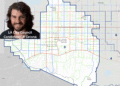
LA County Supervisor Holly J. Mitchell

Supervisor Holly J. Mitchell (D-Inglewood, Hawthorne, Gardena, Compton, Carson) cited reductions to state rental assistance programs, the federal suspension of Continuum of Care funding, and rising housing and living costs that are pushing more families toward housing instability as major factors contributing to the rise in homelessness.

“The Point-in-Time Count provides an important snapshot—not the full picture—but one that must inform our response. That includes ensuring the County’s new Department for Homeless Services and Housing fulfills its mission to close gaps, strengthen accountability, and better coordinate efforts across city, county, and community partners. As I’ve said before, this department cannot afford to fail,” said Mitchell.

LA County Supervisor Kathryn Barger

Supervisor Kathryn Barger (R-Palmdale, Lancaster, Santa Clarita, San Marino, Pasadena, La Cañada Flintridge, portions of the San Gabriel Valley) highlighted a 37% drop in unsheltered homelessness in the Antelope Valley as evidence that targeted strategies work, but argued the county’s approach needs to expand beyond housing alone.

“Los Angeles County cannot solve this crisis through housing alone. We also need the ability to provide timely, intensive treatment for individuals experiencing severe mental illness and substance use disorders,” Barger said, renewing her call for federal IMD waivers to expand treatment capacity.

“We owe taxpayers accountability. We owe our communities safer and healthier neighborhoods. And, most importantly, we owe people experiencing homelessness every opportunity to recover and rebuild their lives,” she added.

LA County Supervisor Lindsey P. Horvath

Supervisor Lindsey Horvath (D-Santa Monica, Beverly Hills, West Hollywood, Calabasas, Malibu, Pacoima, Panorama City), who has pushed to reorient the county’s homelessness bureaucracy through DHSH and the Emergency Centralized Response Center, downplayed the significance of a single count.

“The Point-in-Time Count is one data point — not the whole picture,” Horvath said. “People experiencing homelessness — and the communities impacted by this crisis — care less about esoteric debates over the numbers. They care more about what they see on our streets.”

The count found an estimated 73,000 people experiencing homelessness across LA County and 45,194 within city limits, with unsheltered homelessness rising 3.3% countywide and 7.9% in the city — the latter driven in part by a rise in people living in RVs.


Leave a Reply

Your email address will not be published. Required fields are marked *

This site uses Akismet to reduce spam. Learn how your comment data is processed.

  • Latest
  • Comments
  • Trending

By Stephen Witt, Los Angeles County Politics

If it ain’t broke, don’t fix it. But if it is broke — take over the agency.

Three of the five LA County Supervisors quickly weighed in on Friday’s Greater Los Angeles Point-in-Time Homeless Count — which found homelessness up 3.4% in the city of Los Angeles and 1.2% across the broader Continuum of Care, ending a two-year stretch of declines.

Their comments came as the County pulled homelessness funding from the joint city-county Los Angeles Homeless Services Authority (LAHSA) last year and created its own Department of Homeless Services and Housing (DHSH).

LA County Supervisor Holly J. Mitchell

Supervisor Holly J. Mitchell (D-Inglewood, Hawthorne, Gardena, Compton, Carson) cited reductions to state rental assistance programs, the federal suspension of Continuum of Care funding, and rising housing and living costs that are pushing more families toward housing instability as major factors contributing to the rise in homelessness.

“The Point-in-Time Count provides an important snapshot—not the full picture—but one that must inform our response. That includes ensuring the County’s new Department for Homeless Services and Housing fulfills its mission to close gaps, strengthen accountability, and better coordinate efforts across city, county, and community partners. As I’ve said before, this department cannot afford to fail,” said Mitchell.

LA County Supervisor Kathryn Barger

Supervisor Kathryn Barger (R-Palmdale, Lancaster, Santa Clarita, San Marino, Pasadena, La Cañada Flintridge, portions of the San Gabriel Valley) highlighted a 37% drop in unsheltered homelessness in the Antelope Valley as evidence that targeted strategies work, but argued the county’s approach needs to expand beyond housing alone.

“Los Angeles County cannot solve this crisis through housing alone. We also need the ability to provide timely, intensive treatment for individuals experiencing severe mental illness and substance use disorders,” Barger said, renewing her call for federal IMD waivers to expand treatment capacity.

“We owe taxpayers accountability. We owe our communities safer and healthier neighborhoods. And, most importantly, we owe people experiencing homelessness every opportunity to recover and rebuild their lives,” she added.

LA County Supervisor Lindsey P. Horvath

Supervisor Lindsey Horvath (D-Santa Monica, Beverly Hills, West Hollywood, Calabasas, Malibu, Pacoima, Panorama City), who has pushed to reorient the county’s homelessness bureaucracy through DHSH and the Emergency Centralized Response Center, downplayed the significance of a single count.

“The Point-in-Time Count is one data point — not the whole picture,” Horvath said. “People experiencing homelessness — and the communities impacted by this crisis — care less about esoteric debates over the numbers. They care more about what they see on our streets.”

The count found an estimated 73,000 people experiencing homelessness across LA County and 45,194 within city limits, with unsheltered homelessness rising 3.3% countywide and 7.9% in the city — the latter driven in part by a rise in people living in RVs.