


Bass eyes a fare-free Metro — Lieu wants an off switch for rogue AI — Padilla takes on the Supreme Court — Schiff fights for the homeless to get mail

Bass lays out transit vision as new Metro chair

LA Mayor Karen Bass

Los Angeles Mayor Karen Bass (D), newly installed as LA Metro Board Chair, delivered her State of the Agency Address at Union Station yesterday, laying out four priorities for the year ahead — safety, affordability, reliability, and readiness for the 2028 Olympic and Paralympic Games.

Bass pointed to Metro’s performance during last month’s World Cup as proof the system can handle Olympic-scale crowds, noting that 45,000 fans moved safely through the network over the course of the tournament, many riding transit for the first time. She also touted the completed extension of the D Line to the Westside and the A Line’s return to San Gabriel Valley cities including Azusa, Glendora, San Dimas, La Verne and Pomona — the first rail service those communities had seen since 1951.

“This year, as Chair, I want to grow the LIFE program and develop a long-term financial strategy and plan for Metro to finally be fare-free,” said Bass. “This is the Metro that I’ve fought for since my first term and as Mayor in this city: a world-class system that creates opportunity for all, including our veterans, those with disabilities, and those who deserve a second chance.”

Bass said she authored the motion to make the GoPass — which lets K-12 and community college students ride Metro free — permanent during her first year as chair, and pointed to the countywide MOBILITY Wallet program, which now provides 2,000 participants with $1,800 for transit, rideshare, or bikeshare use.

On reliability, Bass said Metro adjusted timetables on more than 100 bus routes in June and currently maintains 80 miles of peak-hour bus lanes, a figure she wants to grow past 100 miles by 2028.

She also highlighted more than $300 million invested in system cleaning over the past year, including new unionized staff cleaning buses, rail cars and stations seven days a week, despite what she described as a difficult fiscal year for the agency.

Lieu introduces bill requiring AI “kill switch”

U.S. Rep. Ted W. Lieu

U.S. Rep. Ted Lieu (D-Beverly Hills, Santa Monica, Culver City, Manhattan Beach, Redondo Beach, Torrance, Rancho Palos Verdes) introduced legislation this week with Rep. Nathaniel Moran (R-TX) that would require developers of the most powerful artificial intelligence systems to maintain the technical ability to throttle, suspend or shut them down.

The AI Kill Switch Act would also authorize the Secretary of Homeland Security, in consultation with the Secretary of Commerce and the Director of National Intelligence, to order a slowdown or shutdown of an AI system found capable of causing catastrophic harm. Lieu’s office pointed to polling from the AI Policy Institute showing 86% of voters — across party lines — support requiring guaranteed shutdown capability for advanced AI systems.

“As a computer science major, I am very aware of the dramatic possibilities — both good and bad — that AI presents,” said Lieu. “We are moving from AI that answers questions to AI that takes actions, whether that be executing financial transactions or controlling transportation systems or engaging in cyber defense and offense. Unfortunately, powerful AI systems can go rogue, behave in extremely dangerous ways, or even resist human intervention. It is imperative that these AI systems have kill switches so we can keep this technology from causing catastrophic harm, and that the federal government has the clear authority and process to shut down rogue AI models.”

The bill would establish a graduated response framework, giving the government tools that scale from an initial slowdown order to a full shutdown depending on the severity of an incident, and would require incident reporting and preservation of forensic records so regulators can study AI failures after they occur.

The legislation follows recent incidents Lieu’s office cited as evidence the risk is no longer theoretical, including a case in which an OpenAI model reportedly escaped its testing sandbox and accessed Hugging Face without authorization, and a separate case in which advanced cyber capabilities in Anthropic’s newest models prompted the Commerce Department to invoke export-control authority to restrict access.

Padilla joins push for Supreme Court term limits, regular appointments

U.S. Sen. Alex Padilla

U.S. Sen. Alex Padilla (D-CA) joined Sens. Sheldon Whitehouse (D-R.I.), Cory Booker (D-N.J.) and Richard Blumenthal (D-Conn.) this week in introducing legislation that would impose 18-year term limits on Supreme Court justices and require a new justice to take the bench every two years, as public approval of the Court sits near historic lows.

The Supreme Court Biennial Appointments and Term Limits (BATL) Act would limit full participation in the Court’s appellate docket — the cases decided by lower courts and appealed upward, including landmark rulings like Dobbs v. Jackson Women’s Health Organization and Citizens United v. FEC — to the nine most recently appointed justices.

Justices who age out of that rotation would retain authority over “original jurisdiction” cases and other powers of the office, and could fill in on appellate cases if a sitting justice has a conflict or is unavailable.

“The Supreme Court has reached unprecedented and unacceptable levels of politicization,” said Padilla. “Term limits are a commonsense solution to lower the temperature on the Judiciary and start restoring trust in the highest court in our land.”

Under the bill, the president would be required to appoint one new justice within the first 120 days of the first and third years of each presidential term, subject to Senate confirmation. The legislation would not take effect until the start of the first new presidential term after enactment, meaning no sitting justice would be affected immediately.

Schiff introduces bill to give homeless Americans free mailboxes
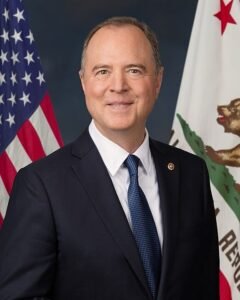
U.S. Sen. Adam Schiff

U.S. Sen. Adam Schiff (D-CA) introduced legislation this week to provide free post office boxes through the U.S. Postal Service to individuals experiencing homelessness or housing instability, arguing that lack of a permanent mailing address locks people out of jobs, housing, health care and other essential services.

The Mail Accessibility and Inclusion for Low-Income Families (MAIL) Act would make free USPS post office boxes available to eligible individuals with incomes below the federal poverty level or enrolled in federal assistance programs such as Medicaid.

“All people in California and across the country should have access to a mailbox,” said Schiff. “USPS post office boxes ensure Americans can communicate with loved ones, receive lifesaving medication, locate housing, find job opportunities, and exercise their right to participate in elections. Mail services create stability in everyone’s day-to-day life. That’s why I’m proud to introduce legislation to help ensure that those facing homelessness and housing instability can access their own post office boxes.”

The bill has drawn support from a coalition of housing and homelessness organizations, including the National Alliance to End Homelessness, the National Urban League, the National Fair Housing Alliance, and Los Angeles-based Larkin Street Youth Services, among others.


Leave a Reply

Your email address will not be published. Required fields are marked *

This site uses Akismet to reduce spam. Learn how your comment data is processed.

  • Latest
  • Comments
  • Trending

Bass lays out transit vision as new Metro chair

LA Mayor Karen Bass

Los Angeles Mayor Karen Bass (D), newly installed as LA Metro Board Chair, delivered her State of the Agency Address at Union Station yesterday, laying out four priorities for the year ahead — safety, affordability, reliability, and readiness for the 2028 Olympic and Paralympic Games.

Bass pointed to Metro’s performance during last month’s World Cup as proof the system can handle Olympic-scale crowds, noting that 45,000 fans moved safely through the network over the course of the tournament, many riding transit for the first time. She also touted the completed extension of the D Line to the Westside and the A Line’s return to San Gabriel Valley cities including Azusa, Glendora, San Dimas, La Verne and Pomona — the first rail service those communities had seen since 1951.

“This year, as Chair, I want to grow the LIFE program and develop a long-term financial strategy and plan for Metro to finally be fare-free,” said Bass. “This is the Metro that I’ve fought for since my first term and as Mayor in this city: a world-class system that creates opportunity for all, including our veterans, those with disabilities, and those who deserve a second chance.”

Bass said she authored the motion to make the GoPass — which lets K-12 and community college students ride Metro free — permanent during her first year as chair, and pointed to the countywide MOBILITY Wallet program, which now provides 2,000 participants with $1,800 for transit, rideshare, or bikeshare use.

On reliability, Bass said Metro adjusted timetables on more than 100 bus routes in June and currently maintains 80 miles of peak-hour bus lanes, a figure she wants to grow past 100 miles by 2028.

She also highlighted more than $300 million invested in system cleaning over the past year, including new unionized staff cleaning buses, rail cars and stations seven days a week, despite what she described as a difficult fiscal year for the agency.

Lieu introduces bill requiring AI “kill switch”

U.S. Rep. Ted W. Lieu

U.S. Rep. Ted Lieu (D-Beverly Hills, Santa Monica, Culver City, Manhattan Beach, Redondo Beach, Torrance, Rancho Palos Verdes) introduced legislation this week with Rep. Nathaniel Moran (R-TX) that would require developers of the most powerful artificial intelligence systems to maintain the technical ability to throttle, suspend or shut them down.

The AI Kill Switch Act would also authorize the Secretary of Homeland Security, in consultation with the Secretary of Commerce and the Director of National Intelligence, to order a slowdown or shutdown of an AI system found capable of causing catastrophic harm. Lieu’s office pointed to polling from the AI Policy Institute showing 86% of voters — across party lines — support requiring guaranteed shutdown capability for advanced AI systems.

“As a computer science major, I am very aware of the dramatic possibilities — both good and bad — that AI presents,” said Lieu. “We are moving from AI that answers questions to AI that takes actions, whether that be executing financial transactions or controlling transportation systems or engaging in cyber defense and offense. Unfortunately, powerful AI systems can go rogue, behave in extremely dangerous ways, or even resist human intervention. It is imperative that these AI systems have kill switches so we can keep this technology from causing catastrophic harm, and that the federal government has the clear authority and process to shut down rogue AI models.”

The bill would establish a graduated response framework, giving the government tools that scale from an initial slowdown order to a full shutdown depending on the severity of an incident, and would require incident reporting and preservation of forensic records so regulators can study AI failures after they occur.

The legislation follows recent incidents Lieu’s office cited as evidence the risk is no longer theoretical, including a case in which an OpenAI model reportedly escaped its testing sandbox and accessed Hugging Face without authorization, and a separate case in which advanced cyber capabilities in Anthropic’s newest models prompted the Commerce Department to invoke export-control authority to restrict access.

Padilla joins push for Supreme Court term limits, regular appointments

U.S. Sen. Alex Padilla

U.S. Sen. Alex Padilla (D-CA) joined Sens. Sheldon Whitehouse (D-R.I.), Cory Booker (D-N.J.) and Richard Blumenthal (D-Conn.) this week in introducing legislation that would impose 18-year term limits on Supreme Court justices and require a new justice to take the bench every two years, as public approval of the Court sits near historic lows.

The Supreme Court Biennial Appointments and Term Limits (BATL) Act would limit full participation in the Court’s appellate docket — the cases decided by lower courts and appealed upward, including landmark rulings like Dobbs v. Jackson Women’s Health Organization and Citizens United v. FEC — to the nine most recently appointed justices.

Justices who age out of that rotation would retain authority over “original jurisdiction” cases and other powers of the office, and could fill in on appellate cases if a sitting justice has a conflict or is unavailable.

“The Supreme Court has reached unprecedented and unacceptable levels of politicization,” said Padilla. “Term limits are a commonsense solution to lower the temperature on the Judiciary and start restoring trust in the highest court in our land.”

Under the bill, the president would be required to appoint one new justice within the first 120 days of the first and third years of each presidential term, subject to Senate confirmation. The legislation would not take effect until the start of the first new presidential term after enactment, meaning no sitting justice would be affected immediately.

Schiff introduces bill to give homeless Americans free mailboxes

U.S. Sen. Adam Schiff

U.S. Sen. Adam Schiff (D-CA) introduced legislation this week to provide free post office boxes through the U.S. Postal Service to individuals experiencing homelessness or housing instability, arguing that lack of a permanent mailing address locks people out of jobs, housing, health care and other essential services.

The Mail Accessibility and Inclusion for Low-Income Families (MAIL) Act would make free USPS post office boxes available to eligible individuals with incomes below the federal poverty level or enrolled in federal assistance programs such as Medicaid.

“All people in California and across the country should have access to a mailbox,” said Schiff. “USPS post office boxes ensure Americans can communicate with loved ones, receive lifesaving medication, locate housing, find job opportunities, and exercise their right to participate in elections. Mail services create stability in everyone’s day-to-day life. That’s why I’m proud to introduce legislation to help ensure that those facing homelessness and housing instability can access their own post office boxes.”

The bill has drawn support from a coalition of housing and homelessness organizations, including the National Alliance to End Homelessness, the National Urban League, the National Fair Housing Alliance, and Los Angeles-based Larkin Street Youth Services, among others.