


Editorial: The Los Angeles City Council Did Voters No Favors on Charter Reform Vote

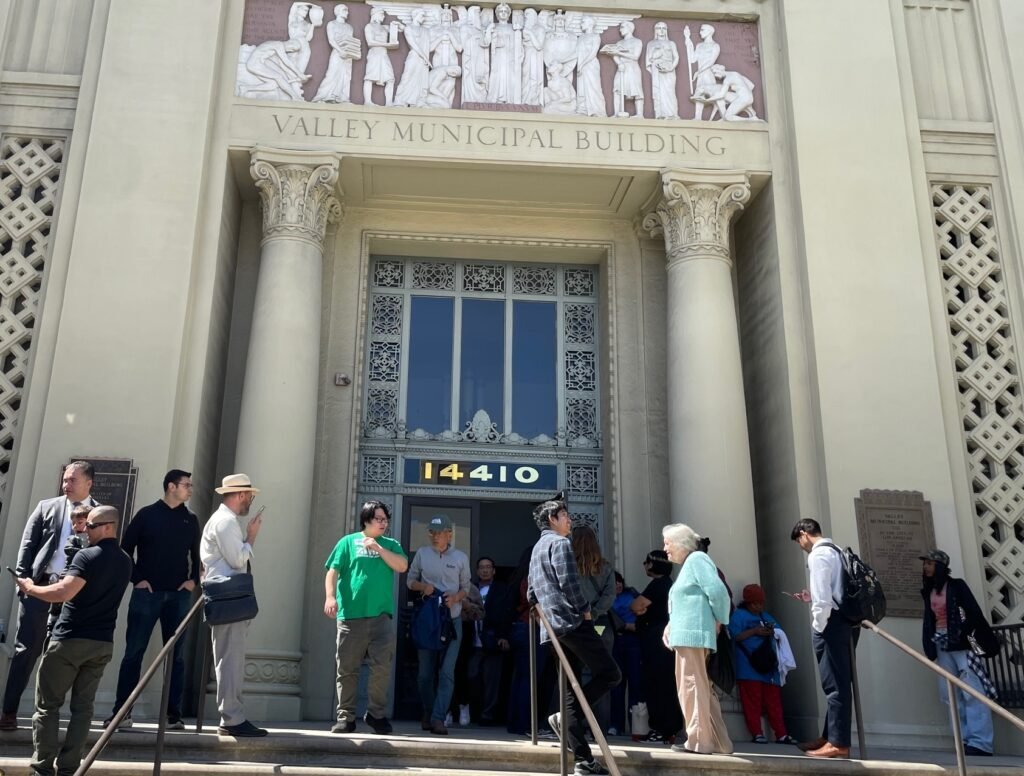
The City of Los Angeles Valley Municpal Building, also known as Van Nuys City Hall. Photo Credit: Stephen Witt/LACP

By Los Angeles County Politics

The Los Angeles City Council’s Rules Committee met yesterday and managed to kick the city’s most consequential governance reform down the road for what may be the third decade running — while accidentally getting one big thing right.

Start with the failure. Council expansion — growing the body from 15 members to 25 — was stripped from the November ballot and sent to yet another committee for further study. This, after four years of formal discussion, a year of work by a citizen Charter Reform Commission, and 27 years of the proposal collecting dust in the hallways of City Hall. Council President Marqueece Harris-Dawson said he’d create a new committee to carry the torch forward. We’ve seen that torch. It goes nowhere.

Los Angeles has 15 council members representing nearly 4 million people. The representation gap is not a policy nuance — it is a structural failure, and the voters who have been asking for relief on it deserve a chance to weigh in this November.

Councilmember Nithya Raman put it plainly: “There is a great deal of mistrust in L.A. city government right now.” She is correct. And nothing breeds mistrust faster than an institution that studies its own reform indefinitely and never acts.

Now the silver lining — and it is genuine. The committee also rejected ranked choice voting (RCV), and Los Angeles County Politics believes that was the right call.

RCV produces delayed results, confused voters, and outcomes that can contradict the clear preference of a plurality. This city does not need a more complicated ballot. It needs a more accountable government. Those are not the same thing, and reformers who conflate them do the public no favors.

Which leads to the broader editorial position of this publication: Los Angeles — city and county — is best served by a strong executive branch. Clear executive authority means clear accountability. Voters know who made the decision and who answers for it. Dispersed authority across committees, commissions, and a 15-member council that can barely agree on lunch is precisely the environment in which responsibility disappears.

That is why we are watching the Measure G implementation process with genuine interest and measured optimism. County voters approved Measure G to restructure county governance, strengthen executive leadership, and create cleaner lines of authority. If the commission tasked with implementing it does its job seriously, it could demonstrate what real reform looks like — not another 10-month committee, but accountable leadership with consequences attached.

Harris-Dawson argued that a larger council would actually empower the mayor. “A bigger council makes the mayor more powerful,” he said. He may have a point. Los Angeles County Politics would simply note that we consider it an argument for expansion, not against it.

Strong executives, properly checked, produce results. Weak institutions spread across too many competing power centers produce exactly what Los Angeles has had for 27 years on this question — motion without movement.

The committee got one right yesterday. On the other, the city’s voters are still waiting.

Leave a Reply

Your email address will not be published. Required fields are marked *

This site uses Akismet to reduce spam. Learn how your comment data is processed.

  • Latest
  • Comments
  • Trending

By Los Angeles County Politics

The Los Angeles City Council’s Rules Committee met yesterday and managed to kick the city’s most consequential governance reform down the road for what may be the third decade running — while accidentally getting one big thing right.

Start with the failure. Council expansion — growing the body from 15 members to 25 — was stripped from the November ballot and sent to yet another committee for further study. This, after four years of formal discussion, a year of work by a citizen Charter Reform Commission, and 27 years of the proposal collecting dust in the hallways of City Hall. Council President Marqueece Harris-Dawson said he’d create a new committee to carry the torch forward. We’ve seen that torch. It goes nowhere.

Los Angeles has 15 council members representing nearly 4 million people. The representation gap is not a policy nuance — it is a structural failure, and the voters who have been asking for relief on it deserve a chance to weigh in this November.

Councilmember Nithya Raman put it plainly: “There is a great deal of mistrust in L.A. city government right now.” She is correct. And nothing breeds mistrust faster than an institution that studies its own reform indefinitely and never acts.

Now the silver lining — and it is genuine. The committee also rejected ranked choice voting (RCV), and Los Angeles County Politics believes that was the right call.

RCV produces delayed results, confused voters, and outcomes that can contradict the clear preference of a plurality. This city does not need a more complicated ballot. It needs a more accountable government. Those are not the same thing, and reformers who conflate them do the public no favors.

Which leads to the broader editorial position of this publication: Los Angeles — city and county — is best served by a strong executive branch. Clear executive authority means clear accountability. Voters know who made the decision and who answers for it. Dispersed authority across committees, commissions, and a 15-member council that can barely agree on lunch is precisely the environment in which responsibility disappears.

That is why we are watching the Measure G implementation process with genuine interest and measured optimism. County voters approved Measure G to restructure county governance, strengthen executive leadership, and create cleaner lines of authority. If the commission tasked with implementing it does its job seriously, it could demonstrate what real reform looks like — not another 10-month committee, but accountable leadership with consequences attached.

Harris-Dawson argued that a larger council would actually empower the mayor. “A bigger council makes the mayor more powerful,” he said. He may have a point. Los Angeles County Politics would simply note that we consider it an argument for expansion, not against it.

Strong executives, properly checked, produce results. Weak institutions spread across too many competing power centers produce exactly what Los Angeles has had for 27 years on this question — motion without movement.

The committee got one right yesterday. On the other, the city’s voters are still waiting.