




Padilla, Schiff decry Trump’s National Guard deployment to Dem states

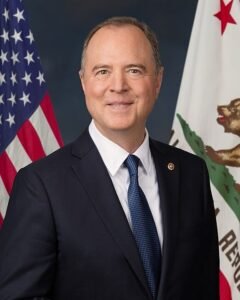
U.S. Senators Alex Padilla (D-CA) and Adam Schiff (D-CA) yesterday, joined four Senators representing states that President Donald Trump has sought to force National Guard deployments over state and local officials’ objections, condemned the President’s threats against their states:
“Donald Trump is stretching the limits of Presidential authority far past their breaking point and moving us closer to authoritarianism with each dangerous and unacceptable escalation of his campaign to force federal troops into American communities against the wishes of sovereign states in the Union he is supposed to represent,” the U.S. senators said in a joint statement.
“Whether in Los Angeles, Chicago, or Portland, the Trump Administration continues fabricating claims of chaos and crime on American streets to justify his false assertions that there is a ‘need’ to deploy troops into our cities — all while literally defunding our police by cutting funding that helps local law enforcement make our cities safer.
“None of our states asked for this. None of our states need this. And none of our National Guard Troops who are our friends and neighbors — signed up to intimidate their fellow Americans in their own communities or to be used as political pawns by a vindictive President. Donald Trump should immediately reverse course and end these un-American deployments.”
Padilla has been a leading voice in opposition to President Trump’s militarization of Los Angeles and other American cities. In June, Padilla led the entire Senate Democratic Caucus in demanding that President Trump immediately withdraw all military forces from Los Angeles and cease all threats to deploy the National Guard or active-duty service members to American cities.
Barger motion greenlighted on alleged fraud in sexual abuse lawsuits

Los Angeles County Board of Supervisors Chair Kathryn Barger (R-Palmdale, Lancaster, Santa Clarita, San Marino, Pasadena, La Cañada-Flintridge, portions of the San Gabriel Valley) yesterday saw the full Board unanimously approved her motion to investigate and address recent allegations of fraud tied to civil claims filed under AB 218, the state law that extended the statute of limitations for childhood sexual abuse lawsuits.
Thousands of AB 218 claims have been filed against Los Angeles County, many involving individuals formerly in the County’s probation and foster care systems. The first round of settlements for approximately 11,000 plaintiffs will cost $4 billion–of which an exorbitant $1.5 billion will go directly to attorneys’ fees. This is the largest financial settlement in County history and there are more claims still pending.
Barger’s motion directs County Counsel to immediately investigate misconduct allegations, explore referrals to the California State Bar, strengthen oversight of settlement agreements, and establish a fraud hotline for reporting unethical or fraudulent behavior.
“Fraudulent claims do a grave disservice to survivors of childhood sexual abuse and to taxpayers,” said Barger. “This motion ensures we are protecting both by holding bad actors accountable while maintaining the integrity of a process designed to deliver justice and healing.”
Under the motion, County Counsel will report back within 14 days with updates on the claims review process and the implementation of a fraud reporting hotline.
“Every legitimate survivor deserves to be heard, believed, and supported,” said Barger. “But we must make sure that those seeking to exploit this system are stopped in their tracks. This is about accountability, transparency, and ensuring County resources go to those who truly deserve them.”
LA Councilmember Hernandez highlights 10% drop in evictions

Los Angeles City Councilmember Eunisses Hernandez (D-Northeast and Downtown Los Angeles) announced new data yesterday showing that evictions in her Council District 1 have declined at more than twice the rate of the city as a whole — dropping 10% in the last two years compared to just 4% citywide.
The lawmaker announced the decline on International Tenants Day.
This progress builds on Hernandez’s successful efforts to strengthen the Los Angeles Tenant Anti-Harassment Ordinance (TAHO). It follows her office securing the first-ever Administrative Citation (ACE) against an abusive landlord and setting a citywide precedent for accountability.
At 202 N. Avenue 52 in Highland Park, working-class tenants who have lived in their homes for over two decades faced an onslaught of harassment from a new landlord — unauthorized entries, false permit filings, defying stop-work orders, even armed guards sent to intimidate families – all in efforts to flip the property in a rapidly gentrifying neighborhood.
After months of work by District 1’s Tenant and Housing Deputy — filing detailed complaints, translating documents, and conferring with the Housing Department and the City Attorney — the tenants achieved a historic victory: the first-ever ACE citation under TAHO was issued on August 4, 2025, with the landlord fined for harassment and violations. The City Attorney also filed 26 criminal charges, with more cases in preparation.
The Highland Park case is just one example of a broader strategy. District 1 is one of the few council offices with staff dedicated to assisting tenants, who not only manage cases but also canvass tenants directly, check in on families who receive eviction notices, and connect them with legal and financial resources.
“Los Angeles is a city of renters, and on International Tenants Day, I want our constituents to know that in CD1, we are fighting for you,” said Hernandez. “We’ve achieved one of the largest drops in evictions in all of Los Angeles because we meet tenants where they are: at their doors, in their neighborhoods, and in their homes. It is far more effective – and far less expensive – to keep families in their homes than to try to get them back on their feet after they’ve been displaced.”
Zbur’s community college student housing bill gets signed

Democratic Caucus Chair and Assemblymember Rick Chavez Zbur (D-Universal City, Hollywood, Hancock Park, West Hollywood, Beverly Hills, Westwood, West Los Angeles, Santa Monica) announced yesterday that Governor Gavin Newsom signed his legislation (AB 648), to streamline student, staff, and faculty housing projects on community college campuses.
The measure gives community college districts the authority to build housing — just as they do for educational facilities — on property they own or lease while eliminating barriers that slow or prevent construction. In addition, this law will significantly benefit California’s housing crisis by opening up affordable units in communities that students and staff would have otherwise occupied.
“This law will address housing insecurity for our community college students and staff and help prevent homelessness,” said Zbur. “California’s community college students face some of the highest rates of housing insecurity and homelessness in the state.”
According to a 2024 report by the California Legislative Analyst’s Office, more than half of California’s community college students faced housing insecurity in 2023, and about a quarter of those nearly 2 million students experienced homelessness. Additionally, findings from a 2023 Basic Needs Survey of over 66,000 students at 88 community colleges found that 3 out of 5 students were housing insecure and 1 in 4 were homeless.
The University of California (UC) and California State University (CSU) systems already have the authority to build student housing regardless of how their properties are zoned. Despite their past as commuter schools, California Community Colleges have become an integral part of the education system and a key stepping stone, allowing vulnerable populations to access higher education.
AB 648 ensures that California Community Colleges (CCCs) now have the same authority as the UCs and CSUs to build housing quickly and efficiently on property that they own or lease located within a half-mile radius of a main campus or an existing satellite campus. Community colleges will still be required to follow other local regulations and consult with their local planning department.
AB 648 takes effect on January 1, 2026.