


By Stephen Witt
While hundreds of homeless people wander the streets around Vermont Avenue, in an unincorporated pocket of Los Angeles County, a local nonprofit struggles to secure the funding needed to expand its services – even as demand surges across the region.
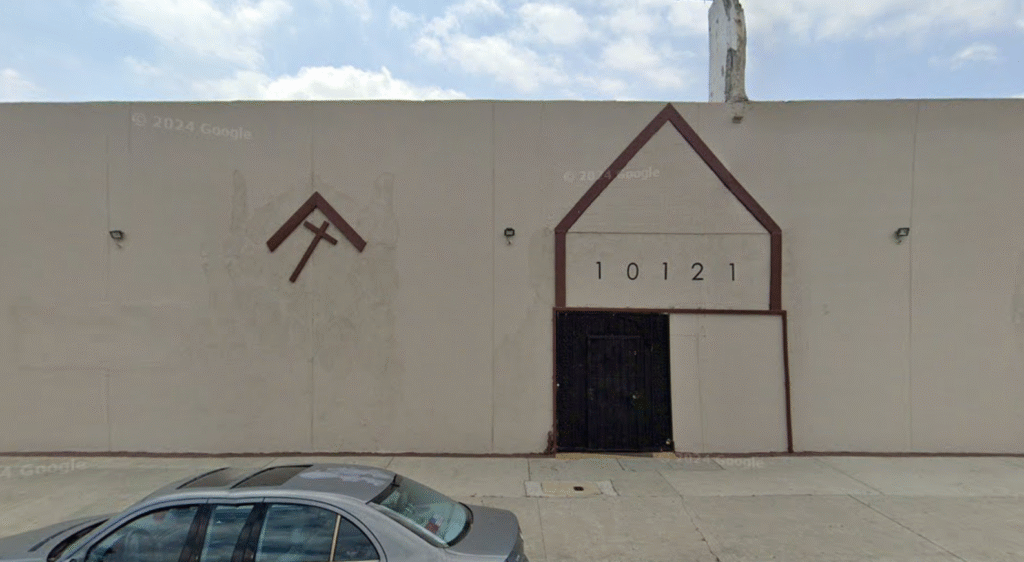
Dennis Taylor, CEO of Vermont Galaxy, operates a proposed homeless shelter at 10121 S. Vermont Avenue that offers comprehensive wraparound services—including medical care, psychological support, job placement, life skills training, and assistance obtaining identification and other social services. Despite the visible need, with people sleeping in street medians and gathering daily for food, water, and clothing, the organization has faced repeated setbacks in obtaining major funding.
“We’ve done RFPs [Requests for Proposals] before with LAHSA,” Taylor said, referring to the Los Angeles Homeless Services Authority. “We scored high, but we didn’t score enough. But enough’s not good enough.”
The facility serves clients from across Los Angeles, stretching from Manchester Avenue to areas as far as Santa Monica and Hollywood. Taylor even receives calls from unexpected places—even mortuaries—asking for help with families who have nowhere to go.
Caught in the Cracks
Maya Jones, who is preparing grant applications for Vermont Galaxy, points to a systemic problem: the shelter sits on the boundary between Service Planning Areas 6 and 8, creating a statistical blind spot.
“When you look at the South Bay Area, we’re considered part of it, but we don’t have the same sort of per capita [income] that people are making over in Redondo Beach or El Segundo, where these are mansions,” Jones explained. “When they look at who needs services, it doesn’t look like [our area] needs it to the extent that it does.”
The location is in an unincorporated part of Los Angeles County, which some advocates say creates additional barriers to resources compared to incorporated cities. Jones questioned whether unincorporated areas throughout the county—from Altadena after the recent fires to neighborhoods along Vermont Avenue—are systematically overlooked when funding is distributed.
A Daily Reality
Taylor walks the property daily, documenting the stream of people seeking help. The organization has transformed the facility from its previous condition, but without consistent major funding, expanding services remains difficult. “This place is needed because we’re giving services that are not given in this area,” Taylor said.
Despite the challenges, the nonprofit continues its work, providing emergency assistance and preparing new grant applications. Meanwhile, as the state and county continue broader debates over the governance of homeless services, organizations like Vermont Galaxy focus on immediate needs.
“It’s not just like, ‘Okay, we know where to send them,'” Taylor said. “They come here.”