




Tuesday, Feb. 17, 2026

Valladares pushes for buffer zone between schools and rehab Facilities

State Sen. Suzette Valladares

State Sen. Suzette Martinez Valladares (R-Lancaster, Palmdale, Santa Clarita, portions of the Antelope Valley) on Friday announced the introduction of Senate Bill (SB) 1060, legislation establishing a statewide standard requiring large residential alcohol and drug rehabilitation facilities to be located at least 1,000 feet away from public or private elementary schools, secondary schools, and daycare centers.

The bill applies to facilities that house more than six residents and provide on-site treatment or recovery services.

“We know that California is in need of effective addiction and behavioral health treatment centers,” said Valladares. “We also have a responsibility to ensure that large-scale facilities are not placed near schools and childcare centers. This bill strikes a balance between both priorities and offers a commonsense solution that brings clarity to the law.”

California does not currently have a uniform statewide standard dictating how close large residential treatment facilities can be located to schools and daycares. The absence of clear guidelines has raised concerns about student safety and has led to community conflict and uncertainty for local governments.

“This legislation recognizes two important truths,” said Valladares. “Addiction treatment is necessary and so is taking reasonable steps to protect our children. A 1,000-foot buffer is a measured solution that gives communities certainty and ensures that future decisions are thoughtful and balanced.”

SB1060 will be heard in policy committee later this legislative session.

Archuleta, Schiavo veteran protection bill gets Newsom signature 
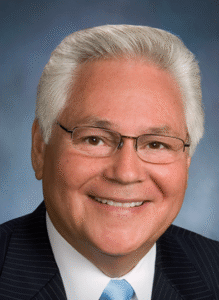
State Sen. Bob Archuleta
Assemblywoman Pilar Schiavo

State Sen. Bob Archuleta (D-Brea, Downey, Pico Rivera, Whittier, Montebello, La Mirada, Norwalk) and Assemblymember Pilar Schiavo (D-Santa Clarita, Granada Hills, Porter Ranch) saw the legislation they sponsored (SB 694) in their respective chambers strengthening protections against unaccredited individuals, often referred to as “claim sharks,” who exploit veterans through illegal fees, false promises, and misuse of sensitive information get signed into law last week.

“As Chair of the Senate Committee on Military and Veterans Affairs and as a veteran myself, I am pleased to see SB 694 signed into law,” said Archuleta. “This is a clear victory for veterans and their families. California is sending a strong message that exploitation of those who served will not be tolerated.”

The measure reinforces the role of trusted, VA-accredited County Veteran Service Offices and nonprofit Veterans Service Organizations while closing loopholes that allowed bad actors to operate without accountability. The law prohibits unaccredited claims assistance, bans the request or use of veterans’ federal login credentials, and enforces fee limits consistent with federal law.

This new law will prohibit any person or entity from soliciting, charging, or contracting for assistance with veterans’ benefits claims unless they are federally authorized to do so. This affirms that only accredited representatives may legally provide such services.

“As Chair of the Military and Veterans Committee and the daughter of a veteran, alongside so many, we fought to protect disabled veterans from illegal fees charged by predatory claims sharks,” said Schiavo. “Veterans who earned their benefits through service and sacrifice deserve every penny, and with the Governor’s signature of SB 694, we are making it clear that we will always protect our veterans and hold predators accountable.”

State Attorney General Rob Bonta was also a co-author of the measure.

With nearly 1.8 million veterans calling California home, SB 694 strengthens the state’s commitment to protecting veterans and ensuring they receive every benefit they earned through their service.

Zbur bill strengthens protections for youth in Foster Care

Assemblymember Rick Chavez Zbur

Assemblymember Rick Chavez Zbur (D–Hollywood, Hancock Park, West Hollywood, Beverly Hills, Westwood, West Los Angeles, Santa Monica) last Friday introduced AB 1967, legislation to end instability for vulnerable youth by strengthening safeguards when young people seek protection and ensuring timely access to extended foster care for young adults who need transitional support. 

The Alliance for Children’s Rights and the California Coalition for Youth also sponsored the bill, which establishes clear requirements for timely and responsive action by county child welfare agencies when a youth self-petitions for protection, and ensures that former youth in foster care ages 18 to 21 are not denied access to extended foster care when a guardian or adoptive parent continues to collect benefits without providing ongoing support.

“Young people who reach out for help are often doing so at a moment of crisis,” said Zbur. “This bill ensures that youth in foster care—who are disproportionately LGBTQ+, Black, and Native American—receive timely support and crucial interventions required to care for youth and keep them safe.”

Youth who experience abuse, neglect, or unsafe home environments often face inconsistent or delayed responses when they independently seek help from Child Protective Services. These gaps can leave young people—particularly those experiencing homelessness or family instability—without a reliable pathway to safety or care. 

In 2024, Child Protective Services received more than 400,000 reports of abuse or neglect statewide. A recent State Auditor report found that investigations and services are frequently delayed due to staff shortages and high caseloads, leaving vulnerable youth without timely protection.

At its core, the legislation is about strengthening accountability, improving responsiveness, and ensuring youth are not left without protection or stability during critical transitions.

Calderon measure would protect workers experiencing menopause

Assemblymember Lisa Calderon

Assemblymember Lisa Calderon (D-Whittier, La Puente, Industry) introduced AB 1940 last Friday to update the Fair Employment and Housing Act (FEHA) to explicitly include menopause in the definition of “sex” and tostrengthen employee awareness of workplace protections.

The bill also requires updated workplace notices and statewide outreach on menopause-related employment rights. AB 1940 ensures California law clearly protects workers experiencing perimenopause, menopause, and post-menopause from discrimination and harassment.

“For too long, workers experiencing menopause have navigated the workplace without a clear understanding of their rights,” said Calderon. “AB 1940 makes it clear that no one should face discrimination or harassment because of a natural biological transition, and it ensures employees know the protections available to them.”

California’s Fair Employment and Housing Act is the state’s primary civil rights law prohibiting harassment and discrimination in employment based on protected characteristics, including sex. While existing law specifies that the definition of “sex” includes pregnancy, childbirth, breastfeeding, and related medical conditions, it does not explicitly reference menopause.

An estimated 39 million women in the U.S. workforce are experiencing or approaching menopause, with menopause-related challenges contributing to approximately $1.8 billion in lost productivity annually. 

AB 1940 would update FEHA’s definition of “sex” to include perimenopause, menopause, post-menopause, and related medical conditions, require the California Department of Civil Rights to revise its workplace discrimination poster, and direct the Governor’s Office of Community Partnerships and Strategic Engagement to conduct statewide outreach on menopause-related employment rights.

“Clear guidance benefits both employees and employers,” said Calderon. “When workers understand their rights and businesses understand their responsibilities, we create healthier workplaces and retain experienced employees who are vital to our economy.”

Whittier Receives Budget Award Fourth Year In A Row

Whittier Mayor Joe Vinatieri

The City of Whittier announced last week that it has been awarded the Distinguished Budget Presentation Award from the Government Finance Officers Association (GFOA), marking the fourth consecutive year Whittier has earned prestigious national recognition.

The award honors cities that demonstrate excellence in budget planning, transparency, and communication. This recognition reflects Whittier’s careful planning and responsible financial management that support high-quality programs, services, and infrastructure throughout the community.

“To receive this award for a fourth consecutive year is a meaningful achievement,” said Mayor Joe Vinatieri. “It highlights the City Council’s dedication to remaining transparent, and fiscally responsible on a consistent basis, and reflects the exemplary work of City staff whose careful stewardship of public funds allows us to continue delivering the services Whittier residents rely on and enjoy.”

To qualify for the award, Whittier’s budget was evaluated against nationally recognized standards and rated proficient in four key areas: serving as a clear policy document, a sound financial plan, a practical operations guide, and an effective communications tool for the public. Budgets must meet all required criteria across these categories to earn the distinction.

The GFOA’s Budget Awards Program includes more than 1,900 participating governments across North America. Award recipients are recognized for setting a high standard in public budgeting and for making financial information accessible and understandable to the communities they serve.

Leave a Reply

Your email address will not be published. Required fields are marked *

Valladares pushes for buffer zone between schools and rehab Facilities

State Sen. Suzette Valladares

State Sen. Suzette Martinez Valladares (R-Lancaster, Palmdale, Santa Clarita, portions of the Antelope Valley) on Friday announced the introduction of Senate Bill (SB) 1060, legislation establishing a statewide standard requiring large residential alcohol and drug rehabilitation facilities to be located at least 1,000 feet away from public or private elementary schools, secondary schools, and daycare centers.

The bill applies to facilities that house more than six residents and provide on-site treatment or recovery services.

“We know that California is in need of effective addiction and behavioral health treatment centers,” said Valladares. “We also have a responsibility to ensure that large-scale facilities are not placed near schools and childcare centers. This bill strikes a balance between both priorities and offers a commonsense solution that brings clarity to the law.”

California does not currently have a uniform statewide standard dictating how close large residential treatment facilities can be located to schools and daycares. The absence of clear guidelines has raised concerns about student safety and has led to community conflict and uncertainty for local governments.

“This legislation recognizes two important truths,” said Valladares. “Addiction treatment is necessary and so is taking reasonable steps to protect our children. A 1,000-foot buffer is a measured solution that gives communities certainty and ensures that future decisions are thoughtful and balanced.”

SB1060 will be heard in policy committee later this legislative session.

Archuleta, Schiavo veteran protection bill gets Newsom signature 

State Sen. Bob Archuleta
Assemblywoman Pilar Schiavo

State Sen. Bob Archuleta (D-Brea, Downey, Pico Rivera, Whittier, Montebello, La Mirada, Norwalk) and Assemblymember Pilar Schiavo (D-Santa Clarita, Granada Hills, Porter Ranch) saw the legislation they sponsored (SB 694) in their respective chambers strengthening protections against unaccredited individuals, often referred to as “claim sharks,” who exploit veterans through illegal fees, false promises, and misuse of sensitive information get signed into law last week.

“As Chair of the Senate Committee on Military and Veterans Affairs and as a veteran myself, I am pleased to see SB 694 signed into law,” said Archuleta. “This is a clear victory for veterans and their families. California is sending a strong message that exploitation of those who served will not be tolerated.”

The measure reinforces the role of trusted, VA-accredited County Veteran Service Offices and nonprofit Veterans Service Organizations while closing loopholes that allowed bad actors to operate without accountability. The law prohibits unaccredited claims assistance, bans the request or use of veterans’ federal login credentials, and enforces fee limits consistent with federal law.

This new law will prohibit any person or entity from soliciting, charging, or contracting for assistance with veterans’ benefits claims unless they are federally authorized to do so. This affirms that only accredited representatives may legally provide such services.

“As Chair of the Military and Veterans Committee and the daughter of a veteran, alongside so many, we fought to protect disabled veterans from illegal fees charged by predatory claims sharks,” said Schiavo. “Veterans who earned their benefits through service and sacrifice deserve every penny, and with the Governor’s signature of SB 694, we are making it clear that we will always protect our veterans and hold predators accountable.”

State Attorney General Rob Bonta was also a co-author of the measure.

With nearly 1.8 million veterans calling California home, SB 694 strengthens the state’s commitment to protecting veterans and ensuring they receive every benefit they earned through their service.

Zbur bill strengthens protections for youth in Foster Care

Assemblymember Rick Chavez Zbur

Assemblymember Rick Chavez Zbur (D–Hollywood, Hancock Park, West Hollywood, Beverly Hills, Westwood, West Los Angeles, Santa Monica) last Friday introduced AB 1967, legislation to end instability for vulnerable youth by strengthening safeguards when young people seek protection and ensuring timely access to extended foster care for young adults who need transitional support. 

The Alliance for Children’s Rights and the California Coalition for Youth also sponsored the bill, which establishes clear requirements for timely and responsive action by county child welfare agencies when a youth self-petitions for protection, and ensures that former youth in foster care ages 18 to 21 are not denied access to extended foster care when a guardian or adoptive parent continues to collect benefits without providing ongoing support.

“Young people who reach out for help are often doing so at a moment of crisis,” said Zbur. “This bill ensures that youth in foster care—who are disproportionately LGBTQ+, Black, and Native American—receive timely support and crucial interventions required to care for youth and keep them safe.”

Youth who experience abuse, neglect, or unsafe home environments often face inconsistent or delayed responses when they independently seek help from Child Protective Services. These gaps can leave young people—particularly those experiencing homelessness or family instability—without a reliable pathway to safety or care. 

In 2024, Child Protective Services received more than 400,000 reports of abuse or neglect statewide. A recent State Auditor report found that investigations and services are frequently delayed due to staff shortages and high caseloads, leaving vulnerable youth without timely protection.

At its core, the legislation is about strengthening accountability, improving responsiveness, and ensuring youth are not left without protection or stability during critical transitions.

Calderon measure would protect workers experiencing menopause

Assemblymember Lisa Calderon

Assemblymember Lisa Calderon (D-Whittier, La Puente, Industry) introduced AB 1940 last Friday to update the Fair Employment and Housing Act (FEHA) to explicitly include menopause in the definition of “sex” and tostrengthen employee awareness of workplace protections.

The bill also requires updated workplace notices and statewide outreach on menopause-related employment rights. AB 1940 ensures California law clearly protects workers experiencing perimenopause, menopause, and post-menopause from discrimination and harassment.

“For too long, workers experiencing menopause have navigated the workplace without a clear understanding of their rights,” said Calderon. “AB 1940 makes it clear that no one should face discrimination or harassment because of a natural biological transition, and it ensures employees know the protections available to them.”

California’s Fair Employment and Housing Act is the state’s primary civil rights law prohibiting harassment and discrimination in employment based on protected characteristics, including sex. While existing law specifies that the definition of “sex” includes pregnancy, childbirth, breastfeeding, and related medical conditions, it does not explicitly reference menopause.

An estimated 39 million women in the U.S. workforce are experiencing or approaching menopause, with menopause-related challenges contributing to approximately $1.8 billion in lost productivity annually. 

AB 1940 would update FEHA’s definition of “sex” to include perimenopause, menopause, post-menopause, and related medical conditions, require the California Department of Civil Rights to revise its workplace discrimination poster, and direct the Governor’s Office of Community Partnerships and Strategic Engagement to conduct statewide outreach on menopause-related employment rights.

“Clear guidance benefits both employees and employers,” said Calderon. “When workers understand their rights and businesses understand their responsibilities, we create healthier workplaces and retain experienced employees who are vital to our economy.”

Whittier Receives Budget Award Fourth Year In A Row

Whittier Mayor Joe Vinatieri

The City of Whittier announced last week that it has been awarded the Distinguished Budget Presentation Award from the Government Finance Officers Association (GFOA), marking the fourth consecutive year Whittier has earned prestigious national recognition.

The award honors cities that demonstrate excellence in budget planning, transparency, and communication. This recognition reflects Whittier’s careful planning and responsible financial management that support high-quality programs, services, and infrastructure throughout the community.

“To receive this award for a fourth consecutive year is a meaningful achievement,” said Mayor Joe Vinatieri. “It highlights the City Council’s dedication to remaining transparent, and fiscally responsible on a consistent basis, and reflects the exemplary work of City staff whose careful stewardship of public funds allows us to continue delivering the services Whittier residents rely on and enjoy.”

To qualify for the award, Whittier’s budget was evaluated against nationally recognized standards and rated proficient in four key areas: serving as a clear policy document, a sound financial plan, a practical operations guide, and an effective communications tool for the public. Budgets must meet all required criteria across these categories to earn the distinction.

The GFOA’s Budget Awards Program includes more than 1,900 participating governments across North America. Award recipients are recognized for setting a high standard in public budgeting and for making financial information accessible and understandable to the communities they serve.