


By Los Angeles County Politics (LACP)
The Los Angeles City Fire Department (LAFD) committed itself to several additional protection measures recommended by the department’s After-Action Review Report (AARR) on the Palisades Fire released yesterday.
In emergency management, such after-action reports are known as “hot wash” reports. These post-event debriefs capture feedback and identify emergency management (EM) operations and response improvements.

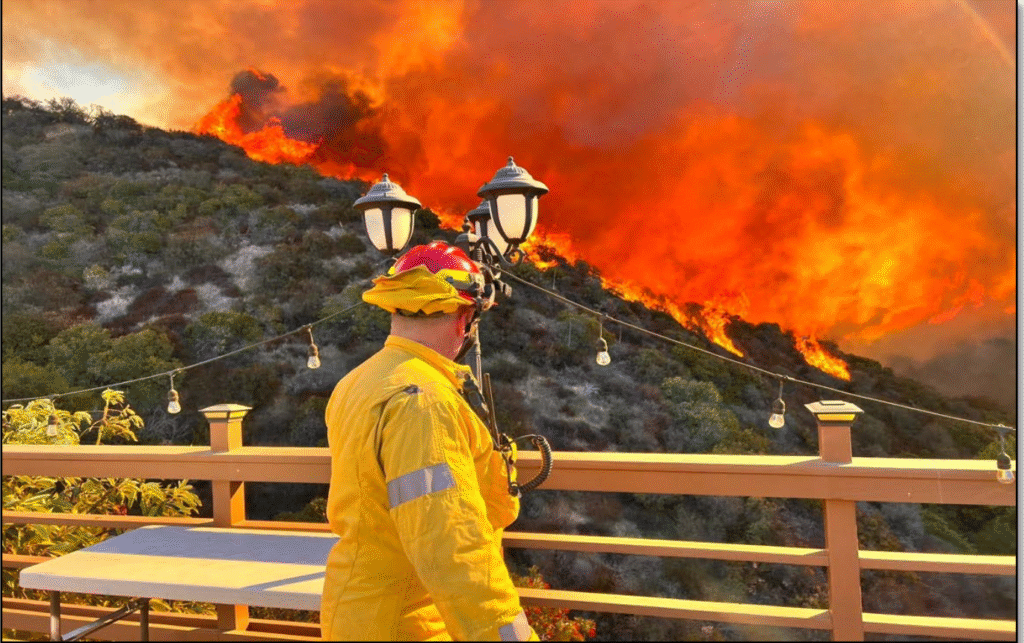
“The Palisades Fire was one of the worst natural disasters in our city’s history. It is vital we learn from what was effective, like the relentless heroism of firefighters responding to the blaze, and the challenges we faced in order to build a stronger emergency response system to prepare for whatever may come our way,” said Los Angeles Mayor Karen Bass.
Based on this AARR, the LAFD is implementing the following additional protection procedures:
- Enhanced Evacuation Procedures: LAFD is working on new and significantly improved evacuation exercises with a new software program, Genasys Protect, which will now be used across all regions in Los Angeles County. This will help reinforce new processes, including proper and efficient civilian evacuation.
- Advancing Communications: When wildfires threaten, communication is our lifeline. That’s why we’re adding tools like Starlink to keep information flowing, even when traditional networks fail.
- Updating the Pre-Deployment Matrix/Model: LAFD is updating preparation processes before a fire starts. This means moving resources into position earlier, giving every officer advance access to briefings, and holding tactical meetings more often, so the Department is ready to respond the moment danger sparks.
- Water Sourcing: LAFD is continuing to train all members on methods for acquiring alternative water sources, including pools, outside of the traditional hydrant system.
- Weather Tracking Technology: LAFD will use innovative technology to forecast weather, enabling us to predict upcoming emergency conditions and effectively initiate preparedness procedures.
- Community Education: LAFD is working closely with My Safe LA to ensure all LA residents can access critical life-saving instructions, up-to-date information, and resources to prepare and survive a wildfire.
Additionally, since January 2025, the LAFD has already implemented new tools, processes and protocols to improve preparedness and response, including:
- Leadership Changes: Since January 2025, LAFD has made 19 leadership changes, including the Mayor’s appointment of Interim Fire Chief Ronnie Villanueva, who brings more than 41 years of leadership and crisis management experience to the LAFD. Following the appointment, a search was initiated for a permanent chief.
- Stronger Recall Protocols: At the onset of a Red Flag Warning, the LAFD will immediately recall staff – regardless of extraneous circumstances – and staff all available apparatus.
- City Leadership Notification: The LAFD will explicitly notify the mayor and key city leadership as soon as possible and keep them up-to-speed at all times during any crisis.
- Clarifying Roles and Responsibilities: LAFD is committed to ensuring every department position is unequivocally clear on its role during an emergency. That means less confusion, no wasted steps and a stronger, faster response for our city.
- Innovating and Improving Training at All Levels: Our firefighters train harder and smarter. LAFD is upgrading weather-tracking tools, reviewing our warning sirens, and improving staff recall systems so we can alert the community faster. Every LAFD member will continue hands-on training in wildfire response, evacuation and protecting homes. LAFD will also run yearly evacuation drills based on real fire data and make sure every high-risk neighborhood has at least two safe ways out.
The AARR also identified several challenges including:
Leadership decisions, communications breakdowns, and strained staffing resources caused limitations that impacted LAFD response efforts within the first 24 hours.
- LAFD leadership decisions at the beginning of the fires caused the initial dispatch to lack a full, all-hands resource deployment.
- After 24 hours, a decision was made to deploy all available resources, including staff and apparatus, against the fast-moving fire.
- LAFD has made improvements in our protocols and equipment to mitigate these limitations.
Due to terrain features and excessive radio traffic, tactical coordination and command structure became strained.
- The scale and complexity complicated the response efforts.
- LAFD is addressing these issues through clearer coordination, enhanced training, and command staff leadership changes to better handle future emergencies.
Simultaneous fires and communication network issues hampered the immediate response.
- Response teams navigated communication issues, evacuation delays, and traffic obstructions as the Palisades Fire progressed.
- LAFD acknowledges the delays and communication issues, as well as how the breakdowns in communication impacted the initial coordination.
Click here to read the full report.