



Altadena Fire Victims Face Corporate Land Grab — Schiff and Trump Move to Block It

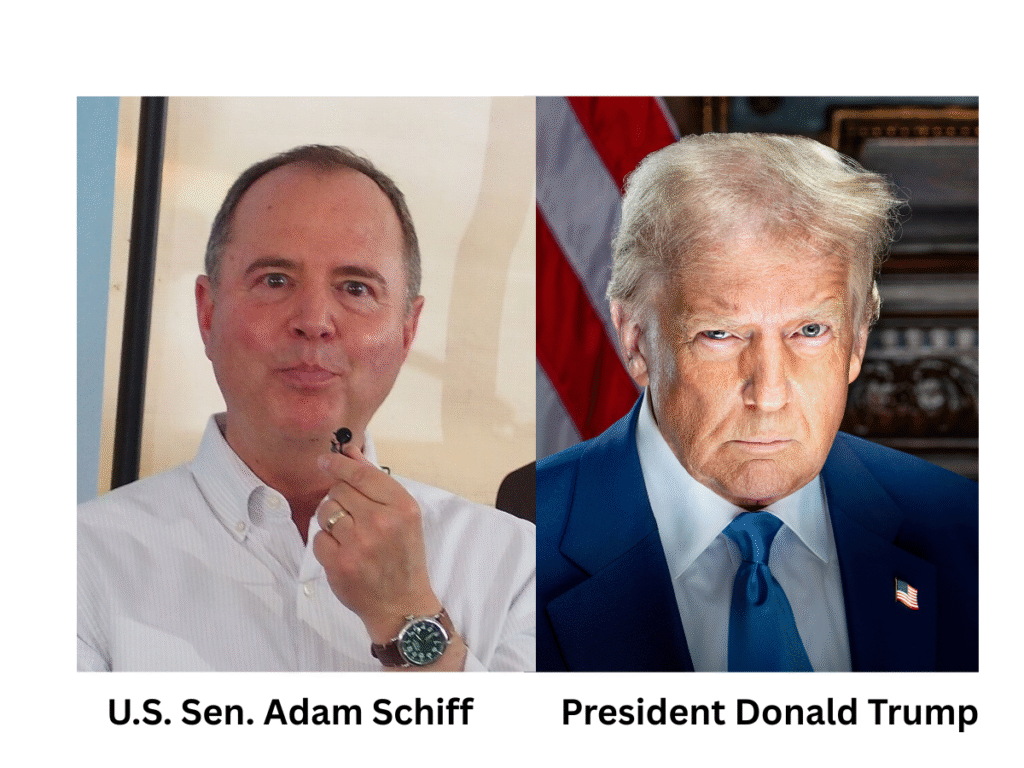
U.S. Sen. Adam Schiff and President Trump on the same side. It’s not a misprint — but for the fire survivors of Altadena, it may not be enough. 

That after corporate investors have purchased 60% of burned lots in the community since the Eaton Fire, and Washington is only now moving to do something about it.

Schiff announced Tuesday he will introduce legislation as part of a broader bipartisan housing package that would prohibit institutional investors owning 75 or more single-family homes from making an offer on any property within a disaster area for six months after a major disaster declaration.

The bill arrives too late for Altadena and Pacific Palisades. According to the Los Angeles Times, about seven months after the Eaton Fire, roughly 60% of all property purchases in fire-damaged Altadena were made by investors, according to the Altadena Not for Sale movement. A third-quarter 2025 analysis covering Pacific Palisades, Malibu, and Altadena found nearly 40% of lots going to investors.

“Across the country, Americans have witnessed giant corporate landlords and Wall Street firms buying up droves of lots in the wake of natural disasters with artificially low offers that take advantage of vulnerable families,” Schiff said in a statement.

The Schiff bill is part of a rare moment of political convergence on an issue that has long frustrated both sides of the aisle. On January 20, 2026 — his first day back in office — Trump signed an executive order titled “Stopping Wall Street from Competing with Main Street Homebuyers,” directing federal agencies to limit support for institutional purchases of single-family homes. “Neighborhoods and communities once controlled by middle-class American families are now run by faraway corporate interests,” Trump wrote. “People live in homes, not corporations.”

The order directs key agencies to issue guidance preventing federal programs from approving, insuring, guaranteeing, or facilitating sales of single-family homes to large institutional investors, and instructs agencies to promote sales to individual owner-occupants through “first-look” policies and anti-circumvention measures. The White House also tasked staff with preparing legislative recommendations to codify the policy into law.

Though the order does not ban institutional investors outright or require portfolio sales, Treasury Secretary Scott Bessent has signaled that officials are considering lower thresholds — potentially as few as a dozen or two dozen homes — for defining a “large institutional investor.”

But community organizers in Altadena say none of this is moving fast enough. Melissa Michelson, co-founder of the Altadena Not for Sale movement, welcomed Schiff’s attention to the problem while questioning its scope and timing. “Six months is not enough of a breather for people to deal with all the issues and decisions they have to make,” she said. “Why did Adam Schiff wait so long for this?”

In January, the group found that eight companies had purchased 76 properties in Altadena — about a quarter of all properties sold in the first year since the fire.

“Families who can’t afford to rebuild are being replaced by investors who can,” said Lisa Odgie of the Eaton Fire Collaborative. “That is not recovery. That is displacement dressed up as a real estate transaction.”

The Schiff disaster-zone bill complements a broader legislative push on Capitol Hill. The American Homeownership Act, co-sponsored by Schiff and more than a dozen Senate Democrats, seeks to limit tax advantages that large corporations and investment firms use to acquire single-family homes. A separate measure would ban investors owning at least 1,000 single-family properties from purchasing additional homes to rent out.

Some economists remain skeptical that restricting institutional investors will significantly move the needle on housing affordability, arguing the more pressing issue is supply. But in communities like Altadena — where the threat isn’t just cost, but the wholesale transformation of a historically Black neighborhood — the stakes feel different.

Schiff has been active on multiple legislative fronts since joining the Senate. He previously partnered with Republican Sen. Tim Sheehy of Montana on the bipartisan FIREWALL Act, which would create a federal tax credit for homeowners making disaster-resilience upgrades. 

He also co-introduced the Mortgage Relief for Disaster Survivors Act with Sen. Michael Bennet of Colorado, which would grant homeowners in disaster-declared areas up to 360 days of mortgage forbearance without interest or penalties.


Leave a Reply

Your email address will not be published. Required fields are marked *

U.S. Sen. Adam Schiff and President Trump on the same side. It’s not a misprint — but for the fire survivors of Altadena, it may not be enough. 

That after corporate investors have purchased 60% of burned lots in the community since the Eaton Fire, and Washington is only now moving to do something about it.

Schiff announced Tuesday he will introduce legislation as part of a broader bipartisan housing package that would prohibit institutional investors owning 75 or more single-family homes from making an offer on any property within a disaster area for six months after a major disaster declaration.

The bill arrives too late for Altadena and Pacific Palisades. According to the Los Angeles Times, about seven months after the Eaton Fire, roughly 60% of all property purchases in fire-damaged Altadena were made by investors, according to the Altadena Not for Sale movement. A third-quarter 2025 analysis covering Pacific Palisades, Malibu, and Altadena found nearly 40% of lots going to investors.

“Across the country, Americans have witnessed giant corporate landlords and Wall Street firms buying up droves of lots in the wake of natural disasters with artificially low offers that take advantage of vulnerable families,” Schiff said in a statement.

The Schiff bill is part of a rare moment of political convergence on an issue that has long frustrated both sides of the aisle. On January 20, 2026 — his first day back in office — Trump signed an executive order titled “Stopping Wall Street from Competing with Main Street Homebuyers,” directing federal agencies to limit support for institutional purchases of single-family homes. “Neighborhoods and communities once controlled by middle-class American families are now run by faraway corporate interests,” Trump wrote. “People live in homes, not corporations.”

The order directs key agencies to issue guidance preventing federal programs from approving, insuring, guaranteeing, or facilitating sales of single-family homes to large institutional investors, and instructs agencies to promote sales to individual owner-occupants through “first-look” policies and anti-circumvention measures. The White House also tasked staff with preparing legislative recommendations to codify the policy into law.

Though the order does not ban institutional investors outright or require portfolio sales, Treasury Secretary Scott Bessent has signaled that officials are considering lower thresholds — potentially as few as a dozen or two dozen homes — for defining a “large institutional investor.”

But community organizers in Altadena say none of this is moving fast enough. Melissa Michelson, co-founder of the Altadena Not for Sale movement, welcomed Schiff’s attention to the problem while questioning its scope and timing. “Six months is not enough of a breather for people to deal with all the issues and decisions they have to make,” she said. “Why did Adam Schiff wait so long for this?”

In January, the group found that eight companies had purchased 76 properties in Altadena — about a quarter of all properties sold in the first year since the fire.

“Families who can’t afford to rebuild are being replaced by investors who can,” said Lisa Odgie of the Eaton Fire Collaborative. “That is not recovery. That is displacement dressed up as a real estate transaction.”

The Schiff disaster-zone bill complements a broader legislative push on Capitol Hill. The American Homeownership Act, co-sponsored by Schiff and more than a dozen Senate Democrats, seeks to limit tax advantages that large corporations and investment firms use to acquire single-family homes. A separate measure would ban investors owning at least 1,000 single-family properties from purchasing additional homes to rent out.

Some economists remain skeptical that restricting institutional investors will significantly move the needle on housing affordability, arguing the more pressing issue is supply. But in communities like Altadena — where the threat isn’t just cost, but the wholesale transformation of a historically Black neighborhood — the stakes feel different.

Schiff has been active on multiple legislative fronts since joining the Senate. He previously partnered with Republican Sen. Tim Sheehy of Montana on the bipartisan FIREWALL Act, which would create a federal tax credit for homeowners making disaster-resilience upgrades. 

He also co-introduced the Mortgage Relief for Disaster Survivors Act with Sen. Michael Bennet of Colorado, which would grant homeowners in disaster-declared areas up to 360 days of mortgage forbearance without interest or penalties.