


Thursday, Feb. 26, 2026

Hochman charges LAPD officer for allegedly skydiving while on disability 
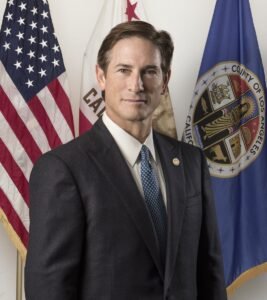
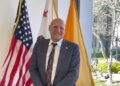
LA County District Attorney Nathan J. Hochman

Los Angeles County District Attorney Nathan J. Hochman yesterday announced charges against a Los Angeles police officer with two counts of felony insurance fraud for allegedly exaggerating an on-duty injury to collect disability benefits while participating in recreational skydiving and other physical activity.

“This case is about honesty and accountability,” said Hochman. “Claiming to be temporarily totally disabled and collecting disability benefits intended for injured workers while engaging in physically demanding activities like skydiving is a crime. This is an officer who knows the law and understands the standards he is sworn to uphold.”

Christopher Brandon Carnahan, 43, of Norwalk is charged with two counts of felony insurance fraud. His arraignment will be scheduled for a later date. He is being held on $100,000 bail. 

On May 22, 2023, Officer Carnahan purportedly injured his left elbow while on duty and was subsequently placed on Temporary Totally Disabled (TTD) status. Prosecutors allege that while on TTD status, Carnahan completed many skydives at Skydive Elsinore in Lake Elsinore, California and worked out at a fitness center, contrary to his claims of being temporarily totally disabled.

If convicted as charged, Carnahan faces up to six years in state prison to be served in county jail.

Sherman sounds alarm on potential Saudi nuclear deal

U.S. Rep. Brad Sherman

U.S. Rep. Brad Sherman (D-Sherman Oaks, Encino, Studio City, Valley Village), Ranking Member of the House Foreign Affairs Subcommittee on the Middle East and North Africa, this week issued a stark warning about a potential U.S.–Saudi nuclear cooperation agreement and announced he will reintroduce the No Nuclear Weapons for Saudi Arabia Act.

The bipartisan legislation was first introduced in 2018 with then-Senator Marco Rubio requiring affirmative congressional approval before any U.S.–Saudi nuclear agreement could take effect (see the 2018 bill and explanatory press release).

The Trump Administration has notified Congress of its intent to pursue a so-called “123 Agreement” with Saudi Arabia. Sherman warned that any deal lacking the strongest nonproliferation safeguards would threaten U.S. security and global stability and announced he will introduce a Resolution of Disapproval if the President submits an agreement that fails to include Gold Standard and Additional Protocol requirements.

“America should be leading the world in preventing nuclear proliferation — not lowering the bar,” said Sherman. “Any nuclear agreement with Saudi Arabia must include ironclad nonproliferation protections. That’s why I am reintroducing the No Nuclear Weapons for Saudi Arabia Act. Without the strongest safeguards, we risk fueling nuclear proliferation in one of the world’s most volatile regions.”

The legislation would require affirmative congressional approval before any U.S.–Saudi nuclear agreement could take effect.

Sherman emphasized that any civilian nuclear cooperation must, at a minimum, require Saudi Arabia to adopt the International Atomic Energy Agency’s Additional Protocol and permanently renounce uranium enrichment and spent fuel reprocessing — the proven “Gold Standard” for preventing nuclear breakout. These same safeguards were included in the U.S.–United Arab Emirates nuclear agreement.

Without stronger statutory guardrails, Sherman warned, Congress would face steep procedural hurdles to block a weak agreement after the fact.

Fong gets LA28 backing to extend in-state eligibility for Team USA 

Assemblymember Mike Fong

Assemblymember Mike Fong (D-Alhambra, Monterey Park, San Gabriel, Temple City) yesterday announced 2028 Olympic and Paralympic Games (LA28) support for his legislation (AB2436) to permanently extend in-state eligibility for Team USA student athletes training in California.

Co-authors of the legislation include Los Angeles Assemblymembers Tina McKinnor, John Harabedian, Nick Schultz, and Rick Chavez Zbur, as well as Los Angeles State Senators Lena Gonzalez and Laura Richardson.

“California is home to some of the most prestigious public colleges and universities in the country,” said Fong, Chair of the Higher Education Committee. “As elite student-athletes commit themselves to representing Team USA and choose to train in our great state, we have a responsibility to ensure that cost is not a burden to their educational goals. Permanently extending resident tuition eligibility through AB 2436 strengthens California’s commitment to long-term success of the next generation of scholars, athletes, and Olympic champions.”

The proposed bill removes the July 1, 2032 sunset provision in Section 68083 of the California Education Code, permanently extending in-state tuition eligibility for Team USA student athletes training in California in an elite-level program approved by the United States Olympic & Paralympic Committee (USOPC).

The bill maintains accountability measures requiring Team USA student athletes to certify their participation in an Olympic or Paralympic elite-level training program through documentation from the United States Olympic and Paralympic Committee and to submit verification to their campus.

Archuleta, Schiavo tag team legislation helps veterans
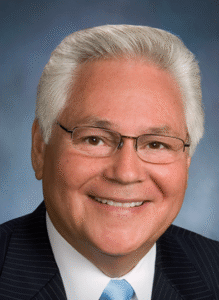
State Sen. Bob Archuleta
Assemblywoman Pilar Schiavo

State Sen. Bob Archuleta (D-Pico Rivera, Brea, Downey, Whittier, Montebello, La Mirada, Norwalk, Orange County), and Assemblymember Pilar Schiavo (D-Santa Clarita, Granada Hills, Porter Ranch) this week led authorship of legislation (SB 1407) that will exclude military retirement pay and income from personal gross income. 

The measure seeks to incentivize veterans to stay in California and pursue second careers, guaranteeing their continued investment in the state’s economy while supplying highly skilled workforce for the state. 

“For too long our veterans have been faced with a difficult decision: stay in this beautiful state while struggling to make ends meet with rising costs of living or move to a state that financially incentivizes them to join their labor force and feed federal dollars into their economy,” said Archuleta, Chair of the Senate Committee on Military and Veterans Affairs and U.S. Army veteran. “I’ve heard from far too many of my brothers and sisters who say California has become too expensive for them to live and say a tax exemption on their retirement pay would be the determining factor on whether they stay or leave.” 

From 2010 to 2021, the veteran retiree population grew by 17% in the United States. California was one of only five states to experience a decrease in the military retiree population, with a 14% reduction. 

Between 2010 and 2022, California lost over 24,000 military retirees, resulting in recurring annual losses of more than $700 million in federal retirement and survivor payments that would otherwise flow through California’s economy.

“After years of hard work, we took an important first step toward making military retirement more affordable by exempting the first $20,000 of military pension income from state taxes starting in 2026,” said Schiavo. “Now it’s time to finish the job and fully exempt military retirement and survivor pay so veterans can continue building their lives and careers right here in California. 

California’s current tax structure discourages long-term service and drives away mid-career leaders, weakening our state’s ability to meet homeland defense, wildfire, disaster response, and civil support missions. As retention challenges grow, wemust recognize that fiscal policy plays a role in long-term enlistment decisions. Aside from their federal retirement, retiree households can contribute $50,000 to $100,000 in annual taxable income.

“Veterans staying in California will pay sales, property, and use taxes, benefiting local governments,” said Archuleta, “by exempting military retirement pay for retirees, SB 1407 will ensure California retains these highly skilled professionals and keeps the reinvestment of federal dollars and wages from second careers.”

Pérez introduces legislation to make online dating safer 

Sen. Sasha Renée Pérez

State Sen. Sasha Renée Pérez (D-Altadena, Arcadia, Burbank, Claremont, Duarte, Glendale, Pasadena, La Cañada Flintridge, South Pasadena, Upland) last week introduced legislation (SB 957) designed to strengthen safety standards, transparency, and accountability across online dating platforms operating in California. 

Dubbed the Online Dating Safety and Transparency Act, the measure would require online dating services to adopt a safety policy that meets minimum standards for protecting users. It would also mandate annual reporting to ensure accountability and impose penalties for noncompliance.

“Online dating is firmly established as a popular way for people to meet, but the safety standards behind these platforms have clearly not kept pace,” said Pérez. “Californians deserve transparency, accountability, and basic protections when they use apps or websites that facilitate intimate, personal interactions. This legislation would ensure companies take responsibility for user safety instead of leaving people to fend for themselves.”

With nearly one‑third of American adults having used an online dating service, these platforms have become part of modern social life. But alongside their popularity, reports of harassment, sexual abuse, and deceptive behavior have increased—often without adequate response from the companies that operate them. 

In California, a man in Fontana was arrested in 2024 for raping a woman he met on a dating app. Police discovered that he had been using multiple usernames and fake identities across various dating platforms to connect with women. 

A Pew Research survey further revealed that 35% of American adults who use dating platforms have received unsolicited explicit images or messages, while 9% reported receiving threats of physical harm. These threats and unwanted behaviors are more commonly experienced by women under 50 years of age. 

Despite these dangers, California currently has no comprehensive safety requirements for online dating services.

Leave a Reply

Your email address will not be published. Required fields are marked *

Hochman charges LAPD officer for allegedly skydiving while on disability 

LA County District Attorney Nathan J. Hochman

Los Angeles County District Attorney Nathan J. Hochman yesterday announced charges against a Los Angeles police officer with two counts of felony insurance fraud for allegedly exaggerating an on-duty injury to collect disability benefits while participating in recreational skydiving and other physical activity.

“This case is about honesty and accountability,” said Hochman. “Claiming to be temporarily totally disabled and collecting disability benefits intended for injured workers while engaging in physically demanding activities like skydiving is a crime. This is an officer who knows the law and understands the standards he is sworn to uphold.”

Christopher Brandon Carnahan, 43, of Norwalk is charged with two counts of felony insurance fraud. His arraignment will be scheduled for a later date. He is being held on $100,000 bail. 

On May 22, 2023, Officer Carnahan purportedly injured his left elbow while on duty and was subsequently placed on Temporary Totally Disabled (TTD) status. Prosecutors allege that while on TTD status, Carnahan completed many skydives at Skydive Elsinore in Lake Elsinore, California and worked out at a fitness center, contrary to his claims of being temporarily totally disabled.

If convicted as charged, Carnahan faces up to six years in state prison to be served in county jail.

Sherman sounds alarm on potential Saudi nuclear deal

U.S. Rep. Brad Sherman

U.S. Rep. Brad Sherman (D-Sherman Oaks, Encino, Studio City, Valley Village), Ranking Member of the House Foreign Affairs Subcommittee on the Middle East and North Africa, this week issued a stark warning about a potential U.S.–Saudi nuclear cooperation agreement and announced he will reintroduce the No Nuclear Weapons for Saudi Arabia Act.

The bipartisan legislation was first introduced in 2018 with then-Senator Marco Rubio requiring affirmative congressional approval before any U.S.–Saudi nuclear agreement could take effect (see the 2018 bill and explanatory press release).

The Trump Administration has notified Congress of its intent to pursue a so-called “123 Agreement” with Saudi Arabia. Sherman warned that any deal lacking the strongest nonproliferation safeguards would threaten U.S. security and global stability and announced he will introduce a Resolution of Disapproval if the President submits an agreement that fails to include Gold Standard and Additional Protocol requirements.

“America should be leading the world in preventing nuclear proliferation — not lowering the bar,” said Sherman. “Any nuclear agreement with Saudi Arabia must include ironclad nonproliferation protections. That’s why I am reintroducing the No Nuclear Weapons for Saudi Arabia Act. Without the strongest safeguards, we risk fueling nuclear proliferation in one of the world’s most volatile regions.”

The legislation would require affirmative congressional approval before any U.S.–Saudi nuclear agreement could take effect.

Sherman emphasized that any civilian nuclear cooperation must, at a minimum, require Saudi Arabia to adopt the International Atomic Energy Agency’s Additional Protocol and permanently renounce uranium enrichment and spent fuel reprocessing — the proven “Gold Standard” for preventing nuclear breakout. These same safeguards were included in the U.S.–United Arab Emirates nuclear agreement.

Without stronger statutory guardrails, Sherman warned, Congress would face steep procedural hurdles to block a weak agreement after the fact.

Fong gets LA28 backing to extend in-state eligibility for Team USA 

Assemblymember Mike Fong

Assemblymember Mike Fong (D-Alhambra, Monterey Park, San Gabriel, Temple City) yesterday announced 2028 Olympic and Paralympic Games (LA28) support for his legislation (AB2436) to permanently extend in-state eligibility for Team USA student athletes training in California.

Co-authors of the legislation include Los Angeles Assemblymembers Tina McKinnor, John Harabedian, Nick Schultz, and Rick Chavez Zbur, as well as Los Angeles State Senators Lena Gonzalez and Laura Richardson.

“California is home to some of the most prestigious public colleges and universities in the country,” said Fong, Chair of the Higher Education Committee. “As elite student-athletes commit themselves to representing Team USA and choose to train in our great state, we have a responsibility to ensure that cost is not a burden to their educational goals. Permanently extending resident tuition eligibility through AB 2436 strengthens California’s commitment to long-term success of the next generation of scholars, athletes, and Olympic champions.”

The proposed bill removes the July 1, 2032 sunset provision in Section 68083 of the California Education Code, permanently extending in-state tuition eligibility for Team USA student athletes training in California in an elite-level program approved by the United States Olympic & Paralympic Committee (USOPC).

The bill maintains accountability measures requiring Team USA student athletes to certify their participation in an Olympic or Paralympic elite-level training program through documentation from the United States Olympic and Paralympic Committee and to submit verification to their campus.

Archuleta, Schiavo tag team legislation helps veterans

State Sen. Bob Archuleta
Assemblywoman Pilar Schiavo

State Sen. Bob Archuleta (D-Pico Rivera, Brea, Downey, Whittier, Montebello, La Mirada, Norwalk, Orange County), and Assemblymember Pilar Schiavo (D-Santa Clarita, Granada Hills, Porter Ranch) this week led authorship of legislation (SB 1407) that will exclude military retirement pay and income from personal gross income. 

The measure seeks to incentivize veterans to stay in California and pursue second careers, guaranteeing their continued investment in the state’s economy while supplying highly skilled workforce for the state. 

“For too long our veterans have been faced with a difficult decision: stay in this beautiful state while struggling to make ends meet with rising costs of living or move to a state that financially incentivizes them to join their labor force and feed federal dollars into their economy,” said Archuleta, Chair of the Senate Committee on Military and Veterans Affairs and U.S. Army veteran. “I’ve heard from far too many of my brothers and sisters who say California has become too expensive for them to live and say a tax exemption on their retirement pay would be the determining factor on whether they stay or leave.” 

From 2010 to 2021, the veteran retiree population grew by 17% in the United States. California was one of only five states to experience a decrease in the military retiree population, with a 14% reduction. 

Between 2010 and 2022, California lost over 24,000 military retirees, resulting in recurring annual losses of more than $700 million in federal retirement and survivor payments that would otherwise flow through California’s economy.

“After years of hard work, we took an important first step toward making military retirement more affordable by exempting the first $20,000 of military pension income from state taxes starting in 2026,” said Schiavo. “Now it’s time to finish the job and fully exempt military retirement and survivor pay so veterans can continue building their lives and careers right here in California. 

California’s current tax structure discourages long-term service and drives away mid-career leaders, weakening our state’s ability to meet homeland defense, wildfire, disaster response, and civil support missions. As retention challenges grow, wemust recognize that fiscal policy plays a role in long-term enlistment decisions. Aside from their federal retirement, retiree households can contribute $50,000 to $100,000 in annual taxable income.

“Veterans staying in California will pay sales, property, and use taxes, benefiting local governments,” said Archuleta, “by exempting military retirement pay for retirees, SB 1407 will ensure California retains these highly skilled professionals and keeps the reinvestment of federal dollars and wages from second careers.”

Pérez introduces legislation to make online dating safer 

Sen. Sasha Renée Pérez

State Sen. Sasha Renée Pérez (D-Altadena, Arcadia, Burbank, Claremont, Duarte, Glendale, Pasadena, La Cañada Flintridge, South Pasadena, Upland) last week introduced legislation (SB 957) designed to strengthen safety standards, transparency, and accountability across online dating platforms operating in California. 

Dubbed the Online Dating Safety and Transparency Act, the measure would require online dating services to adopt a safety policy that meets minimum standards for protecting users. It would also mandate annual reporting to ensure accountability and impose penalties for noncompliance.

“Online dating is firmly established as a popular way for people to meet, but the safety standards behind these platforms have clearly not kept pace,” said Pérez. “Californians deserve transparency, accountability, and basic protections when they use apps or websites that facilitate intimate, personal interactions. This legislation would ensure companies take responsibility for user safety instead of leaving people to fend for themselves.”

With nearly one‑third of American adults having used an online dating service, these platforms have become part of modern social life. But alongside their popularity, reports of harassment, sexual abuse, and deceptive behavior have increased—often without adequate response from the companies that operate them. 

In California, a man in Fontana was arrested in 2024 for raping a woman he met on a dating app. Police discovered that he had been using multiple usernames and fake identities across various dating platforms to connect with women. 

A Pew Research survey further revealed that 35% of American adults who use dating platforms have received unsolicited explicit images or messages, while 9% reported receiving threats of physical harm. These threats and unwanted behaviors are more commonly experienced by women under 50 years of age. 

Despite these dangers, California currently has no comprehensive safety requirements for online dating services.