


By Los Angeles County Politics (LACP)
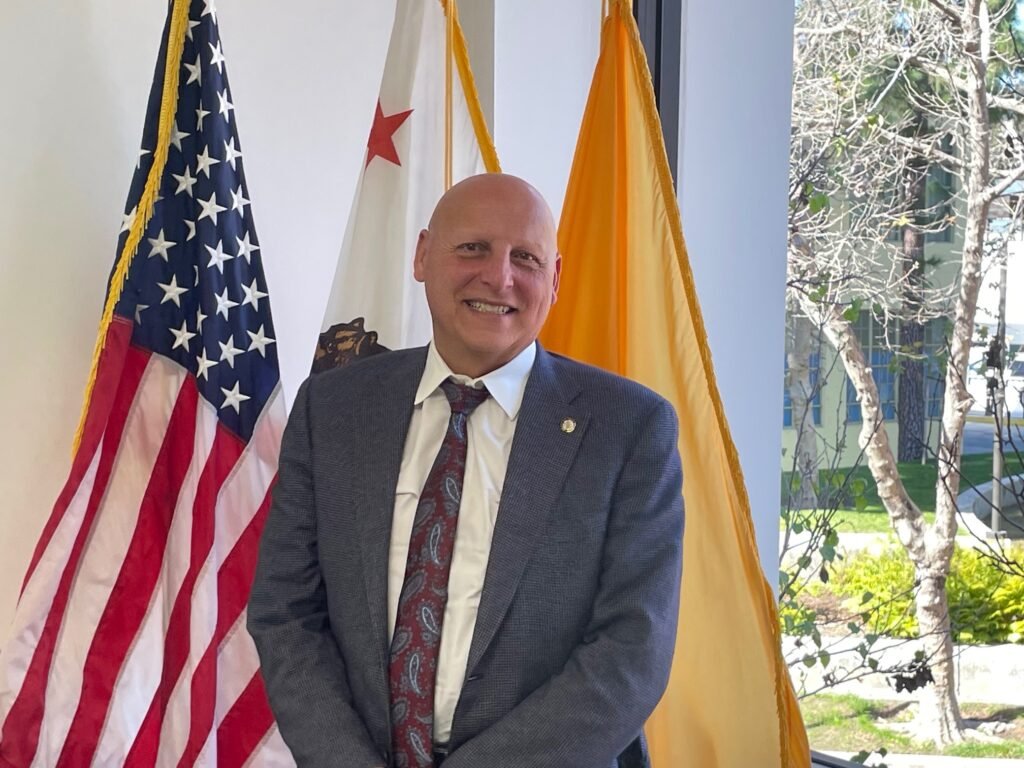
After nearly two decades on the Glendale City Council and five terms as mayor, Ara Najarian is calling it quits. But his decision to retire has less to do with age or ambition than with a hard political reality: as a Republican in heavily Democratic California, he believes he has hit a glass ceiling that is “the most firm ceiling than any individual or group has facing them.”
In a wide-ranging interview, the 65-year-old attorney and transportation expert spoke candidly about navigating Republican politics in Los Angeles County, the structural limits of Glendale’s city manager government, and why moderate voices—even Democratic ones—are being silenced.
“As a Republican, you’ve got a R next to your name, you’re cooked,” Najarian said. “People will automatically judge you, have a bias against you, associate you with Trump, associate you with MAGA and everything that’s bad.”
The Glass Ceiling
First elected to the Glendale City Council in 2005 with the highest vote count, Najarian has served as mayor five times. But in Glendale’s city manager form of government, the mayor serves only a one-year term and is selected by fellow council members, not elected directly—a system that has both enabled his longevity and limited his ability to rise further.
“The glass ceiling doesn’t exist anymore for women, people of color, gay and lesbians, for foreign-born,” Najarian said. “What exists is being labeled a Republican and not having a chance in hell of getting elected, except in very few and sparse areas of the state, mainly inland.”
He pointed to redistricting and California’s Democratic supermajority as mechanisms that have systematically reduced Republican representation far below the party’s actual voter share. While Trump garnered roughly 40% of California’s vote in recent elections, Republicans hold nowhere near 40% of legislative seats.
Najarian ran for the Los Angeles County Board of Supervisors in 2016, earning a Los Angeles Times endorsement but finishing fourth. He’s considering another run in two years, though he acknowledges the challenges remain steep, with even moderate Democrats being pushed out by progressives.
The Limits of City Manager Government
Beyond partisan politics, Najarian’s retirement reflects his belief that Glendale has reached a structural inflection point. With approximately 220,000 residents and an annual budget exceeding $1 billion, the city is testing the limits of its weak-mayor, strong-city-manager form of government.
“Right now, I think we’re hitting the ceiling of how big we can be with a city manager style government,” Najarian said. “If we get to 250,000 or 300,000 population, then I think it’s time to go to districts and a single elected mayor.”
Glendale’s structure gives significant power to the city manager, who oversees day-to-day operations and makes administrative decisions without direct council oversight. While a professional manager brings technical expertise and can be quickly removed if performance falters, “a lot of things that go on are not brought to our attention,” Najarian acknowledged.
He contrasted this with larger cities like Los Angeles and Long Beach, which have directly elected mayors with greater executive authority. While that model offers clearer accountability, it also creates risks. “You can get an elected mayor who was a bean farmer, knows diddly about all that,” he said. “We got this big budget—how does that work?”
Despite the frustrations, Najarian favors keeping Glendale’s current system at its present size, citing the ability to quickly remove a bad city manager versus the drawn-out recall process required to oust an elected mayor.
The Democratic Squeeze
What may be most striking about Najarian’s analysis is not his criticism of Democratic dominance, but his warning that moderate Democrats themselves are facing a similar squeeze from the progressive left.
He cited Los Angeles City Council races in which established Democrats such as Mitch O’Farrell (who lost to labor organizer Hugo Soto-Martinez in 2022) and Gil Cedillo (who lost to community activist Eunisses Hernandez in 2022) were defeated by more progressive challengers.
“If I was a moderate Democrat, I would be concerned that my voice is not going to be heard,” Najarian said. “The Democrat Socialists of America are becoming more and more relevant.”
Najarian’s political positioning is difficult to categorize. He describes himself as a moderate, supports robust public transit investment, and served as chairman of the Los Angeles Metro board in 2010-2011.
Yet on issues such as California’s refinery closures and rising gas prices, he aligns with Republican critiques, accusing the Newsom administration of deliberately raising gasoline prices to push residents toward public transit—a policy he opposes despite his own transit advocacy.
“I’m a transit guy, but I will never go that far to squeeze the drivers,” he said. “That’s forcing an agenda on the voters.”
What’s Next
Najarian’s mayoral term runs through April 2026, and he will not seek reelection to the city council. He is exploring a run for the Los Angeles County Board of Supervisors in two years and has expressed interest in a federal appointment to a transportation position in the Trump administration—though he acknowledged that “anyone here who’s going to work for the Trump administration becomes a target.”
For now, the five-time mayor is focused on finishing his term while grappling with political realities: too Republican for California’s Democratic strongholds, too moderate for today’s Republican Party, and increasingly convinced that the political center is disappearing entirely.
As for Glendale, Najarian believes the city he has served for nearly 20 years is at a crossroads. Whether it evolves toward stronger mayoral leadership or maintains its city manager structure may depend on how much larger it grows. But for Najarian himself, the path forward appears increasingly narrow—a reality he attributes not to his own limitations, but to a system that has closed its doors to Republicans and moderates alike.










Comments 6
This is so funny. Najarian has spent the past several years making outrageous false claims against Glendale Unified public schools, attacking LGBTQ teachers and students and parents. When he was called out on his lies, he doubled down. He’s openly hostile to constituents and fellow council members at meetings, and has been in office for nearly 2 decades but still feels he hasn’t “had his turn.” Maybe if he were better at his job, he’d have a future. How he is still on the Metro board is a mystery, given his active opposition to improving road safety and accessibility in Glendale. Good luck on the MAGA appointment, you’ll be great at it (or maybe not) Ara.
“The glass ceiling doesn’t exist anymore for women, people of color, gay and lesbians, for foreign-born,” Najarian said. “What exists is being labeled a Republican and not having a chance in hell of getting elected, except in very few and sparse areas of the state, mainly inland.”
Have you tried introducing policy that helps the voters instead of crying about how you’re a bigger victim than a bunch of other people who aren’t the mayor?
How about walking away talking about all the great stuff you accomplished instead of acting like some kind of sore loser? You give the impression that you didn’t accomplish anything worth talking about.
“Yet on issues such as California’s refinery closures and rising gas prices, he aligns with Republican critiques, accusing the Newsom administration of deliberately raising gasoline prices to push residents toward public transit…”
You’re all for private companies getting to do what they want until it bites you. Then it’s not the private company’s fault; it’s the Democrats’ fault.
I’ve voted for Ara, more than once, since 2005. Somewhere in the middle something shifted. It became all about Ara. Long, prima donna rants on the dais, self-serving soliloquies that attacked community members (re: “wine-gate”) to silly end. It was embarrassing – to everyone but himself. Ara dug in and chose his rabbit hole, and now wants to blame everything but his own life choices. His legacy is of his own making, 100 percent: using his protected seat to attack people in his community, spread disinformation, lose his lawsuit against the city, back extremists, and eventually become one. And now he’s playing his favorite card: victim. Only of your own actions, Ara. To quote the band Minor Threat,” Boo-f**king-hoo. Don’t let the door hit you in the ass on the way out.
I’ve voted for Ara, more than once, since 2005. Somewhere in the middle something shifted. It became all about Ara. Long, prima donna rants on the dais, self-serving soliloquies that attacked community members (re: “wine-gate”) to silly end. It was embarrassing – to everyone but himself. Ara dug in and chose his rabbit hole, and now wants to blame everything but his own life choices. His legacy is of his own making, 100 percent: using his protected seat to attack people in his community, spread disinformation, lose his lawsuit against the city, back extremists, and eventually become one. And now he’s playing his favorite card: victim. Only of your own actions, Ara. To quote the band Minor Threat,” Boo-f**king-hoo. Don’t let the door hit you in the ass on the way out.
“The Democrat Socialists of America are becoming more and more relevant.”
Preach it, Ara! Can I get an amen?
Public office is about more than longevity. Some of us remember the public comments, the anti LGBTQ rhetoric voiced from the dais, and a record that too often appeared to prioritize political allies and private interests over the broader community. After decades in office, it’s fair to ask: what lasting, transformative accomplishments did he leave Glendale? A tribute doesn’t erase a record.