

By Los Angeles County Politics (LACP)


President Donald Trump‘s executive order yesterday, first reported by his administration’s quasi-media outlet – the California Post – directing federal agencies to bypass local permitting for Los Angeles wildfire rebuilding has ignited a war of words between federal, state and local officials—adding confusion for fire victims trying to navigate an already complex recovery process.
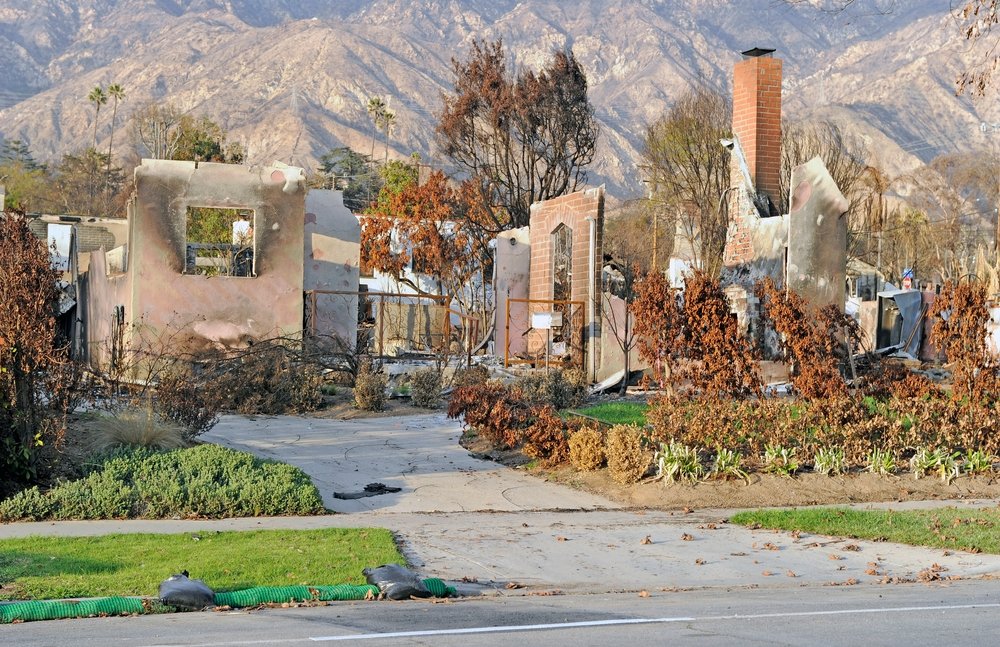
Trump claims bureaucratic red tape has stalled rebuilding one year after fires destroyed nearly 12,000 homes. California officials dismissed the order as legally toothless political theater, according to The Los Angeles Times.
But the data reveal that both sides are avoiding uncomfortable truths, leaving fire victims uncertain about which government to trust or follow.
The Permit Dispute
Trump’s core claim is accurate: approximately 3,000 permits have been issued for roughly 12,000 destroyed structures, a 25% rate after one year. His assertion that “less than 10 homes have been rebuilt” is misleading, as it conflates completed homes with hundreds currently under construction in Palisades and Altadena.
California officials counter that permits are being approved in record time. State data shows an average of 85 days, nearly three times the pre-fire average.
City of Los Angeles officials report 69 days for Palisades applications, compared to up to 24 months outside fire zones. LA County officials cite 72 days, compared with about eight months previously.
Missing Context From Both Sides
Both narratives omit critical context. A December Los Angeles Times review found permitting in Altadena and Pacific Palisades was moving at a moderate rate compared to other major California fires.
After the 2018 Camp Fire, which destroyed nearly 14,000 homes in Paradise, the first permits were issued four months after the fire. Three years later, Paradise had issued nearly 2,000 permits with 1,071 homes completed. Six years out, only 35% of the housing stock has been recovered.
LA’s first permits were issued 57 days after ignition and processing times are significantly faster than Paradise. Yet the 25% permit rate lags Colorado’s Marshall Fire, where 75% of destroyed properties received permits within three years.
The Real Bottleneck: Money
The deeper issue neither side wants to discuss is money. California submitted a $33.9 billion federal disaster supplemental request in February 2025. Twelve months later, Congress hasn’t acted and the Trump administration hasn’t transmitted the request for consideration. After the Camp Fire, Congress passed a recovery bill within seven months.
Federal funding matters because insurance gaps, not permits, are the primary barrier to rebuilding. While 93% of fire insurance claims have been partially paid, totaling $20.4 billion, many policies covered homes valued at $200,000 to $300,000 that now cost $500,000 or more to rebuild with new fire-resistant requirements.
Questionable Legal Authority
The executive order’s legal authority is questionable. While federal preemption of state law is established under the Supremacy Clause, building permits have historically been core local government powers.
The Stafford Act provides broad federal disaster authority but contains no explicit language preempting local building permit processes.
The order directs FEMA and the Small Business Administration to allow builders using federal funds to self-certify compliance with local codes. But it provides no enforcement mechanism. Cities and counties could continue requiring standard permits, leaving builders caught between conflicting directives.
Political theater
Trump issued the order exactly one year after the fires for maximum symbolic impact, framing California officials as bureaucratic obstacles.
Governor Gavin Newsom and Los Angeles Mayor Karen Bass responded by linking the order to “recent killings of citizens by federal immigration agents” and calling Trump a “clueless idiot,” ensuring the dispute remains partisan theater rather than problem-solving.
This federal-state-local dispute exemplifies what political scientists call a “nested legitimacy crisis”—when different levels of government issue conflicting directives, each claiming authority.
The competing narratives are stark: The president says local government is blocking recovery. The governor says the president lacks legal authority and is withholding needed funding. The mayor says permits are being processed faster than ever. The county supervisor says money, not permits, is the real problem.
For someone trying to rebuild in Altadena or Pacific Palisades, these contradictions are paralyzing. Should they wait for federal self-certification? Apply through local channels? Delay until federal funding arrives?
The dueling claims make it nearly impossible for victims to determine whether local bureaucracy, federal funding gaps, or their own financial circumstances are actually preventing their return home.
In this case, only Los Angeles County Supervisor Kathryn Barger (R-Palmdale, Lancaster, Santa Clarita, San Marino, Pasadena, La Cañada-Flintridge, portions of the San Gabriel Valley) struck a measured tone.
“I welcome any effort to responsibly accelerate rebuilding,” she said of Trump’s executive order. “I appreciate the Administration’s acknowledgement of the important role FEMA plays in disaster recovery.”
However, Barger also said the most urgent need in the Altadena region is financially driven and that the county will soon face a mass-sheltering crisis as survivors’ insurance and emergency relief funds run out.
“As FEMA’s role expands into this new recovery function, I’m hopeful that the federal government will collaborate with our County to implement a mass housing and sheltering program and offer long-term disaster aid (such as Community Development Block Grant-Disaster Recovery funds) so we can accelerate recovery. All survivors deserve full support from all levels of government so they have a fair shot at rebuilding their lives,” Barger said.