


Valley electeds, community leaders break bread amid Fed immigration challenges

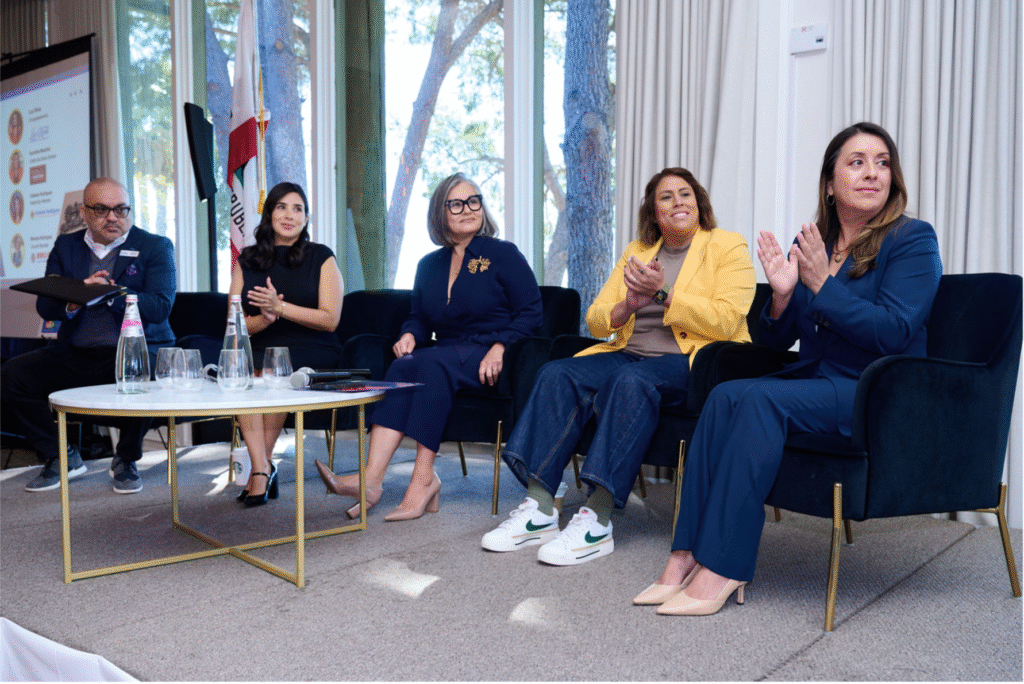
Dr. Juan Benitez, ICON CDC president, left, led ther panel discussion which included from left to right, Assemblywoman Celeste Rodriguez, Los Angeles City Councilmember Monica Rodriguez, State Senator Caroline Menjivar, and U.S. Rep. Luz Rivas. Photo Credit: Sheldon Botler Photography

By Stephen Witt

More than 400 members of the small business community, educators, and healthcare professionals gathered Saturday at the Odyssey Restaurant in Granada Hills for ICON CDC’s annual Policy Con Pan Dulce 2025, an event that brought together local, state, and federal officials to discuss economic development and immigration policy affecting the San Fernando Valley.

ICON [Initiating Change in Our Neighborhoods] is a community economic development organization that has served the San Fernando Valley’s underserved Latino region for 25 years. It convened the conference to address the mounting challenges facing immigrant entrepreneurs and small businesses due to increased federal immigration enforcement.

Federal Support and Local Partnership

U.S. Rep. George Whitesides

U.S. Rep. George Whitesides (D-Santa Clarita, Palmdale, Lancaster, portions of San Fernando Valley) opened the event by praising ICON CDC’s two decades of service to the region.

“I want to start off by thanking icon, CDC, for the incredible work you’ve done for more than 20 years now,” said Whitesides. “You have proven that when we invest in local people, we build stronger neighborhoods and a stronger economy.”

The former Virgin Galactic CEO, who led the company from 12 employees to about 1,000 over 10 years, emphasized federal efforts to support small businesses through expanded access to capital, streamlined permitting, and workforce development programs.

“We’re working to expand access to capital and make sure that entrepreneurs from all backgrounds can get the loans and the grants they need,” Whitesides said. “I know the challenges of building a business in California, and I am firmly committed to helping you.”

Panel Discussion Addresses Critical Issues

The event featured a panel of powerhouse Latina elected officials moderated by Dr. Juan Benitez, ICON CDC president. 

Panelists included U.S. Rep. Luz Rivas (D-San Fernando Valley including Pacoima, Panorama City), State Senator Caroline Menjivar (D-Burbank, Lang, Panorama City, Van Nuys, San Fernando Valley, Winnetka), Los Angeles City Councilwoman Monica Rodriguez (D- Pacoima, Sunland-Tujunga, Sylmar, Shadow Hills, Sun Valley, Lake View Terrace, and Mission Hills), and Assemblywoman Celeste Rodriguez (D- San Fernando, Rancho Cascades, Sylmar, Pacoima, Arleta, Panorama City, Sun Valley, Valley Glen).

LA City Councilmember Imelda Padilla

Los Angeles City Councilwoman Imelda Padilla (D-Arleta, Lake Balboa, North Hollywood, North Hills, Panorama City, Van Nuys, and Sun Valley) spoke before the panel began, discussing infrastructure investments, including a state-of-the-art rail line coming to Van Nuys Boulevard by 2031.

“We have a responsibility, a moral imperative, to build on the perseverance, that resilience, that collective strength that allows for us to have this event,” said Dr. Benitez, who also serves on the Long Beach Unified school board and is a faculty member at Cal State University Long Beach. He referenced the historical struggles of immigrant communities, from the Chinese Exclusion Acts to Operation Wetback, noting that communities have persevered through similar challenges before.

ICON CDC’s Mission and Impact

Roberto Barragan, executive director of ICON CDC, provided context for the organization’s work and the importance of the annual gathering.

“It’s good to have this kind of conversation. We’re not afraid of bringing, you know, 400 Latinos into a room in our own community,” Barragan said. “We’ve had elected officials all coming today to talk about what’s important to them, and engaging the community. Engaging in important topics, including economic development, immigration, regulation, and current legislation. You need to have a dialogue. You need to have it on a regular basis.”

The organization serves 2,000 businesses annually, educates 200 entrepreneurs through city-funded business centers, assists street vendors with permits, and offers microloans up to $50,000 to small businesses.

More than 200 L:atino community leaders and business owners attended ICON’s Policy con Pan Dulce event on Saturday. Photo Credit: Sheldon Botler Photography

Economic Impact and Community Response

Entrepreneur communities represent a $23 billion industry contribution to the economy, according to Councilwoman Rodriguez, who called for a collective economic response to federal policies impacting immigrant families.

“I want everybody in this room to stop going to the Home Depot,” Rodriguez declared, pointing to corporations cooperating with federal immigration enforcement. “I want everybody in this room to start investing their dollars with our local communities that are helping to have our communities back.”

Immigration Enforcement Takes Center Stage

Rivas reported that her Congressional district ranks number one in LA County for ICE operations. She detailed her office’s efforts to provide oversight at detention facilities, including multiple visits to the Adelanto detention center.

“If you know of anyone who needs any help with immigration, that is something that my district office helps with,” Rivas said, emphasizing that all assistance remains confidential. She shared the story of a young man who should have been a senior at Reseda High School but was detained at Adelanto, highlighting her office’s successful intervention.

Menjivar highlighted new protections passed by the California legislature, including bills preventing federal agents from wearing ski masks and requiring them to show badges, though she acknowledged enforcement challenges.

“We’re living in really weird times where the law is not being followed,” Menjivar said. The state allocated $60 million for the Attorney General to fight federal overreach in courts.

Local Initiatives and Workforce Development

Assemblywoman Rodriguez announced the passage of AB 495, which helps families create preparedness plans in case of sudden family separation due to immigration enforcement.

“Every time they take someone, they’re taking someone’s mom or dad, a caregiver, and they’re leaving children behind,” Rodriguez said.

Councilwoman Rodriguez announced a new sidewalk repair program partnering with LiUNA Local 300 to train young people in apprenticeship programs, creating pathways to middle-class employment while addressing infrastructure needs. She also discussed preparing local businesses for Olympic-related contracts, with business readiness workshops planned for the first quarter of next year.

Healthcare and Education Focus

Rivas noted that 52% of her constituents rely on Medicaid for healthcare, and the federal government shutdown threatens to double the premiums for 31,000 constituents on the Affordable Care Act.

Despite widespread federal cuts, the congresswoman proudly announced that Valley College received over $600,000 from the National Science Foundation to continue its cybersecurity program.

Menjivar championed first-in-the-nation protections for small businesses, including requirements that contracts be provided in appropriate languages and doubling eviction notice periods for qualified small businesses. She also passed legislation requiring restaurants with multiple locations to list allergens on menus, becoming the first state to implement EU-style allergen disclosure.

Call to Action

Only 5% of registered voters had returned their ballots as of the event date, so elected officials urged attendees to participate in the November 4 election.

“That is your power, and we all made it easy at the state level,” Rivas said, noting California’s mail-in ballot system.

Among the sponsors of the event were El Nido Family Centers, First Start LA, South Coast Air Quality Management District, Pacoima Chamber of Commerce, Jacobs, LA Art International, Local Union 300, and Opportune Federal Credit Union.

“This is a moment in time where we have to harness our collective economic strength as a community,” Councilwoman Rodriguez said. “Our voices will be heard when we start responding with a collective economic response.”


 

Leave a Reply

Your email address will not be published. Required fields are marked *

By Stephen Witt

More than 400 members of the small business community, educators, and healthcare professionals gathered Saturday at the Odyssey Restaurant in Granada Hills for ICON CDC’s annual Policy Con Pan Dulce 2025, an event that brought together local, state, and federal officials to discuss economic development and immigration policy affecting the San Fernando Valley.

ICON [Initiating Change in Our Neighborhoods] is a community economic development organization that has served the San Fernando Valley’s underserved Latino region for 25 years. It convened the conference to address the mounting challenges facing immigrant entrepreneurs and small businesses due to increased federal immigration enforcement.

Federal Support and Local Partnership

U.S. Rep. George Whitesides

U.S. Rep. George Whitesides (D-Santa Clarita, Palmdale, Lancaster, portions of San Fernando Valley) opened the event by praising ICON CDC’s two decades of service to the region.

“I want to start off by thanking icon, CDC, for the incredible work you’ve done for more than 20 years now,” said Whitesides. “You have proven that when we invest in local people, we build stronger neighborhoods and a stronger economy.”

The former Virgin Galactic CEO, who led the company from 12 employees to about 1,000 over 10 years, emphasized federal efforts to support small businesses through expanded access to capital, streamlined permitting, and workforce development programs.

“We’re working to expand access to capital and make sure that entrepreneurs from all backgrounds can get the loans and the grants they need,” Whitesides said. “I know the challenges of building a business in California, and I am firmly committed to helping you.”

Panel Discussion Addresses Critical Issues

The event featured a panel of powerhouse Latina elected officials moderated by Dr. Juan Benitez, ICON CDC president. 

Panelists included U.S. Rep. Luz Rivas (D-San Fernando Valley including Pacoima, Panorama City), State Senator Caroline Menjivar (D-Burbank, Lang, Panorama City, Van Nuys, San Fernando Valley, Winnetka), Los Angeles City Councilwoman Monica Rodriguez (D- Pacoima, Sunland-Tujunga, Sylmar, Shadow Hills, Sun Valley, Lake View Terrace, and Mission Hills), and Assemblywoman Celeste Rodriguez (D- San Fernando, Rancho Cascades, Sylmar, Pacoima, Arleta, Panorama City, Sun Valley, Valley Glen).

LA City Councilmember Imelda Padilla

Los Angeles City Councilwoman Imelda Padilla (D-Arleta, Lake Balboa, North Hollywood, North Hills, Panorama City, Van Nuys, and Sun Valley) spoke before the panel began, discussing infrastructure investments, including a state-of-the-art rail line coming to Van Nuys Boulevard by 2031.

“We have a responsibility, a moral imperative, to build on the perseverance, that resilience, that collective strength that allows for us to have this event,” said Dr. Benitez, who also serves on the Long Beach Unified school board and is a faculty member at Cal State University Long Beach. He referenced the historical struggles of immigrant communities, from the Chinese Exclusion Acts to Operation Wetback, noting that communities have persevered through similar challenges before.

ICON CDC’s Mission and Impact

Roberto Barragan, executive director of ICON CDC, provided context for the organization’s work and the importance of the annual gathering.

“It’s good to have this kind of conversation. We’re not afraid of bringing, you know, 400 Latinos into a room in our own community,” Barragan said. “We’ve had elected officials all coming today to talk about what’s important to them, and engaging the community. Engaging in important topics, including economic development, immigration, regulation, and current legislation. You need to have a dialogue. You need to have it on a regular basis.”

The organization serves 2,000 businesses annually, educates 200 entrepreneurs through city-funded business centers, assists street vendors with permits, and offers microloans up to $50,000 to small businesses.

More than 200 L:atino community leaders and business owners attended ICON’s Policy con Pan Dulce event on Saturday. Photo Credit: Sheldon Botler Photography

Economic Impact and Community Response

Entrepreneur communities represent a $23 billion industry contribution to the economy, according to Councilwoman Rodriguez, who called for a collective economic response to federal policies impacting immigrant families.

“I want everybody in this room to stop going to the Home Depot,” Rodriguez declared, pointing to corporations cooperating with federal immigration enforcement. “I want everybody in this room to start investing their dollars with our local communities that are helping to have our communities back.”

Immigration Enforcement Takes Center Stage

Rivas reported that her Congressional district ranks number one in LA County for ICE operations. She detailed her office’s efforts to provide oversight at detention facilities, including multiple visits to the Adelanto detention center.

“If you know of anyone who needs any help with immigration, that is something that my district office helps with,” Rivas said, emphasizing that all assistance remains confidential. She shared the story of a young man who should have been a senior at Reseda High School but was detained at Adelanto, highlighting her office’s successful intervention.

Menjivar highlighted new protections passed by the California legislature, including bills preventing federal agents from wearing ski masks and requiring them to show badges, though she acknowledged enforcement challenges.

“We’re living in really weird times where the law is not being followed,” Menjivar said. The state allocated $60 million for the Attorney General to fight federal overreach in courts.

Local Initiatives and Workforce Development

Assemblywoman Rodriguez announced the passage of AB 495, which helps families create preparedness plans in case of sudden family separation due to immigration enforcement.

“Every time they take someone, they’re taking someone’s mom or dad, a caregiver, and they’re leaving children behind,” Rodriguez said.

Councilwoman Rodriguez announced a new sidewalk repair program partnering with LiUNA Local 300 to train young people in apprenticeship programs, creating pathways to middle-class employment while addressing infrastructure needs. She also discussed preparing local businesses for Olympic-related contracts, with business readiness workshops planned for the first quarter of next year.

Healthcare and Education Focus

Rivas noted that 52% of her constituents rely on Medicaid for healthcare, and the federal government shutdown threatens to double the premiums for 31,000 constituents on the Affordable Care Act.

Despite widespread federal cuts, the congresswoman proudly announced that Valley College received over $600,000 from the National Science Foundation to continue its cybersecurity program.

Menjivar championed first-in-the-nation protections for small businesses, including requirements that contracts be provided in appropriate languages and doubling eviction notice periods for qualified small businesses. She also passed legislation requiring restaurants with multiple locations to list allergens on menus, becoming the first state to implement EU-style allergen disclosure.

Call to Action

Only 5% of registered voters had returned their ballots as of the event date, so elected officials urged attendees to participate in the November 4 election.

“That is your power, and we all made it easy at the state level,” Rivas said, noting California’s mail-in ballot system.

Among the sponsors of the event were El Nido Family Centers, First Start LA, South Coast Air Quality Management District, Pacoima Chamber of Commerce, Jacobs, LA Art International, Local Union 300, and Opportune Federal Credit Union.

“This is a moment in time where we have to harness our collective economic strength as a community,” Councilwoman Rodriguez said. “Our voices will be heard when we start responding with a collective economic response.”