

Valley Mayors Unite on Housing, Safety, and Economic Growth at Annual Luncheon

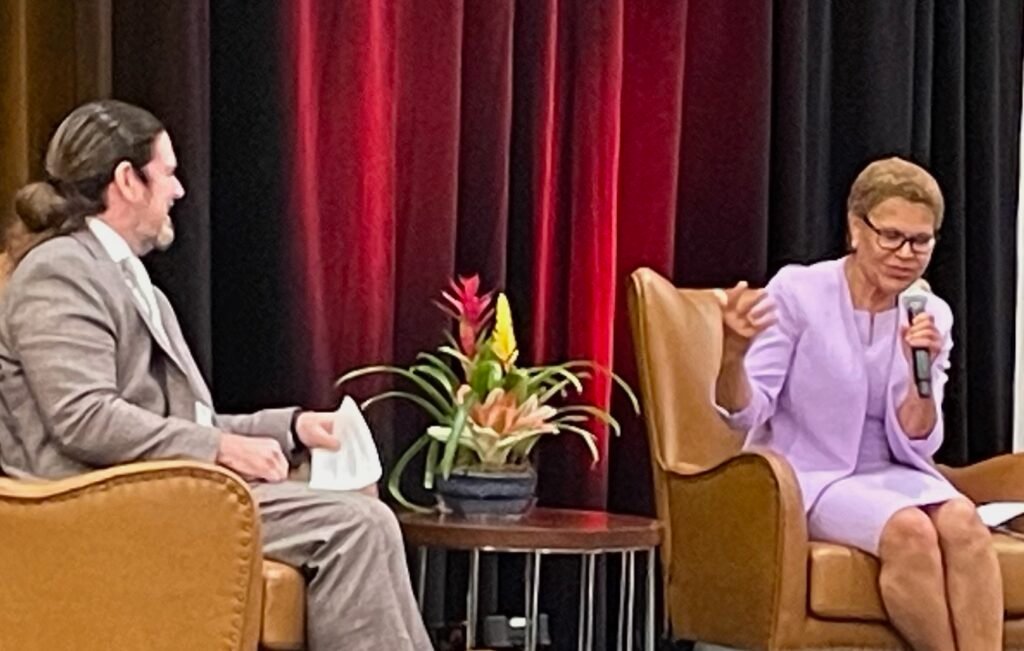
Los Angeles Mayor Karen Bass makes a point during the United Chamber of Commerce's Annual Mayoral Luncheon. Photo credit: Stephen Witt

By Stephen Witt

Four San Fernando Valley mayors outlined ambitious plans for public safety, affordable housing, and economic development at the United Chamber of Commerce’s 19th Annual Mayor’s Luncheon on Tuesday at the Warner Center Marriott in Woodland Hills.

Los Angeles Mayor Karen Bass, Calabasas Mayor Peter Kraut, Burbank Mayor Nikki Perez, and San Fernando Mayor Mary Mendoza addressed a packed room of business leaders, detailing their cities’ progress while confronting shared regional challenges.

Los Angeles Focuses on Recovery and Rebuilding

Los Angeles Mayor Karen Bass

Bass opened with stark reflections on what she called “the worst natural disaster in our city’s history”—the devastating fires earlier this year. The city has issued over 700 permits for more than 400 homes, with approximately 50 houses now under construction.

“We’re on record for the fastest recovery and rebuilding that will happen in our state’s history,” Bass said, though she acknowledged that displaced residents understandably find little comfort in speed records.

The mayor also addressed immigration enforcement raids that have created “incredible uncertainty” across Los Angeles, with residents reluctant to go to work or school. Despite these challenges, Bass emphasized upcoming opportunities, including the World Cup at USC in 2026, preceded by the NBA All-Star Game in February and the U.S. Women’s Open golf tournament in May.

On police hiring—a top priority—Bass issued an executive directive to cut red tape in LAPD recruitment. The department currently has 8,600 officers serving 3.8 million residents, significantly fewer per capita than comparable cities like Chicago.

Bass also announced plans to retain Hollywood production through streamlined permitting and reduced filming costs, including fewer required police officers on sets. The moves follow passage of over $700 million in state tax credits for the entertainment industry.

Burbank Doubles Down on Entertainment Industry

Burbank Mayor Nikki Perez

Perez emphasized Burbank’s identity as “the media capital of the world,” pointing to Warner Brothers’ second-century expansion and new Burbank Studios facilities as evidence of continued industry commitment.

“Our goal is to ensure that the people who make Burbank the entertainment creative hub get to live in Burbank,” Perez said, noting that many affordable housing projects include amenities specifically for entertainment industry workers.

The city also launched a Creative Industry Task Force to “safeguard our vital industry and support the creative and skilled professionals.” Beyond entertainment, Burbank is investing in clean energy infrastructure, expanding homeless services, and maintaining what Perez called an exceptional 99% power reliability rate through Burbank Water and Power.

Calabasas Emphasizes Business-Friendly Policies

Calabasas Mayor Peter Kraut

Kraut highlighted Calabasas’s decision not to impose business license taxes—a key differentiator from surrounding communities. The city welcomed multiple new businesses this year, including Superba Coffee House, Boulevard Steak, and medical device company ResMed, while expanding the Pepperdine campus.

“When our local businesses succeed, we succeed,” Kraut said, announcing a citywide solar infrastructure project to equip public buildings with solar panels and batteries.

Looking ahead, Calabasas is participating in a Las Virgenes-Malibu Council of Governments project to build a 45-mile underground fiber optic network connecting five cities. The high-speed network will enable real-time data transmission during disasters while providing improved internet access to residents and businesses.

The city’s library issued nearly 2,000 cards this year while hosting over 200 programs for 5,000 participants.

San Fernando Maintains Small-Town Character
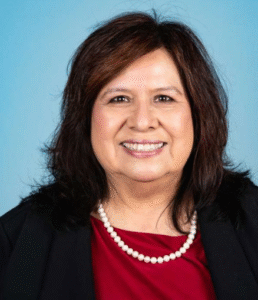
San Fernando Mayor Mary Mendoza

Mendoza detailed how San Fernando—”the first city of the San Fernando Valley,” incorporated in 1911—is balancing state housing mandates with preserving its hometown character. The city must plan for 1,795 housing units by 2029 across just 2.42 square miles.

Despite fiscal challenges, San Fernando rebuilt its general fund reserve to $11 million after running a $4 million deficit a decade ago. The city was again named a finalist for most business-friendly small city in Los Angeles County.

San Fernando’s police department installed a license plate reader system that has helped solve crimes, including shutting down an operation purchasing stolen Legos. The city also launched “Discover San Fernando” events featuring music and food to showcase local businesses ahead of World Cup and Olympic opportunities.

Transportation improvements include a free trolley service with 28 stops and Mission City Transit, a curb-to-curb service with two buses accommodating wheelchairs.

Shared Priorities Emerge

All four mayors emphasized infrastructure investment, public safety partnerships, and support for local businesses as foundational priorities. Housing affordability, mental health services, and preparing for major sporting events emerged as common themes across the diverse communities.

The mayors’ presentations underscored each Valley city’s unique character and the interconnected challenges it faces in one of America’s largest metropolitan regions.


 

Leave a Reply

Your email address will not be published. Required fields are marked *

By Stephen Witt

Four San Fernando Valley mayors outlined ambitious plans for public safety, affordable housing, and economic development at the United Chamber of Commerce’s 19th Annual Mayor’s Luncheon on Tuesday at the Warner Center Marriott in Woodland Hills.

Los Angeles Mayor Karen Bass, Calabasas Mayor Peter Kraut, Burbank Mayor Nikki Perez, and San Fernando Mayor Mary Mendoza addressed a packed room of business leaders, detailing their cities’ progress while confronting shared regional challenges.

Los Angeles Focuses on Recovery and Rebuilding

Los Angeles Mayor Karen Bass

Bass opened with stark reflections on what she called “the worst natural disaster in our city’s history”—the devastating fires earlier this year. The city has issued over 700 permits for more than 400 homes, with approximately 50 houses now under construction.

“We’re on record for the fastest recovery and rebuilding that will happen in our state’s history,” Bass said, though she acknowledged that displaced residents understandably find little comfort in speed records.

The mayor also addressed immigration enforcement raids that have created “incredible uncertainty” across Los Angeles, with residents reluctant to go to work or school. Despite these challenges, Bass emphasized upcoming opportunities, including the World Cup at USC in 2026, preceded by the NBA All-Star Game in February and the U.S. Women’s Open golf tournament in May.

On police hiring—a top priority—Bass issued an executive directive to cut red tape in LAPD recruitment. The department currently has 8,600 officers serving 3.8 million residents, significantly fewer per capita than comparable cities like Chicago.

Bass also announced plans to retain Hollywood production through streamlined permitting and reduced filming costs, including fewer required police officers on sets. The moves follow passage of over $700 million in state tax credits for the entertainment industry.

Burbank Doubles Down on Entertainment Industry

Burbank Mayor Nikki Perez

Perez emphasized Burbank’s identity as “the media capital of the world,” pointing to Warner Brothers’ second-century expansion and new Burbank Studios facilities as evidence of continued industry commitment.

“Our goal is to ensure that the people who make Burbank the entertainment creative hub get to live in Burbank,” Perez said, noting that many affordable housing projects include amenities specifically for entertainment industry workers.

The city also launched a Creative Industry Task Force to “safeguard our vital industry and support the creative and skilled professionals.” Beyond entertainment, Burbank is investing in clean energy infrastructure, expanding homeless services, and maintaining what Perez called an exceptional 99% power reliability rate through Burbank Water and Power.

Calabasas Emphasizes Business-Friendly Policies

Calabasas Mayor Peter Kraut

Kraut highlighted Calabasas’s decision not to impose business license taxes—a key differentiator from surrounding communities. The city welcomed multiple new businesses this year, including Superba Coffee House, Boulevard Steak, and medical device company ResMed, while expanding the Pepperdine campus.

“When our local businesses succeed, we succeed,” Kraut said, announcing a citywide solar infrastructure project to equip public buildings with solar panels and batteries.

Looking ahead, Calabasas is participating in a Las Virgenes-Malibu Council of Governments project to build a 45-mile underground fiber optic network connecting five cities. The high-speed network will enable real-time data transmission during disasters while providing improved internet access to residents and businesses.

The city’s library issued nearly 2,000 cards this year while hosting over 200 programs for 5,000 participants.

San Fernando Maintains Small-Town Character

San Fernando Mayor Mary Mendoza

Mendoza detailed how San Fernando—”the first city of the San Fernando Valley,” incorporated in 1911—is balancing state housing mandates with preserving its hometown character. The city must plan for 1,795 housing units by 2029 across just 2.42 square miles.

Despite fiscal challenges, San Fernando rebuilt its general fund reserve to $11 million after running a $4 million deficit a decade ago. The city was again named a finalist for most business-friendly small city in Los Angeles County.

San Fernando’s police department installed a license plate reader system that has helped solve crimes, including shutting down an operation purchasing stolen Legos. The city also launched “Discover San Fernando” events featuring music and food to showcase local businesses ahead of World Cup and Olympic opportunities.

Transportation improvements include a free trolley service with 28 stops and Mission City Transit, a curb-to-curb service with two buses accommodating wheelchairs.

Shared Priorities Emerge

All four mayors emphasized infrastructure investment, public safety partnerships, and support for local businesses as foundational priorities. Housing affordability, mental health services, and preparing for major sporting events emerged as common themes across the diverse communities.

The mayors’ presentations underscored each Valley city’s unique character and the interconnected challenges it faces in one of America’s largest metropolitan regions.