


By Angelica C. Gualpa
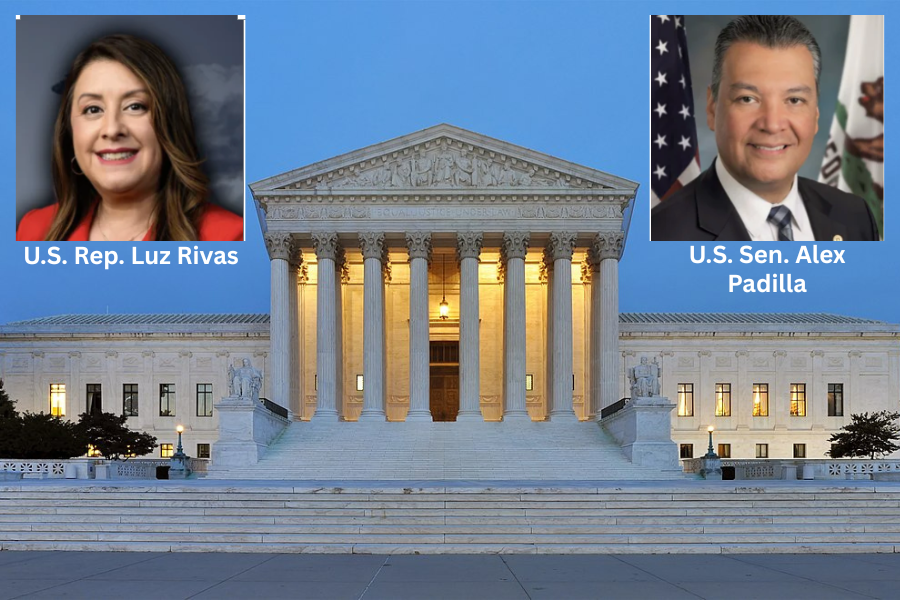
U.S. Senator Alex Padilla (D-CA) and U.S. Rep. Luz Rivas (D-Pacoima, Panorama City) yesterday slammed the United States Supreme Court (SCOTUS) decision to allow the continuation of Immigration and Customs Enforcement (ICE) raids in the Los Angeles County area based on broad criteria such as speaking Spanish or gathering at locations where day laborers often congregate.
In a 6-3 vote along ideological lines, SCOTUS overruled U.S. District Judge Maame Ewusi-Mensah Frimpong, who in July ruled that ICE agents were conducting “roving patrols” of L.A. and making arrests without “reasonable suspicion” that their targets were in the country illegally.
Frimpong, a Biden Administration appointee, also found ICE agents appeared to be relying on legally dubious factors such as race, accent, and line of work.


“The Administration has said it themselves: they are detaining people simply based on whether they ‘look’ like an immigrant, on the language they speak, or where they work. Today’s radical Supreme Court decision tramples on our Constitution and enables racial profiling to continue without explanation,” said Padilla.
“Trump isn’t just targeting violent criminals; he’s sweeping up hardworking people — including U.S. citizens — indiscriminately. And he’s sowing fear and damaging our economy in the process. This is not the final say. There is still time for the Courts to stop this blatantly racist policy from threatening the basic freedoms of Americans and immigrants alike,” he added.
Rivas said the SCOTUS ruling empowered Donald Trump and ICE to continue racial profiling tactics to terrorize Latino and Spanish-speaking communities across Los Angeles.
“Donald Trump’s and ICE’s ‘roving raids’ was never about public safety – it was always about fulfilling an anti-immigrant agenda in our Hispanic and immigrant communities, like Los Angeles. As Donald Trump continues to target Los Angeles, his actions will remain a stain on our values and history,” said Rivas. “I will continue to fight for the dignity and safety of the San Fernando Valley’s families – and that includes standing up to the Trump Administration’s attempts to define who is and who is not an American.”
The issue reached SCOTUS last month after the Justice Department complained in an emergency appeal that the court-ordered limitations amounted to “a straitjacket” for law enforcement officers carrying out the Trump administration’s mass-deportation policy.
Justice Brett Kavanaugh, writing in the majority, said of the decision that it was reasonable to briefly question people who meet multiple “common sense” criteria for possible illegal presence — including employment in day labor or construction and limited English proficiency.
Kavanaugh did note, however, that people who are illegally detained still have the right to sue for damages, but he said Frimpong’s order was vague enough that ICE personnel could be reluctant to do their jobs out of fear they could be accused of contempt.
But Justice Sonia Sotomayor, who along with Justices Elena Kagan and Ketanji Brown, dissented, wrote that the high court’s ruling posed a threat not just to undocumented foreigners but to Americans of Hispanic descent.
“The Government, and now the concurrence, has all but declared that all Latinos, U. S. citizens or not, who work low-wage jobs are fair game to be seized at any time, taken away from work, and held until they provide proof of their legal status to the agents’ satisfaction,” she wrote.
The decision highly impacts Los Angeles County, where nearly half the population is of Hispanic origin, and ICE tactical sweeps have also included U.S. citizens and legal immigrants.